How to Grow a Cactus at Home and Keep It Alive Past Year One
How to Grow a Cactus at Home and Keep It Alive Past Year One
Most cacti don’t die from neglect. They die from kindness. Someone buys a little barrel cactus at a grocery store, sets it on a windowsill, waters it every Sunday like clockwork, and watches it turn to mush in six weeks. That’s the whole story for about nine out of ten dead house cacti.
This guide is for anyone who’s killed one already, or who wants to skip that step (if you’ve lost a cactus, my balcony gardening story starts with exactly that). By the end of this you’ll know what to buy, where to put it, how to water it without guessing, and what to do when something goes wrong.
What “growing a cactus at home” actually requires
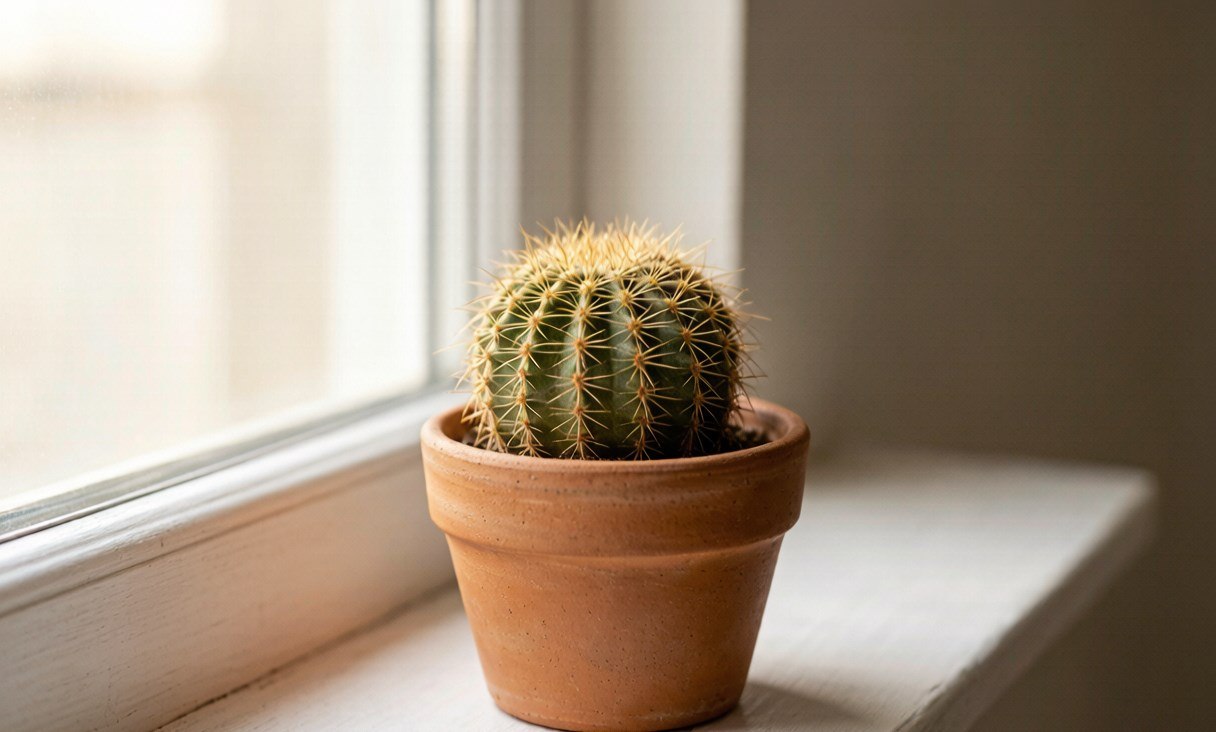
Here’s the part nobody tells you at the register: a cactus is not a low-maintenance houseplant. It’s a plant with a very specific set of demands, and it punishes you only when you violate them.
Three things keep a cactus alive. Bright light, fast-draining soil, and a watering habit built around dryness instead of a calendar. Get those three right and the plant needs almost nothing from you. Get any one of them wrong and you’ll be back at the store in a month.
The fourth thing, which matters more than people expect, is patience. Cacti grow slowly on purpose. A plant that looks identical in March and September is probably doing fine.
Pick a cactus that fits your light (before you buy anything)
The single most common mistake happens before the plant comes home. People buy a desert cactus for a desk in a windowless office, then wonder why it stretches into a sad green pencil over the winter.
Desert cacti — barrel cactus, prickly pear, mammillaria, most of what you see in a store’s cactus rack — want direct sun for at least four to six hours a day. That means a south-facing windowsill, ideally, or a west-facing one. If your best window faces north, a desert cactus will never be happy there.
Jungle cacti are the exception, and they’re the ones to buy if your light is limited. Christmas cactus, Thanksgiving cactus, and Easter cactus all come from forest canopies rather than deserts. They want bright indirect light and a bit more moisture than their desert cousins. Treating a Christmas cactus like a barrel cactus is why so many of them drop their buds in November.
When you’re standing in the store, pick a plant with firm, plump tissue. Pass on anything with soft or mushy spots, blackened patches near the base, or small white cottony tufts tucked into the crevices. Those tufts are mealybugs, and you don’t want to bring them home to your other plants.
The soil mix that keeps cactus roots alive
Standard potting soil is the wrong tool for this job. It’s built to hold moisture, which is great for a fern and fatal for a cactus. Cactus roots need air, and they need water to leave the pot quickly instead of sitting around the root ball for a week.
The easiest fix is to buy a bagged cactus and succulent mix, then cut it with grit. Even the mixes labeled for cacti tend to be peat-heavy and stay wet longer than they should. A blend like a quality succulent and cactus mix works well as a base, but plan on adding perlite or pumice to it.
If you’d rather mix your own, use this:
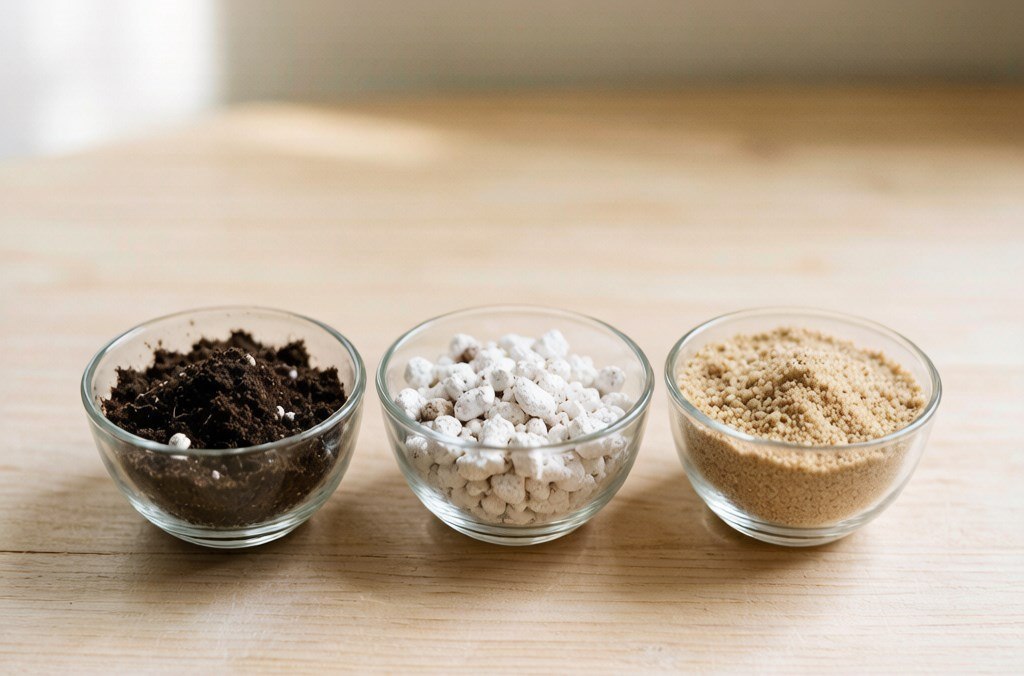
- 2 parts potting soil: the organic base
- 1 part perlite or pumice: creates air pockets so roots can breathe
- 1 part coarse horticultural sand: adds weight and speeds drainage
Two things to avoid. Fine beach sand compacts into a brick and actually blocks drainage, so use particles in the 2 to 4 millimeter range. Vermiculite is the other one to skip; it’s designed to hold water, which is the opposite of what you want here.
The finished mix should feel gritty and loose, closer to a handful of damp sand than to garden soil. If it clumps into a ball when you squeeze it, add more perlite.
The pot matters more than you think
A pot with a drainage hole isn’t optional. A cactus in a sealed decorative pot is a cactus standing in a puddle, and the rot hasn’t started yet. It will.
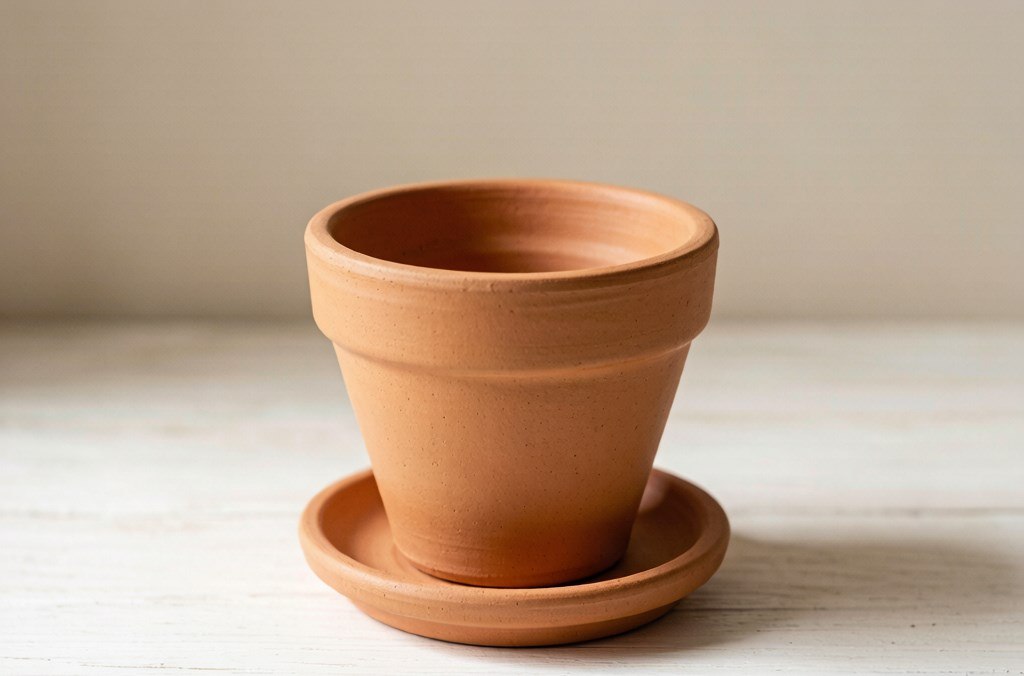
Unglazed terracotta is the best material for beginners. The clay is porous, so water vapor escapes through the walls of the pot, not just the drainage hole. That extra evaporation buys you a wider margin for error on watering. Glazed ceramic and plastic hold moisture longer, which means mistakes show up faster.
Size matters too, and here the instinct is usually wrong. Pick a pot only slightly wider than the root ball. Dropping a small cactus into a big planter means a large volume of soil stays wet around roots that can’t drink it fast enough. A 4-inch cactus wants a 4- to 5-inch pot, not a 10-inch one.
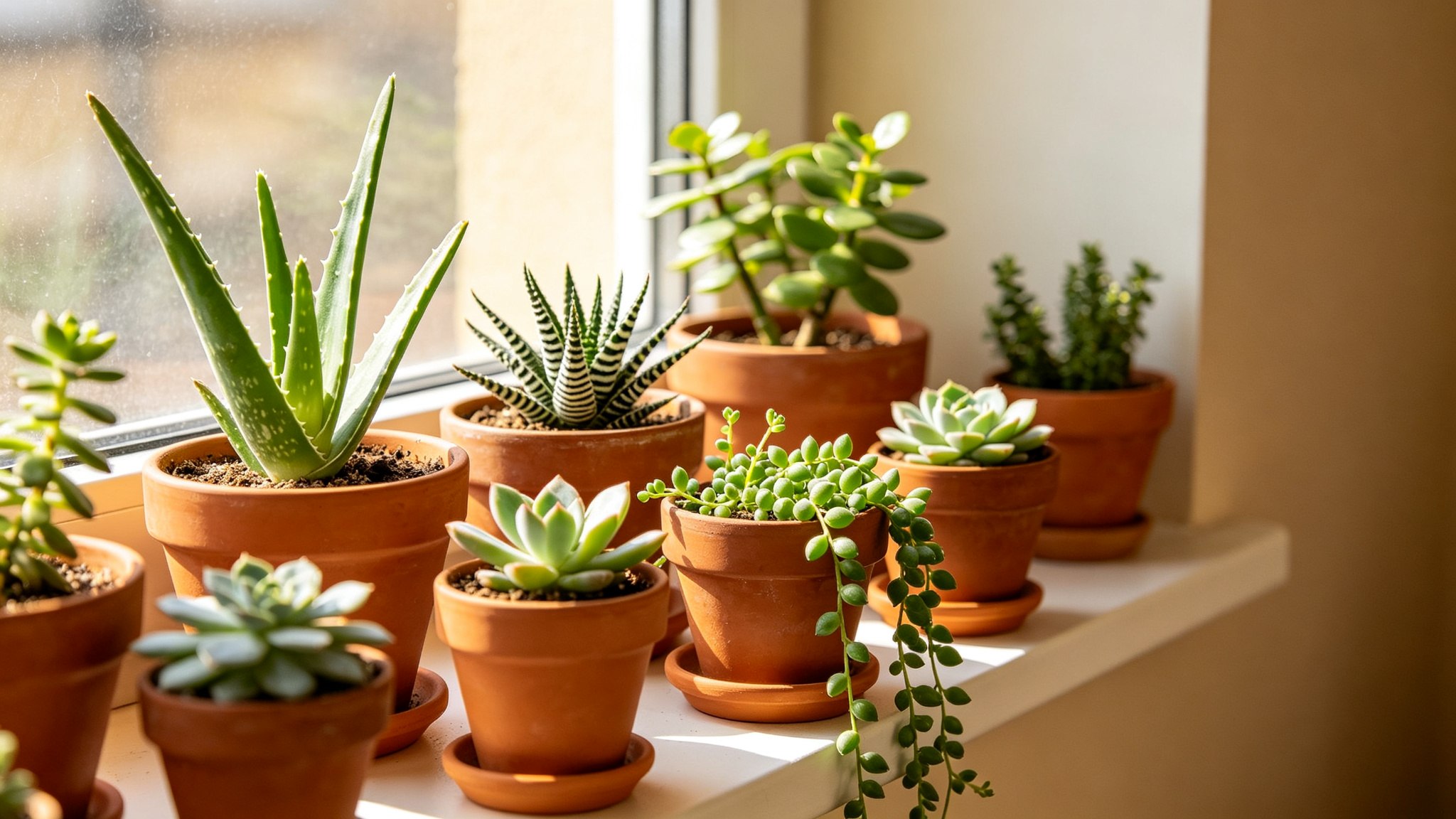
Terraced clay pots with a matching saucer, like this set of unglazed terracotta pots with drainage, cover both needs at once. Whatever you buy, dump the saucer 15 minutes after watering. Letting a pot sit in the runoff is a slow way to rot the roots from the bottom up.
How to water a cactus without killing it
This is the section that saves plants.
Forget the calendar. Cactus watering is a moisture test, not a schedule, because the right interval depends on your humidity, your pot, your soil, and the season. Water when the soil is genuinely dry. Not damp, not “probably fine.” Dry.
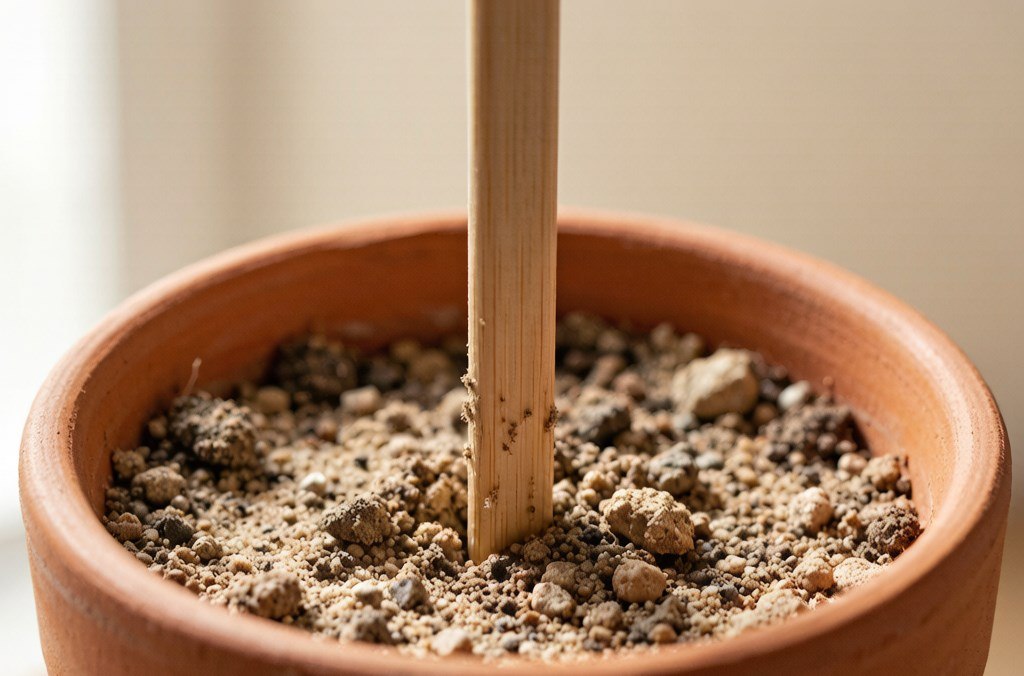
The test that works is a wooden chopstick. Push it two to four inches into the soil, leave it for a minute, then pull it out. If it comes back clean with dry crumbs clinging to it, water. If there’s damp soil stuck to the wood, wait.
When you do water, soak the pot until water runs out the drainage holes. This flushes accumulated salts out of the mix and wets the whole root ball, not just the top inch. Then let it drain completely and empty the saucer.
As a rough starting point for most homes:
| Season | Watering interval | Notes |
|---|---|---|
| Spring & summer | Every 2–4 weeks | Active growth; soak fully each time |
| Fall | Every 3–5 weeks | Taper off as days shorten |
| Winter | Once a month at most | Often skip entirely; see dormancy below |
Two hard rules. Don’t mist a cactus, ever. Humidity is what invites rot, and these plants have no use for it. And never water on a fixed weekly rhythm just because it’s convenient. That habit alone accounts for most cactus deaths.
If you’d rather not poke around in the soil, a simple moisture meter such as a basic soil probe takes the guesswork out. Push the probe down toward the root zone, and water only when the reading comes back dry. Cheap meters drift over time, so replace them every couple of years.
Light: how much, and where to put it
A cactus that isn’t getting enough light tells you clearly, just slowly. It grows taller and thinner than it should, pale instead of deep green, reaching toward whatever window it can find. That’s etiolation, and the stretched growth is permanent. It won’t thicken back up once conditions improve.
Aim for four to six hours of direct sun per day. A south-facing window is the goal; west is the next best thing. If your cactus sits right against the glass, check for bleached white or brown patches, which is sunburn from a sudden move into full sun. Move it back a few inches and, if you’re relocating it outdoors for summer, acclimate it over about ten days rather than all at once.
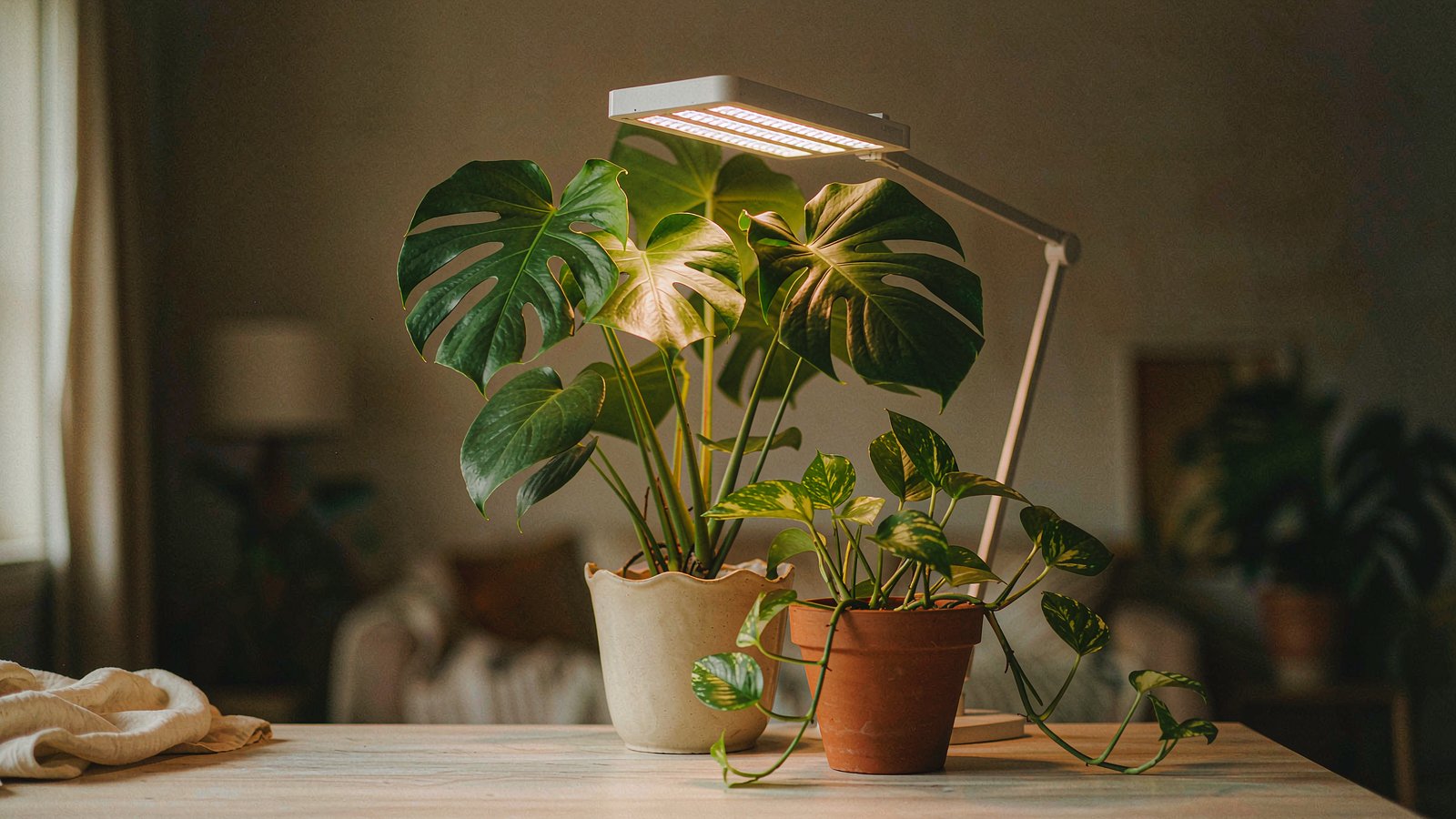
When natural light isn’t enough, which covers short winter days, a north-facing apartment, and any basement office, a grow light closes the gap. Small full-spectrum LED bars like compact grow lights work well for a windowsill collection. Mount them 6 to 12 inches above the top of the plant, run them 10 to 12 hours a day, and put them on a timer so the plant gets the same cycle every day.
One more light habit worth building: rotate your pots a quarter turn every week or two. Cacti lean toward their light source, and a plant that never moves grows lopsided.
Repotting without wrecking the roots
Most cacti only need repotting every two to four years. The signals are roots coming out of the drainage holes, soil that dries out suspiciously fast, or a plant that’s become top-heavy enough to tip its pot.
Do it in spring, before the growth season kicks in, so the plant has months of warm weather to recover.
- Stop watering for a few days first. Dry soil slips off the roots more easily and the plant is less likely to split.
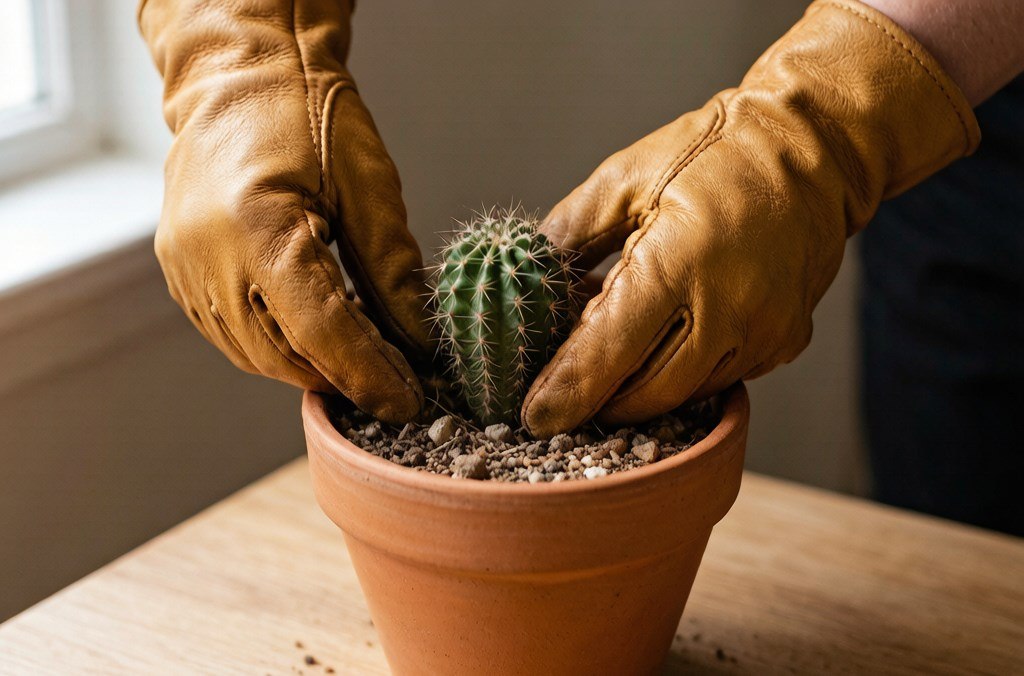
- Protect your hands. Thick leather gloves, kitchen tongs, or a folded strip of newspaper wrapped around the body all work. Spines go through latex like it isn’t there.
- Tease the roots loose. Knock off the old soil and untangle any roots that have circled the bottom of the pot. Trim away anything black or mushy with clean shears.
- Set the plant at the same depth it was before. Burying the stem below its original soil line is a direct path to stem rot.
- Wait a week before watering. Any roots nicked during the move need time to callus over. Watering immediately invites infection into open wounds.
That last step is the one people skip, and it’s the one that costs them the plant.
Winter dormancy and getting yours to bloom
Most desert cacti need a cool, dry rest from roughly mid-October through February. This isn’t optional maintenance you can skip — it’s the trigger for spring blooms, and it’s the most commonly ignored part of cactus care.
During dormancy the plant barely drinks. Water it once a month at most, or skip it entirely if the stems stay plump. Stop fertilizing completely; salts accumulate in soil that’s never flushed and burn the roots. Keep the plant in bright light, and if you can, move it somewhere cooler. Around 50 to 55°F is ideal, so a cool spare room or an enclosed porch works fine.
Then in spring, when you see buds forming, move the plant back to warmth, resume normal watering, and don’t rotate or move it again until the flowers open. Bud drop from a plant being turned at the wrong moment is a genuine heartbreak, and it happens in the last week before bloom.
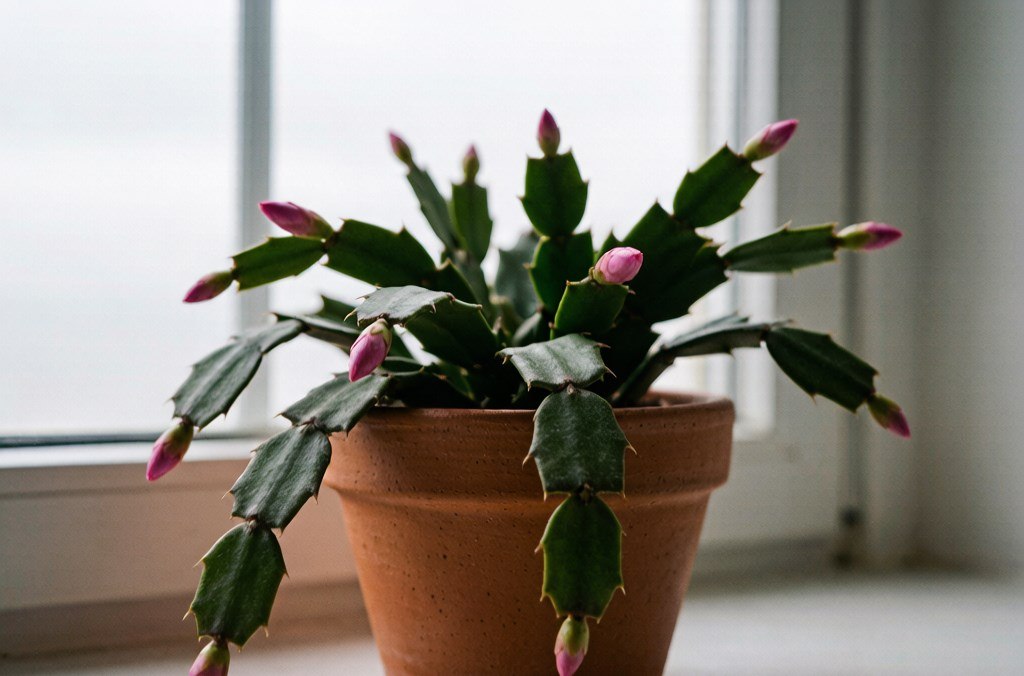
Jungle cacti run on a different clock. Christmas and Thanksgiving cacti need about 13 hours of uninterrupted darkness every night for six to eight weeks in fall, plus cool nights around 13 to 15°C. A lamp left on in the room, or a streetlight through the window, can break that dark cycle and cost you the flowers.
Troubleshooting: what’s wrong with your cactus
Once you know the three basics, most problems resolve into one of a few familiar patterns.
Soft, mushy base. This is rot, and it’s the emergency. Stop watering, unpot the plant, and cut away everything soft and discolored with a sterile blade. Let the healthy top dry in open air for several days, then repot it in fresh dry mix and don’t water for a week. If the rot has reached the center of the plant, take a clean cutting from the top to save what you can.
Wrinkled, shriveled stems. Usually underwatering, which is the rarest cactus problem there is. But check the roots first. If the soil is dry and the roots are firm and pale, water it and the plant should plump up within days. If the roots are brown and mushy, it’s rot, not thirst, and water will make it worse.
Pale, thin, stretched growth. Not enough light. Move it somewhere brighter, gradually, and accept that the leggy section is permanent. New growth will come in normal.
Yellowing at the base. Usually overwatering, sometimes a light problem. Check the soil first; if it’s been damp for more than five days, that’s your answer.
White cottony tufts in the crevices. Mealybugs. Dab them with a cotton swab dipped in 70% isopropyl alcohol, or spray with neem oil. Quarantine the plant from your others until you’ve gone two weeks without seeing new ones.
Brown corky patches near the base of an older plant. This one is fine. It’s corking, a normal part of a cactus aging, and it needs no treatment at all.
FAQ
How often should I water an indoor cactus?
Water only when the soil is completely dry two to four inches down, which lands around every two to four weeks in spring and summer. In fall and winter, cut back to once a month or less. A wooden chopstick pushed into the soil is a better gauge than any calendar.
Why is my cactus growing tall and skinny?
That’s etiolation, and it means the plant isn’t getting enough light. The thin growth won’t reverse, but moving it to a south- or west-facing window, or adding a 6,500K LED grow light six to twelve inches above it (see our grow lights for indoor plants guide for the distance math), will make new growth come in compact and normal.
What kind of soil do cacti need?
A fast-draining mix that’s more than half mineral. A reliable DIY blend is two parts potting soil, one part perlite or pumice, and one part coarse horticultural sand. Skip fine beach sand and vermiculite; both hold water and compact.
Can a cactus survive in a low-light apartment?
Most desert cacti can’t, and they’ll stretch and fade within a few months. If your only windows face north, choose a jungle cactus like a Christmas cactus and run a grow light ten to twelve hours a day.
The short version (your buying checklist)
If you read nothing else, take these five things to the store. A cactus that matches the light you actually have. A bag of cactus mix, plus perlite to loosen it further. An unglazed terracotta pot with a drainage hole, only slightly wider than the root ball. A wooden chopstick, which is the only watering tool you need. And a commitment to water less than feels right.
Start with the mix and the pot. A bag of cactus potting mix and a proper clay pot solve most beginner problems before the plant even goes in. If your light is the limiting factor, spend your money there instead and pick up a grow light before you buy a fourth cactus for a windowsill that can’t support one.
The plant will handle the rest. Cacti are patient, and they forgive almost everything except too much water.
Disclosure: Some links in this post are affiliate links. If you buy through them, I may earn a small commission at no extra cost to you. See the full affiliate disclosure.