7 Grow Lights for Indoor Plants: 3 Numbers That Matter
7 Grow Lights for Indoor Plants: 3 Numbers That Matter
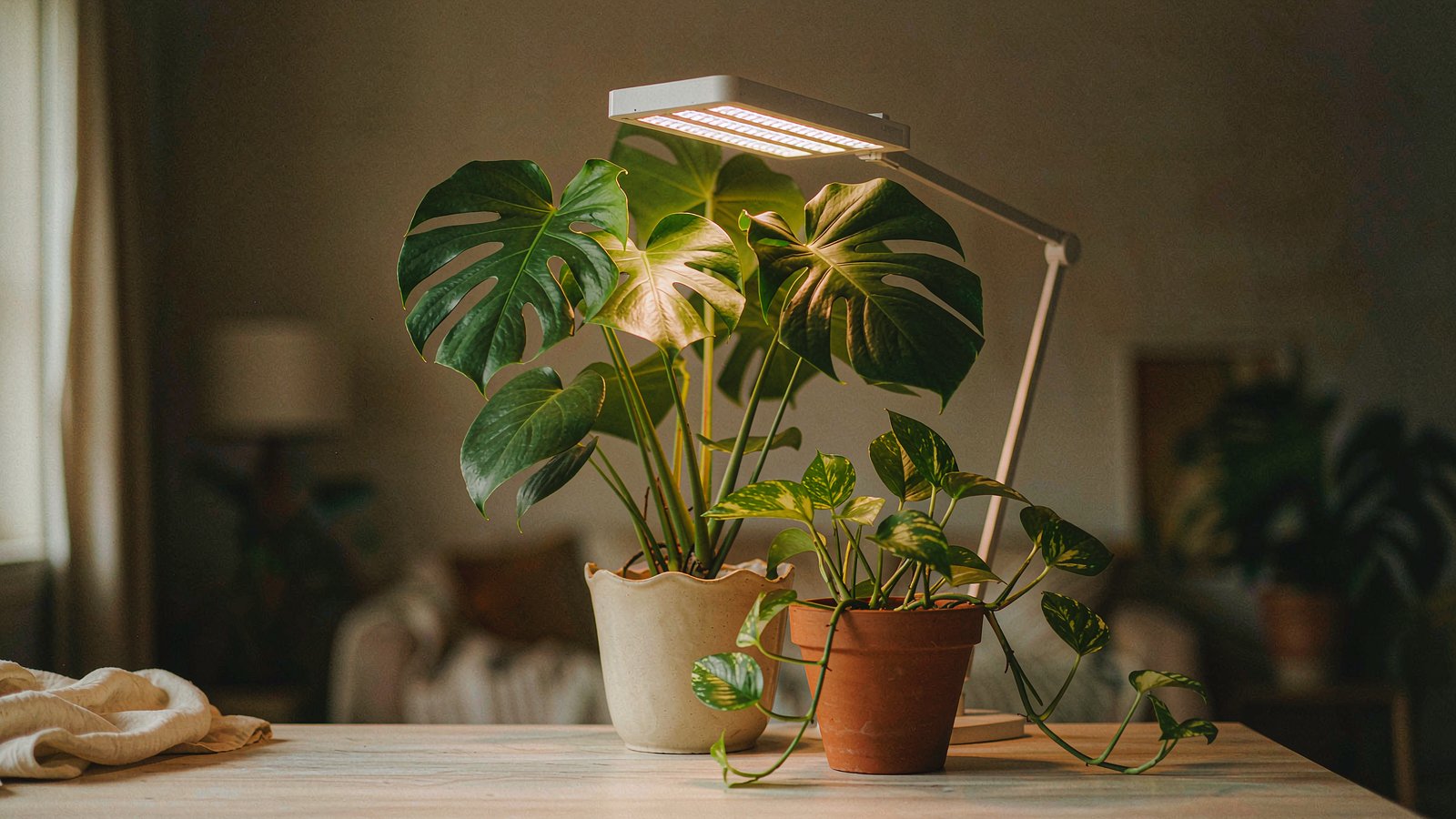
Shopping for the best grow lights for indoor plants usually starts in the wrong place: the wattage printed in the biggest type on the box. Wattage tells you what a light costs to run, not how much light reaches your plant. Two fixtures rated at the same wattage can deliver very different amounts of usable light, and the packaging won’t tell you which is which.
Then there’s the season. Day length falls from roughly 14 hours in June to about 9.5 in December at mid-latitudes, and the winter sun rides low enough that it barely reaches into a room. Even right up against a south-facing window, a plant gets around 1,500 foot-candles, against 10,000 or more outdoors on a clear summer day (University of Illinois Extension). That gap is the thing a grow light fills. Think of it as buying your windowsill a fake summer, not buying your plant a luxury.
First, the 3 numbers that actually matter
Three numbers decide whether a light works in your home. Everything else on the box is decoration.
1. PPFD, or how much light lands on the leaves. PPFD (photosynthetic photon flux density, measured in µmol/m²/s) is the usable light arriving at one spot. Shade-tolerant plants like pothos and snake plant hold steady around 30 to 50 and grow properly from 80 to 150. Medium-light plants (monstera, fiddle leaf fig, calathea) want 150 to 250 for growth you can see. Succulents and cacti want 250 to 500.
2. Coverage, or how much area gets that light. A bulb lights one pot. A bar lights a strip. A panel lights a square. Pick coverage first and intensity second, or you’ll pay for light that lands on the floor.
3. Hours, which means a timer. PPFD multiplied by hours is what the plant actually banks, expressed as DLI in mol/m²/day; foliage houseplants sit around 4 to 8. That cuts both ways: a weaker light running longer can match a stronger one running briefly, and the hours only happen if something turns the light on. A timer isn’t an accessory here.
The number to ignore is watts. Watts measure electricity going in, not photons coming out, and “bigger is better” is the single most expensive mistake in this category.
Three signs your plants need a grow light
Before buying anything, check whether you need one at all.
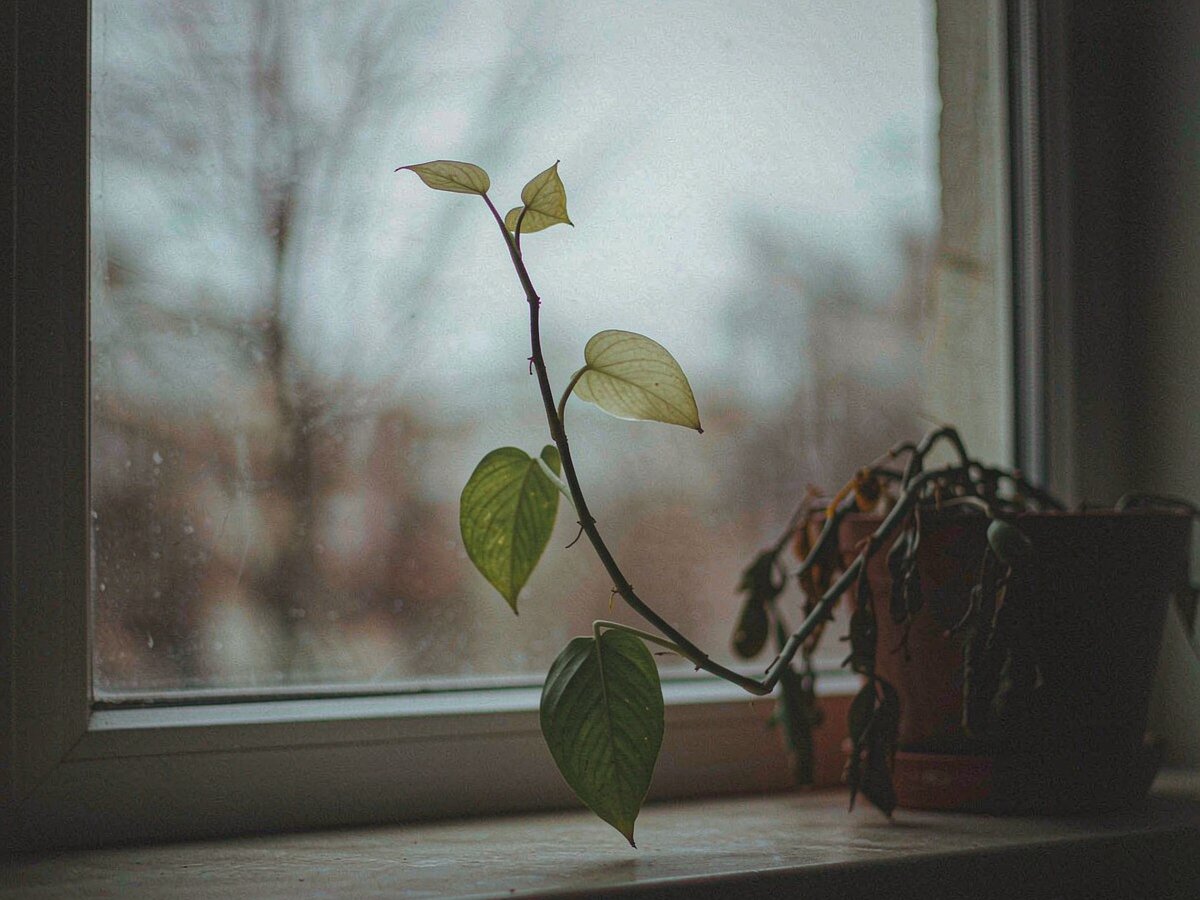
- Stretched internodes. The gap between leaves lengthens and the stem between them thins. Once the spacing runs about 50% longer than that plant’s normal habit, it’s visibly light-starved; at double the normal spacing, it’s etiolated and won’t recover its old shape.
- New leaves arriving smaller, thinner, and paler. New growth reflects the plant’s current energy budget. Under low light it can’t afford thick tissue, so the leaves come in limp and washed out.
- Variegation fading, or the whole plant leaning hard toward the window. A variegated pothos going solid green is manufacturing more chlorophyll to catch what little light there is. A hard lean is the plant trying to close the distance itself.
One more indirect signal: a plant whose soil suddenly stays wet for two weeks is often reporting a light problem rather than a watering one, since low light slows everything the plant does. A basic soil moisture meter helps you confirm that, with one caveat: cheap meters read electrical conductivity rather than water content, and fertilizer salts push the needle toward “wet.” Use one to back up the finger test, never to replace it.
Match the light to your setup
Seven picks, grouped by the setup you actually have. Each is matched to a setup by shape and output class, and each has a real drawback, because every one of these is a compromise.
One or two plants on a desk
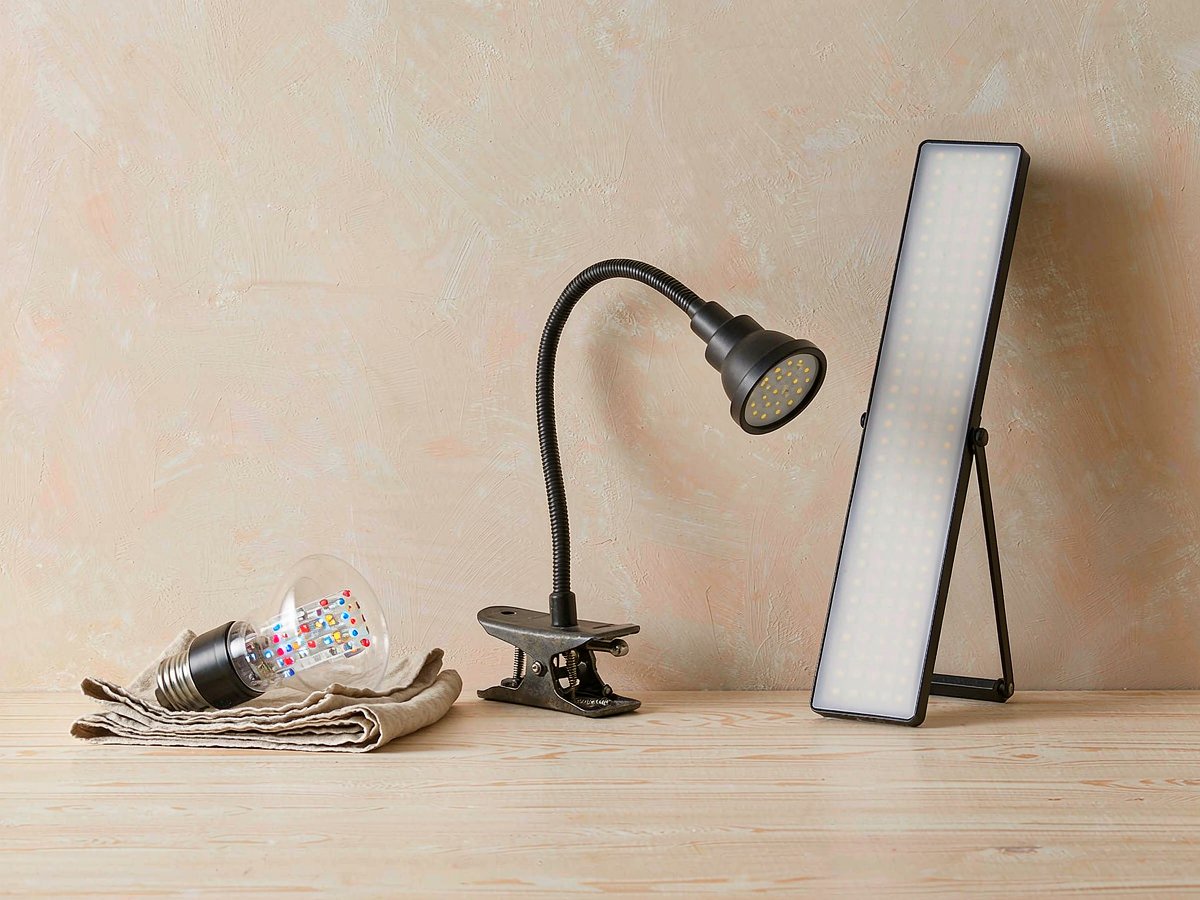
full-spectrum E26 LED grow bulb, 15 to 32 watts. It screws into a lamp you already own. No mounting, no new furniture, no drilling. Look for one that genuinely draws 15 watts or more, since the small decorative 9-watt bulbs don’t have the output to do anything. Drawback: one bulb lights one pot, wherever the socket happens to be, and the base gets warm enough that you shouldn’t wedge it against fabric or paper.
clip-on gooseneck lamp, 10 to 24 watts. This is the pick for a single plant on a bookshelf or the corner of a desk, because the neck lets you aim light at the leaves rather than at the ceiling. Drawback: the clamp needs a lip about 2 inches thick or less, and past roughly 12 inches the beam has spread too far to matter.
A windowsill with three to five pots
linkable T5 or T8 LED bar, 20 to 24 watts per 2-foot bar. The connectors are the whole point. Two or three bars chain into one continuous strip, so an entire sill gets even light instead of one bright hotspot with dark ends. They mount under a shelf or along a window frame with the clips that come in the box. Drawback: bars are built to sit close, around 6 to 12 inches above the leaves, so a tall plant grows past the light unless you keep raising the whole rig.
short under-shelf bar or a 1 to 2-foot flat panel. Flatter and tidier than a tube, and much easier to hide in a room you actually live in. Drawback: the coverage is a narrow strip, so pots parked at either end get noticeably less than the ones in the middle and you end up rotating them weekly.
A shelf with ten or more plants
entry full-spectrum panel, around 100 watts. This is the step up that covers a 2×2 foot area and hangs high enough (12 to 24 inches) that taller plants have room underneath. Drawback: you need that vertical clearance, the driver sits on top of the panel and gives off heat, and hanging it in a rental means solving for a ceiling joist or a freestanding frame.
A mid-size panel, around 70 watts. Cheaper and cooler than a 100-watt panel, and enough output for foliage plants and seedlings across a single shelf. Drawback: less light per watt than newer fixtures, and older units ship without a dimmer. That’s fine for houseplants and limiting the day you start seeds.
The one that crosses setups
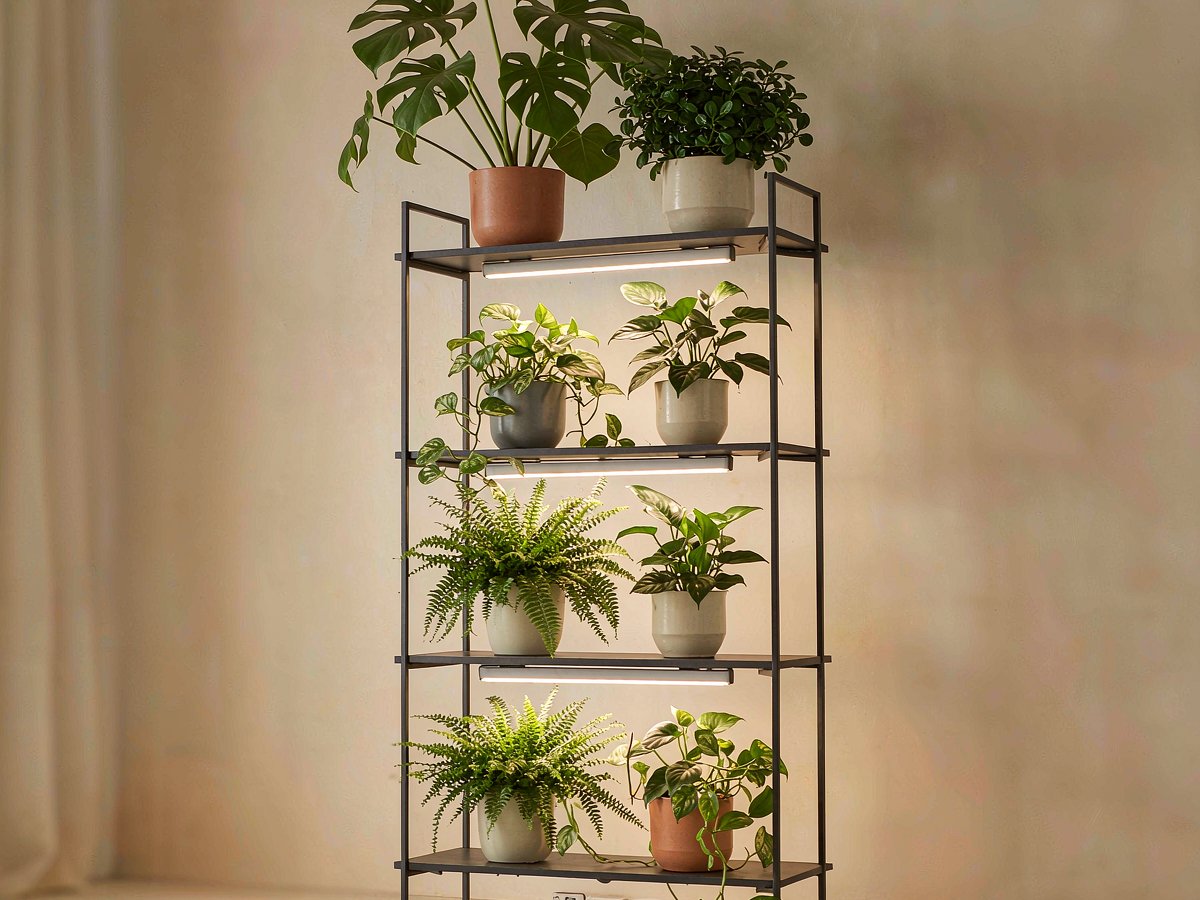
A linkable bar kit, four to six bars with a timer. Bought as a kit, you get the connectors, the hangers, and usually a timer in one box, which covers a windowsill now and a full shelf later. Drawback: it costs more up front than a single bar, and the seam where two bars meet is visibly dimmer than the rest of the run, so plan to put the hungriest plant in the middle.
If your goal is tomatoes rather than houseplants, the numbers change completely, because fruiting plants want several times this much light. The full 60-day cherry tomato setup spells out which of these lights works for fruit.
If you’re buying the shelf at the same time, measure it first. A stand with fixed 12-inch clearance won’t fit a panel that needs to hang 18 inches above the canopy, and a stand without a lip won’t take the clamp on a gooseneck lamp.
Where to put the light
Distance is where most setups quietly fail. Light falls off with the square of the distance, so moving a light twice as far away leaves the plant with roughly a quarter of the light.
- Bulbs and clip-ons: 6 to 12 inches above the leaves.
- Bars: about 6 to 12 inches.
- Panels: 12 to 24 inches.
Start at the far end of the range and move in over a week or two. Bleached patches or crisp brown edges mean back off. A plant that keeps stretching means come closer.
Run the light 8 to 12 hours a day for foliage plants, on a timer. A mechanical outlet timer costs a few dollars and clicks on whether or not you’re home; a digital one lets you set finer intervals and keeps its setting after a power cut. Either way, don’t run past 16 hours. Plants use the dark period, and Illinois Extension caps supplemental light right there.
The 3-number cheat sheet
| Light type | Watt range | Distance from leaves | Hours a day | Best for |
|---|---|---|---|---|
| Full-spectrum E26 bulb | 15–32 W | 6–12 in | 8–12 | One plant on a desk |
| Clip-on gooseneck lamp | 10–24 W | 6–12 in | 8–12 | One plant on a shelf |
| Linkable bar (2 ft) | 20–24 W each | 6–12 in | 8–12 | Windowsill, 3–5 pots |
| Short under-shelf bar | 20–40 W | 6–12 in | 8–12 | Windowsill in a lived-in room |
| Mid-size panel | about 70 W | 12–24 in | 8–12 | One shelf of houseplants |
| Entry panel | about 100 W | 12–24 in | 8–12 | Ten or more plants, 2×2 ft |
| Linkable bar kit | 4–6 bars | 6–12 in | 8–12 | Windowsill now, shelf later |
Prices move around, and most of these go on sale more than once between now and December, so check the current listing rather than trusting a price in an article.
FAQ
How far should a grow light be from houseplants?
Bulbs and clip-ons sit 6 to 12 inches above the leaves, bars about 6 to 12 inches, and panels 12 to 24 inches. Double any of those distances and the plant gets roughly a quarter of the light, so moves of a few inches matter more than they look like they should.
How many hours a day should a grow light be on?
8 to 12 hours for foliage houseplants, and put it on a timer so it happens whether or not you’re home. Don’t push past 16 hours; plants need the dark period.
Do I need a full-spectrum grow light for houseplants?
You need light in the 400 to 700 nm range, and a full-spectrum white LED covers it. It’s also the version you can live with, since the red-and-blue panels make it genuinely hard to spot pests, pale leaves, or nutrient problems early.
Can I use a regular LED bulb instead of a grow light?
For one shade-tolerant plant getting through winter, a bright white LED around 5000K that draws 15 watts or more will hold it. It’s dimmer and less even than a purpose-built grow light. When the plant starts leaning toward the bulb, that’s your signal to upgrade.
The bottom line
Three numbers: the PPFD at the leaves, the area that gets it, and the hours on a timer. Get those three right and the wattage takes care of itself.
Match the light to the shelf you actually own, not the one in the product photo.
Disclosure: Some links in this post are affiliate links. If you buy through them, I may earn a small commission at no extra cost to you. See the full affiliate disclosure.