Water Succulents by Type: Winter Growers Need More
Ask ten people how to water succulents in winter and nine will tell you the same thing: stop watering, they’re dormant. That rule quietly kills a lot of plants, because a big slice of your collection isn’t asleep at all.
Succulent winter dormancy is real, but it doesn’t apply to every plant. Winter growers like Aeonium and Lithops are awake right now, pushing new leaves in the middle of your cold season, and they want water while their summer-growing cousins sit bone dry. Water everything the same and you’ll drown the sleepers and dehydrate the ones that are actually living. This page is the fix: how to tell which growth type you own, how to read the leaves when you’re unsure, and the temperature gate that overrides every schedule.
Your Succulents Are Not All Asleep
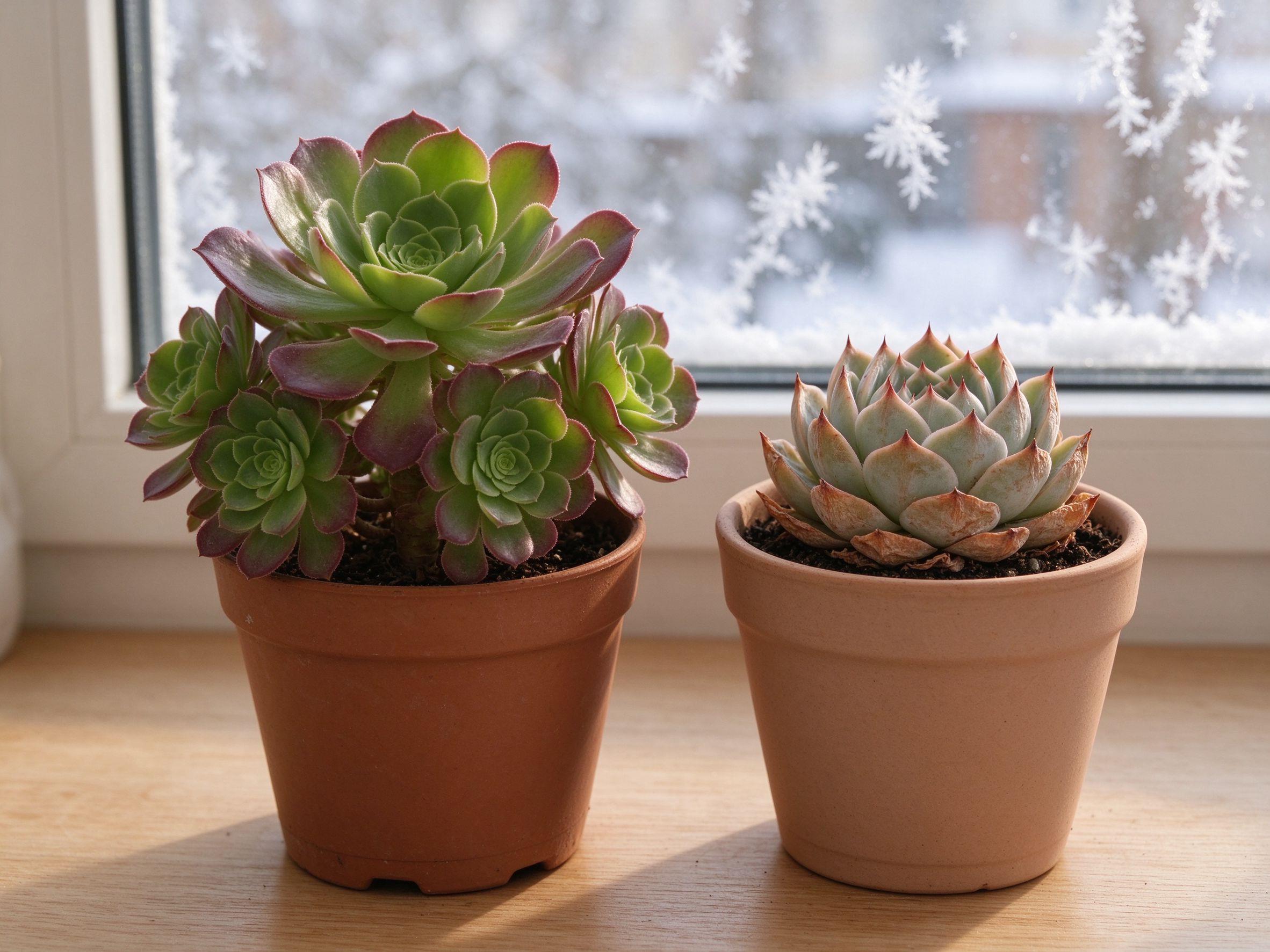
The word “dormant” gets used like a switch, and succulents don’t work that way. Some go into a genuine winter rest. Others do the opposite and grow hardest in the cool, wet half of the year. That’s not a quirk. It’s where they evolved.
A succulent’s growth clock is set by its home climate. Plants from summer-rainfall regions shut down in winter. Plants from winter-rainfall regions, mostly southern Africa and parts of the Mediterranean, wake up exactly when yours are slowing down. So the same room can hold one pot that wants a drink every couple of weeks and another that should go completely dry until spring.
That’s why the first question isn’t “how often do I water my succulents in winter.” It’s “what kind of succulent is this, and is it asleep right now?” The honest answer to do succulents go dormant in winter: some do, some grow harder, and the ones that matter most are the ones nobody warns you about.
Winter Growers vs Summer Growers: Which Are Awake Now
The whole system comes down to one split: when does your plant’s native rainy season fall?
Winter growers come from winter-rainfall climates. They’re dormant through summer heat and wake up as days shorten and temperatures drop. Common winter growers in houseplant collections include Aeonium, most Lithops and Conophytum, some Senecio, and several Haworthia and Aloe.
Summer growers come from summer-rainfall regions. They grow in the warm season and rest through winter, exactly the opposite. This is most of what people keep: Echeveria, jade plants (most Crassula), most cacti, Agave, and the common Sedums.
You don’t need to memorize a species list to use this. You need to know your plant’s native rhythm, because the watering decision depends on which group it’s in. If you’re wondering which succulents grow in winter, the answer lives in that same native-rhythm question: the ones from winter-rainfall climates. The table below covers the genera people actually own.
Look Up Your Succulent: A Growth-Type Chart by Genus
This is the quick reference. Find your plant, read its winter watering column, and adjust by temperature using the gate in the next section. Genus-level groupings have exceptions, so when a plant doesn’t behave like its genus, trust the leaves, not the chart.
| Genus | Growth type | Winter watering | Notes |
|---|---|---|---|
| Aeonium | Winter | Every 2-3 weeks indoors; stop below 50°F | The winter grower people forget; summer is its rest |
| Lithops / Conophytum | Winter | No water during the split | See the no-water window below |
| Senecio (some) | Winter | Every 2-3 weeks | Winter grower |
| Aloe | Winter (half) | Small amounts, keep dry | Adjust with temperature |
| Haworthia / Gasteria | Winter (half) | Small amounts | Tolerate low light |
| Kalanchoe (some) | Winter | Small amounts | Some species bloom in winter |
| Crassula / Jade (some) | Winter (half) | Small amounts | Mixed; check the plant’s condition |
| Sedum (some) | Winter (hardy types) | Very little | Overlaps with cold hardiness |
| Echeveria | Summer | Every 4-6 weeks or less | Deep winter rest |
| Most cacti | Summer | Almost none | Cold plus wet equals rot |
| Agave | Summer | Very little | |
| Sempervivum (Hens & Chicks) | Summer (hardy) | Very little; near zero outdoors | Hardy, but hates cold and wet |
| Spring-autumn types | Spring-autumn | About once a month in winter | Middle group; treat conservatively |
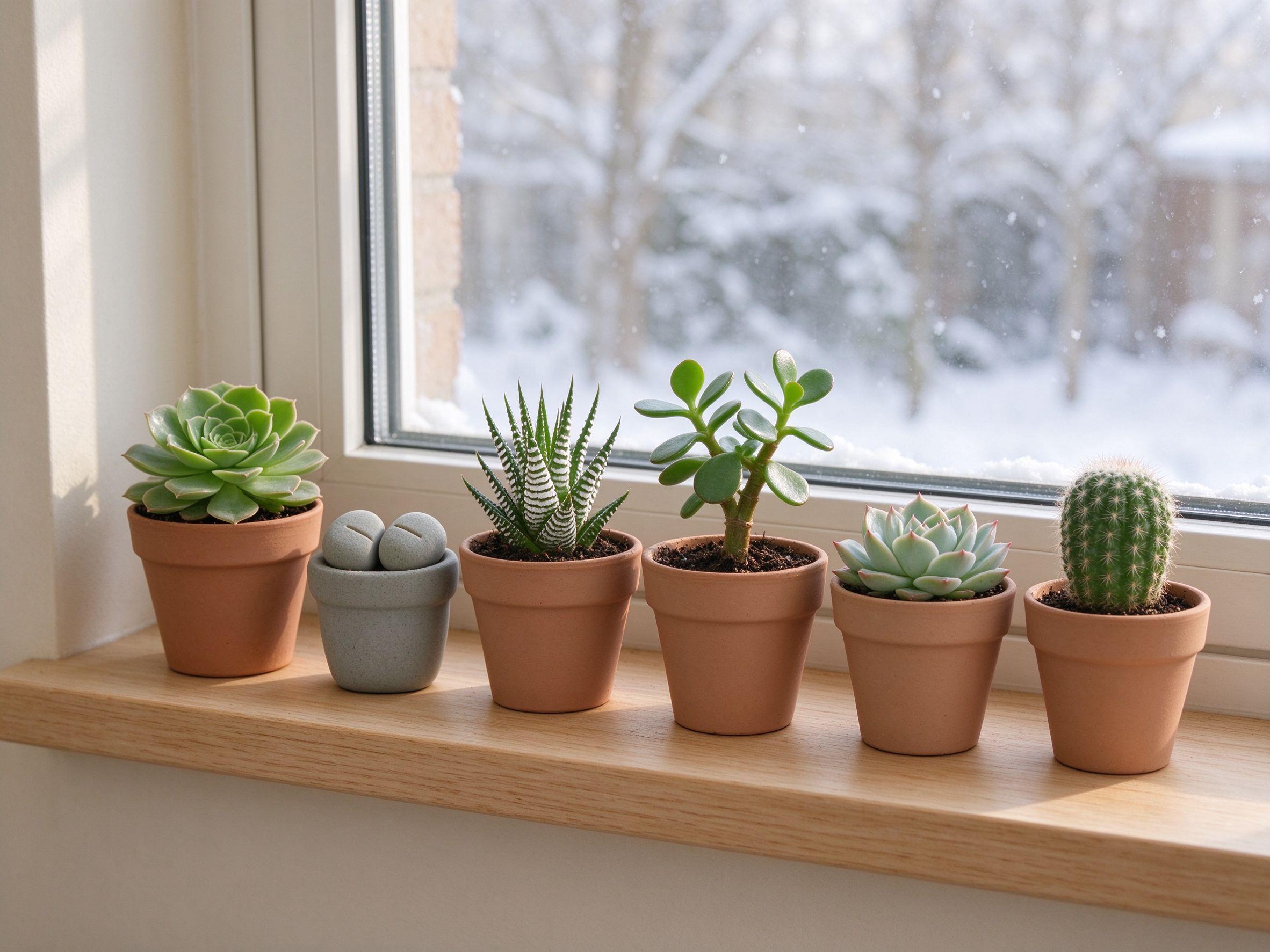
If your plant isn’t on the chart, the fallback is simple: look up whether it’s a winter or summer grower before you water it the first time in November. One search now saves you a rotted plant in February.
Why “Water Less in Winter” Is Wrong for Winter Growers
The standard advice you’ll find everywhere says succulents want almost nothing all winter. For summer growers that’s correct. For winter growers it’s a slow death sentence, and the rule gets repeated so often that people stop thinking about which plants it actually fits.
Here’s the honest version: “water less in winter” is the baseline rule for the summer growers that dominate most collections. We explain that baseline and the transition indoors in our guide to bringing succulents indoors. But a winter grower like Aeonium is actively growing while that rule is being quoted, and leaving it bone dry for months will shrivel it from thirst, not dormancy.
So keep the rule, but know its range. It was written for Echeveria and its cousins. Your Aeonium never read it. This whole approach, succulent winter watering by growth type instead of by blanket rule, is what separates a living collection from a shrinking one.
Dormant, Thirsty, or Rotting? Read the Leaves First
Whenever you’re unsure whether a succulent needs water, the leaves answer before the calendar does. Three conditions, three completely different responses.
Wrinkled and thin, slightly soft to the squeeze: thirsty, not dead. A dormant plant stays firm; a thirsty one loses plumpness. Give it one deep drink and most winter growers re-plump within a few days. If the soil is bone dry and the leaves are shriveling, water it. Don’t wait for a schedule.
Soft, translucent, or dark and mushy, especially near the base: rot, not thirst. This is overwatering, and the fix is the opposite of what the plant seems to ask for. Stop watering. Slide it out of the pot, cut away the brown mushy roots with clean scissors, let the cuts callus, and repot in fresh dry mix. A soft translucent succulent doesn’t need more water; it needs less, and sometimes surgery.
Firm and plump, even if growth has stalled: healthy and resting. This is the dormant state people worry about. A firm plant with turgid leaves doesn’t need watering, no matter how long it’s been. Cambridge’s botanic garden guidance puts it exactly that way: if the leaves are plump and turgid, the plant doesn’t need water. Leave it alone.
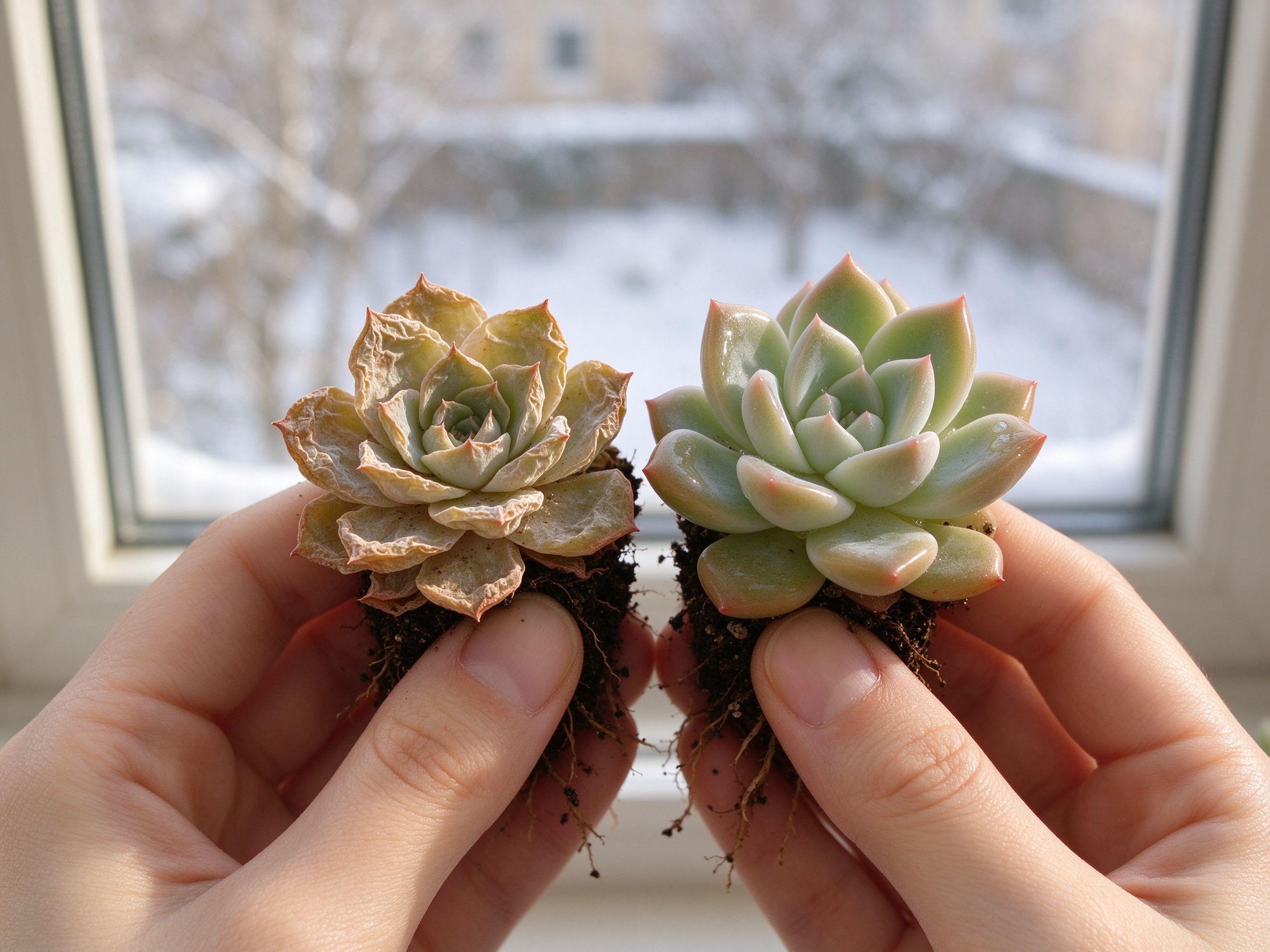
The cheap trick that resolves most confusion: squeeze a leaf. Plump and firm means wait. Wrinkled and soft means drink. Translucent and squishy means emergency.
Water by Temperature, Not by the Calendar
Here’s the gate that overrides every schedule, including the chart above. Succulents don’t read months; they read temperature and light.
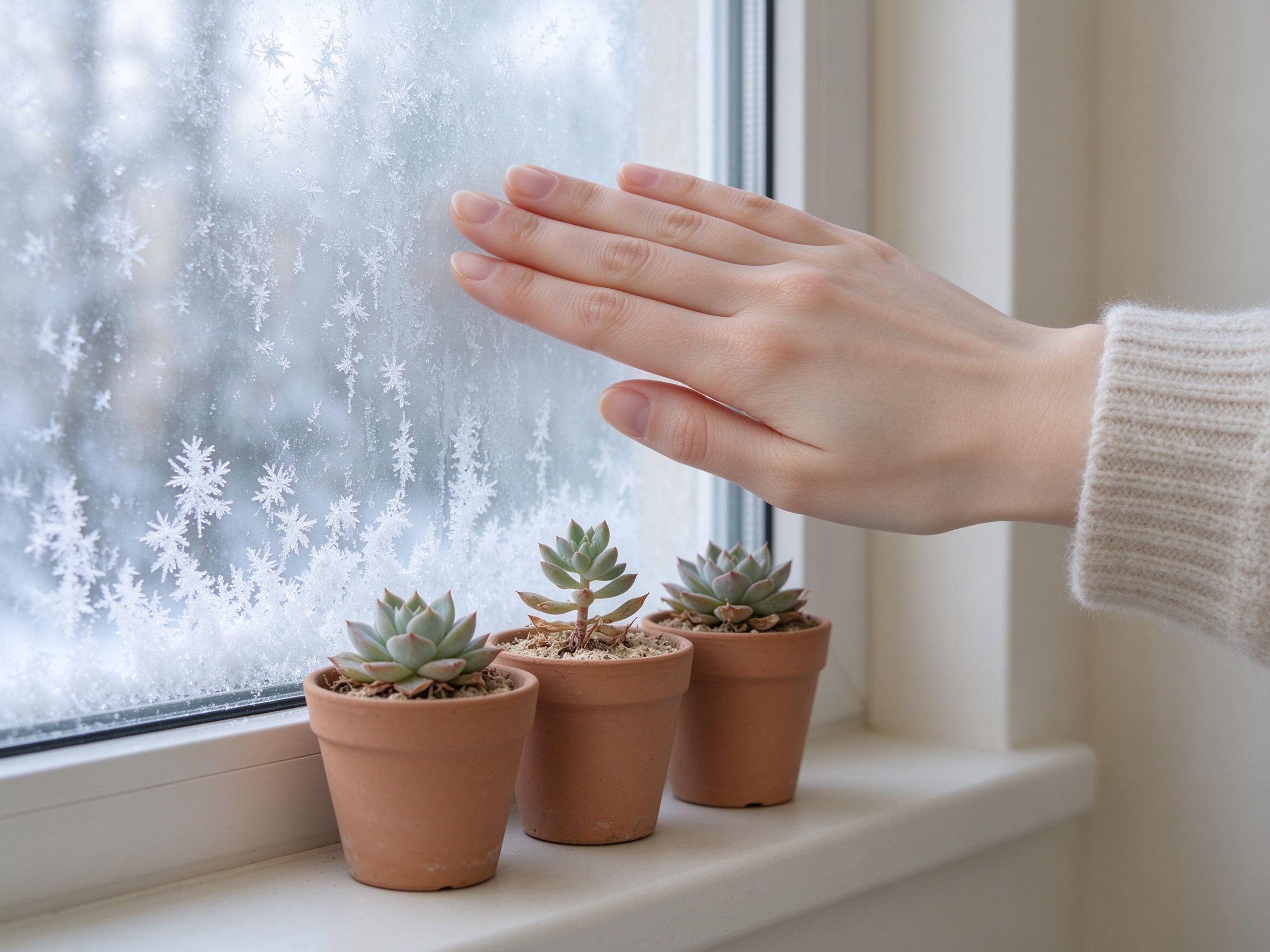
Below 50°F (10°C), stop watering. At that point most succulents shut down water uptake regardless of growth type, and wet roots in cold soil are the fastest route to rot. If your winter growers are in a cool room that dips below 50°F at night, they stop too.
During a sustained cold, dark stretch, stop entirely. A week of overcast cold weather slows every plant to a crawl. Water sits in the pot, the roots can’t use it, and rot starts. When conditions are cold and dim, no watering happens, full stop. When conditions warm up and brighten again, watering resumes.
Watch the plant’s own signals over the forecast. A winter grower in a warm, bright room may drink on a normal winter rhythm. The same plant in a cold hallway wants nothing. The temperature gate exists because “winter” isn’t one condition, it’s a range, and your room decides where your plant sits in it.
This is also where the room matters more than the month. If your succulents spent summer outdoors and only moved inside recently, the watering clock starts over from the moment they crossed the threshold, and the timing of that move sets everything else. We cover that handoff in our guide to bringing plants inside. The transition is a different problem from the one this page solves.
If you can’t tell whether the soil deep in the pot is dry, check it the same way you would any other houseplant: feel the weight of the pot, or push a clean finger in at the edge. The temperature gate decides the timing; the soil check decides the pour.
Lithops and the Mesembs: The Winter No-Water Window
Lithops and Conophytum, the living stones and their mesemb cousins, break every rule in this article, and they’re worth their own section because they’re the most commonly overwatered succulents on earth.
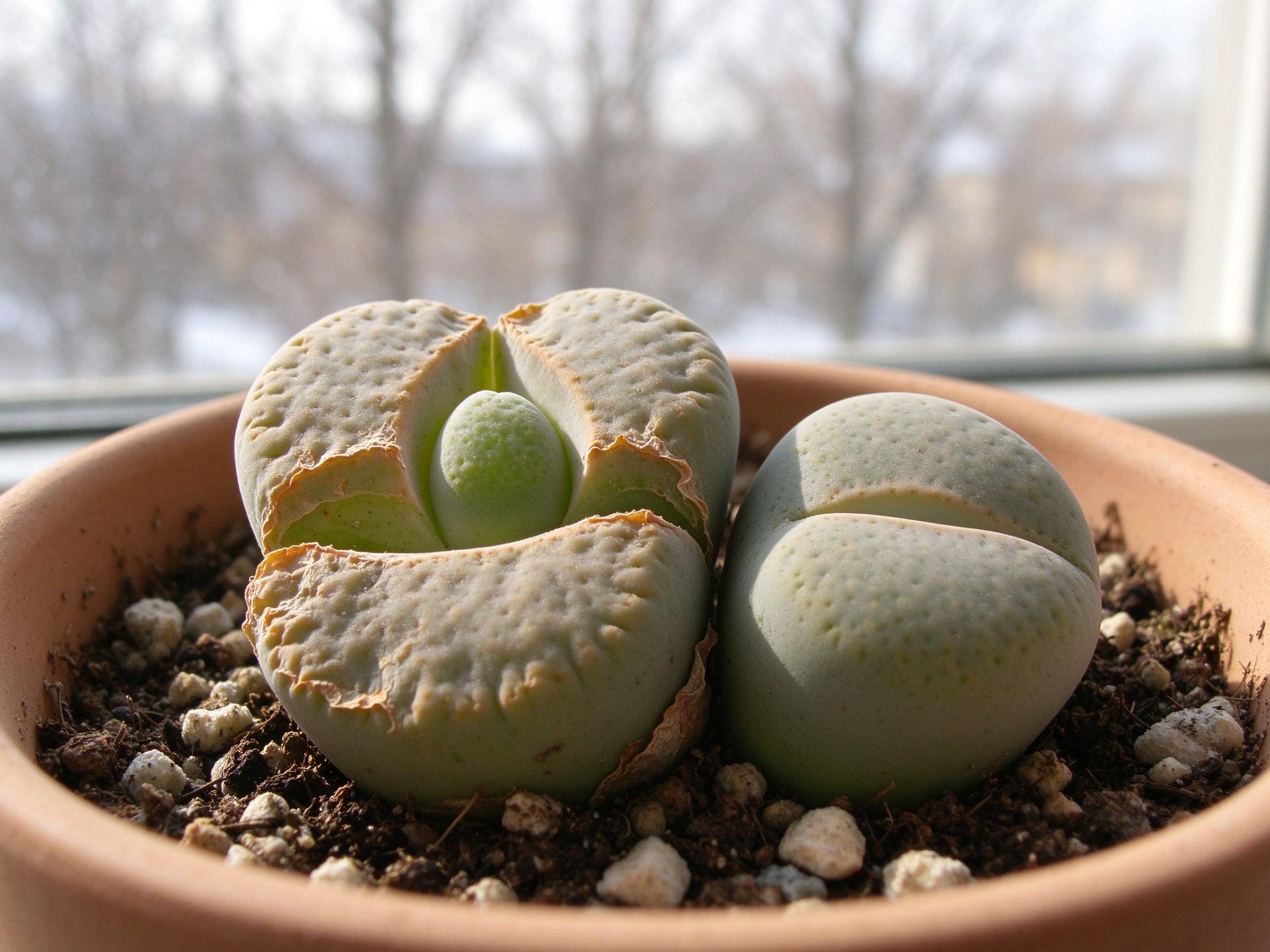
In winter, a Lithops splits: a new leaf pair forms inside the old ones and slowly absorbs them. During that split, watering does two bad things at once. It interrupts the transfer, and it gives rot a wet entry into a plant that’s busy with an open seam.
So the rule for Lithops and Conophytum in winter is absolute: no water during the split. Not a little. None. Wait until the old leaves dry to papery husks in spring, then water again. The plant looks like it’s dying while it does this. It’s not. It’s molting.
FAQ
Do all succulents need less water in winter?
No. Winter growers (Aeonium, Lithops, Senecio) are actively growing and need water every two to three weeks indoors. Summer growers (Echeveria, most cacti, Agave) are deeply dormant and should get very little, sometimes none until spring.
How often should I water succulents in winter?
It depends on growth type and temperature, not the calendar. Winter growers: about every 2 to 3 weeks indoors. Summer growers: every 4 to 6 weeks or less. Below 50°F, stop entirely.
How do I know if my succulent is dormant or dying?
Dormant plants stay firm and structurally sound; growth just slows. Dying plants go soft, translucent, or develop dark mushy spots. Wrinkled, thin leaves mean thirsty, not dead, and usually re-plump within a few days of one deep watering.
Should I water Lithops in winter?
No. When Lithops are splitting (a new leaf pair absorbing the old ones), watering disrupts the process and can rot the plant. Wait until the old leaves dry to papery husks in spring.
The Winter Watering Cheat Sheet
The whole system, on one card.
Winter growers (Aeonium, Lithops, Conophytum, some Senecio, Haworthia, Aloe):
- Awake and growing now. Water every 2-3 weeks indoors.
- Stop below 50°F and during cold, dark stretches.
- Lithops and Conophytum: no water during the split, ever.
Summer growers (Echeveria, most cacti, Agave, jade, most Sedum):
- Deeply dormant. Water every 4-6 weeks or less, often nothing until spring.
- Never water cold, wet roots. Cold plus wet equals rot.
Everyone:
- Read the leaves first. Firm and plump means wait; wrinkled means drink; soft and translucent means emergency.
- Water by temperature, not by the calendar. Below 50°F, stop.
- When in doubt, don’t water. A dry succulent waits; a wet one rots.
That’s the whole system: know your growth type, read your leaves, respect the temperature gate, and let Lithops split in peace. Your winter growers will thank you with new growth, and your summer growers will still be there in spring, exactly as firm as you left them.
If your succulents are dealing with weak winter light and stretching toward the window, our succulent grow light guide covers the fix. And for the broader fall routine around bringing plants inside, watering included, our fall houseplant care checklist walks through the whole season.
This one is knowledge, not a shopping list. If you want to know how we put these posts together, the process is on our methodology page.
Sources
The winter/summer growing-group framework and the “plump and turgid means don’t water” rule come straight from Cambridge University Botanic Garden’s glasshouse team; the winter rest period and the Lithops split watering guidance follow standard cultivation advice from the RHS and Gardener’s Path:
- Cambridge University Botanic Garden, “Caring for cacti and succulents over winter”: https://www.botanic.cam.ac.uk/caring-for-cacti-and-succulents-over-winter/
- Royal Horticultural Society, “How to grow houseplant cacti and succulents”: https://www.rhs.org.uk/plants/types/cacti-succulents/houseplants/growing-guide
- Gardener’s Path, “How to Grow and Care for Lithops Living Stone Plants”: https://gardenerspath.com/plants/succulents/grow-lithops/