Fall Houseplant Care: 7 Things to Stop Doing Before November
Fall Houseplant Care: 7 Things to Stop Doing Before November
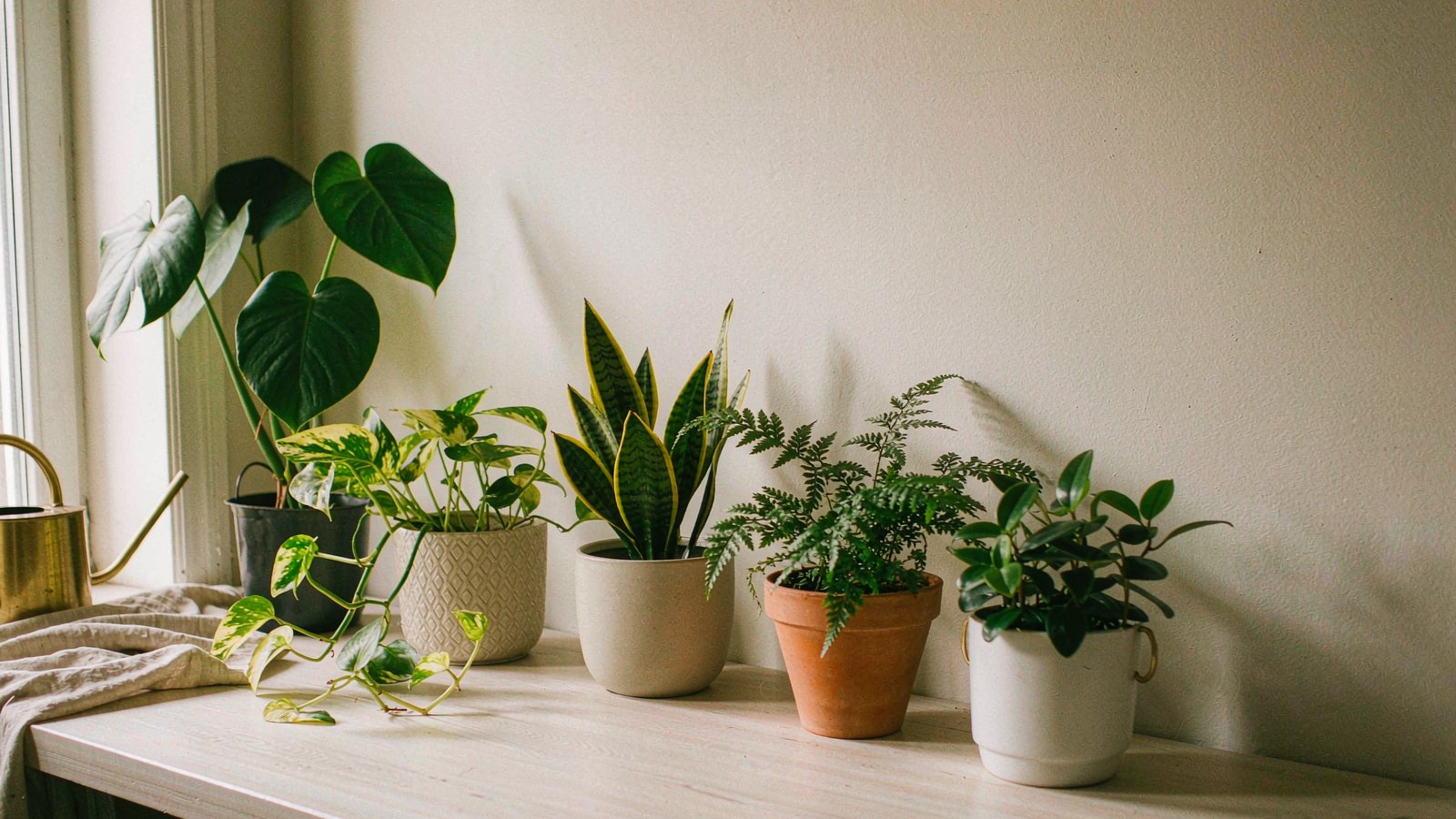
Fall houseplant care is mostly subtraction. Light fades, growth slows, and the routine that kept your plants alive in July starts working against them by mid-October.
That’s the shape of a fall houseplant care checklist worth keeping: water less, feed nothing, chase the light, get ahead of dry air before the furnace does, and inspect every plant on its way inside. Seven changes, all of them done before November.
Most houseplants that die between October and March don’t die of neglect. They drown, burn at the roots, or get eaten by pests that hitched a ride indoors. Here’s what to stop doing, in the order it matters most.
Why fall changes your houseplant routine
Three things shift indoors at once. Light goes first: days get shorter, the sun sits lower, and the light coming through a window loses intensity faster than it loses hours. A plant that was happy in a June window can be sitting in shade by Thanksgiving.
Then the heat comes on and the air dries out. Most houseplants come from places that hold 40 to 60 percent humidity, and a heated house in January sits well below that, so moisture leaves the leaves faster than roots replace it.
Growth slows last, and that’s the part people miss. A slower plant drinks less, uses less fertilizer, and recovers from mistakes more slowly. Care that had slack in summer has none in fall, and all three problems have the same answer: do less, and check before you act.
Stop watering on your summer schedule
Overwatering kills more houseplants than cold, pests, and neglect combined, and fall is when the odds turn against you. Soil that dried out in four days in July can take ten to fourteen days in November.
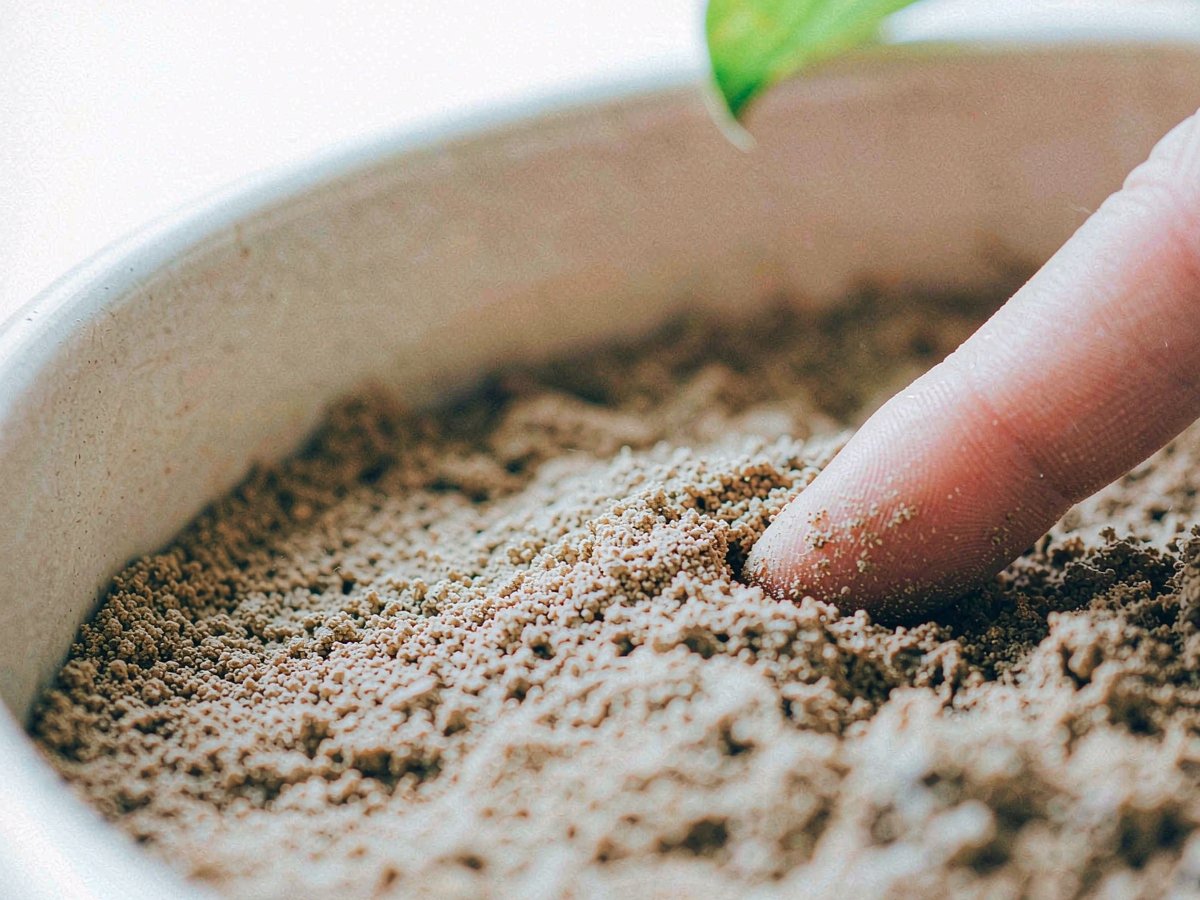
Drop the calendar. Push a finger two inches into the soil, past the second knuckle. Damp or cool at that depth means wait. Dry all the way down means water slowly until it runs out of the drainage hole, then empty the saucer.
Lifting the pot is faster. Heft it right after a thorough watering, then again a week later. The difference is bigger than you expect, and after a month your hand answers before your finger does.
Here’s roughly how the rhythm shifts for common indoor plants, assuming average room temperatures and a spot near a window:
| Plant | Summer | Once the heat is on |
|---|---|---|
| Croton, calathea, ferns | every 3 to 4 days | about once a week |
| Pothos, philodendron, schefflera | about once a week | every 10 to 14 days |
| Snake plant, ZZ plant, Chinese evergreen | about every 2 weeks | every 2 to 3 weeks |
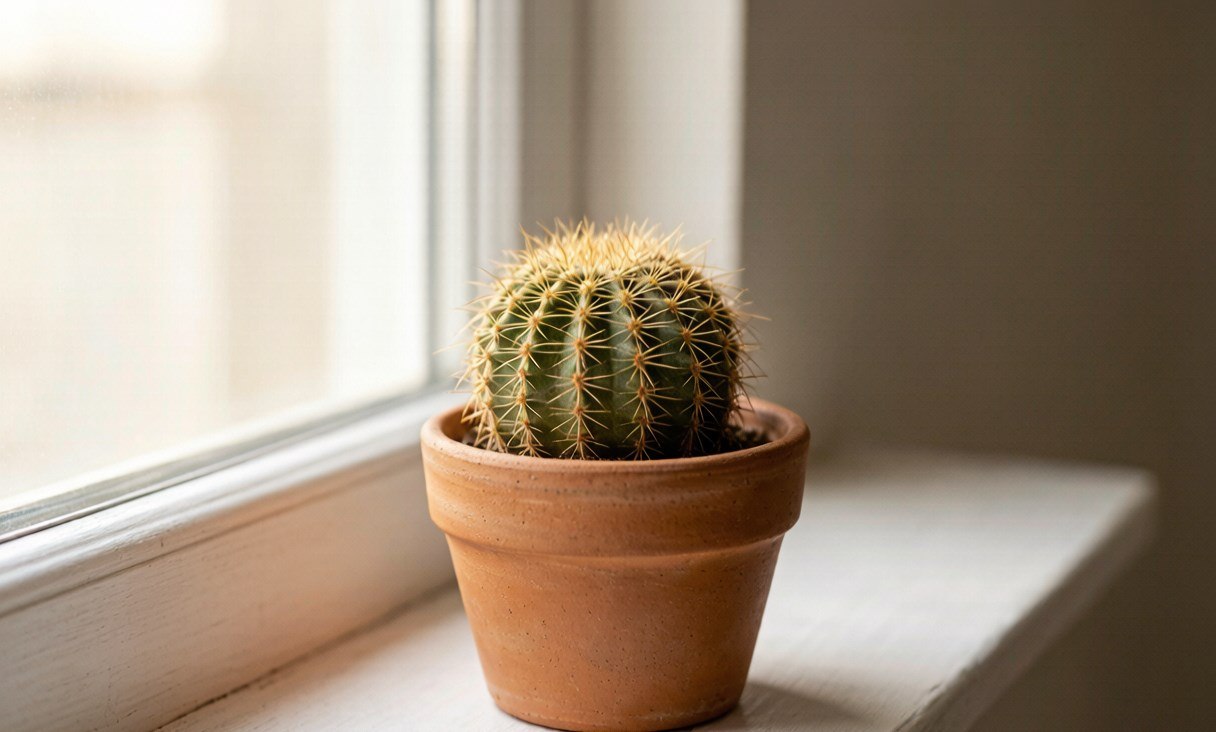
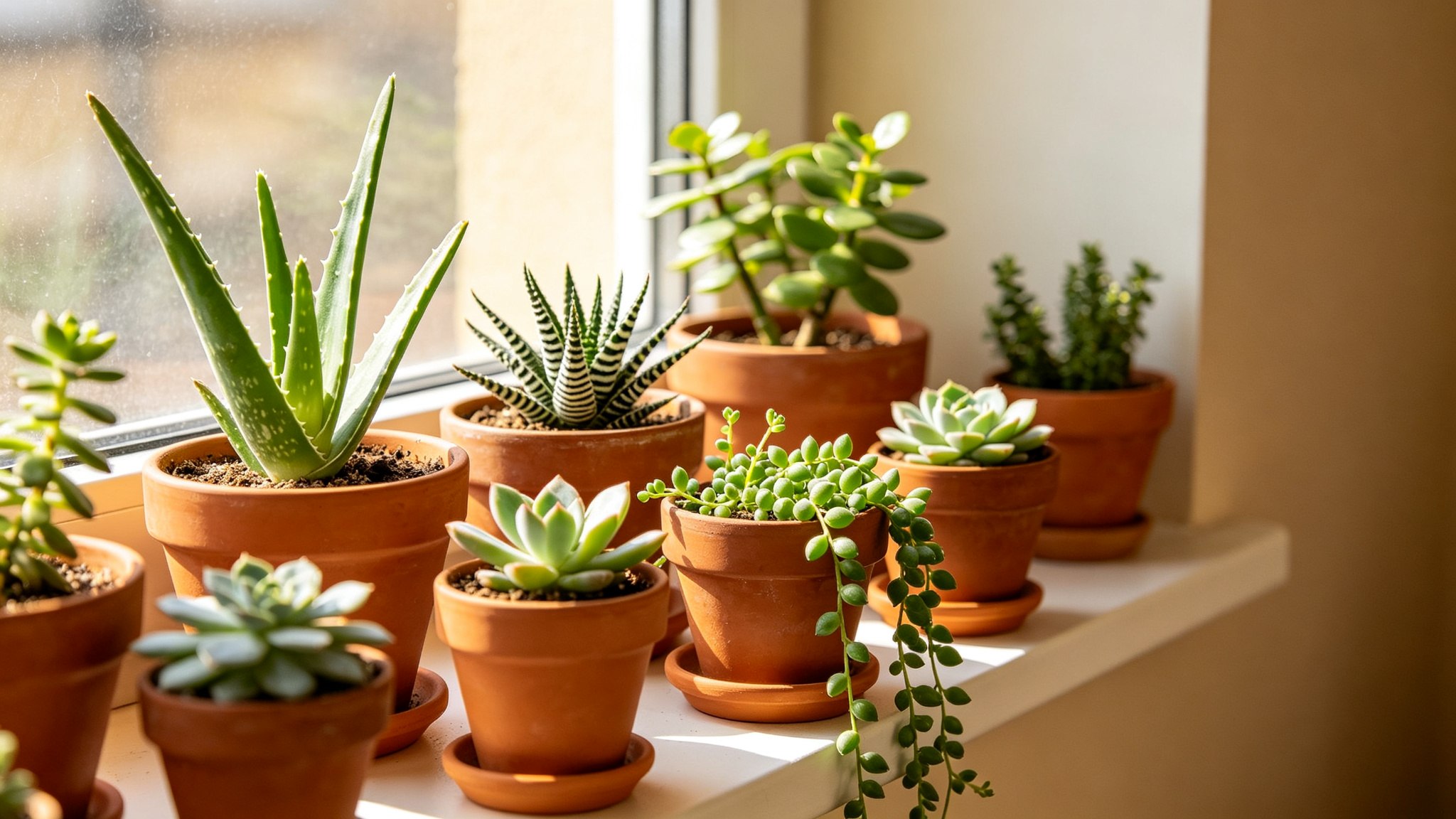
| Succulents and cacti | every 10 to 14 days | about once a month, or when leaves start to soften |
Treat that as a starting point, not a plan. The finger and the pot outrank any table, including this one.
A moisture meter earns its place for the big pots you can’t reach into, and it helps to know what you’re buying: a cheap one reads electrical conductivity, not water. Fertilizer salts push the needle toward “wet,” so it can talk you out of watering a plant that’s genuinely dry. Use it to confirm the finger test, not to replace it.
Use room-temperature water, since cold tap water shocks roots; a jug left out overnight fixes that for free. Then watch the other signals: yellowing lower leaves, soil that stays dark for a week, and the first fungus gnat on a sticky trap all mean the same thing. You’re watering too often.
Stop fertilizing by late fall
When to stop fertilizing houseplants has one clean answer for nearly everything on your shelf: taper through September and stop by mid-October. Growers in warm rooms sometimes stretch it to the end of October if a plant is still pushing new leaves, but that’s the outer edge.
Fertilizer feeds growth, and there isn’t much growth left to feed. Extra nutrients don’t wait in the pot for spring; they build up as salts, and salts burn root tips. A plant that looks stalled in December often has a salt problem, not a food problem.
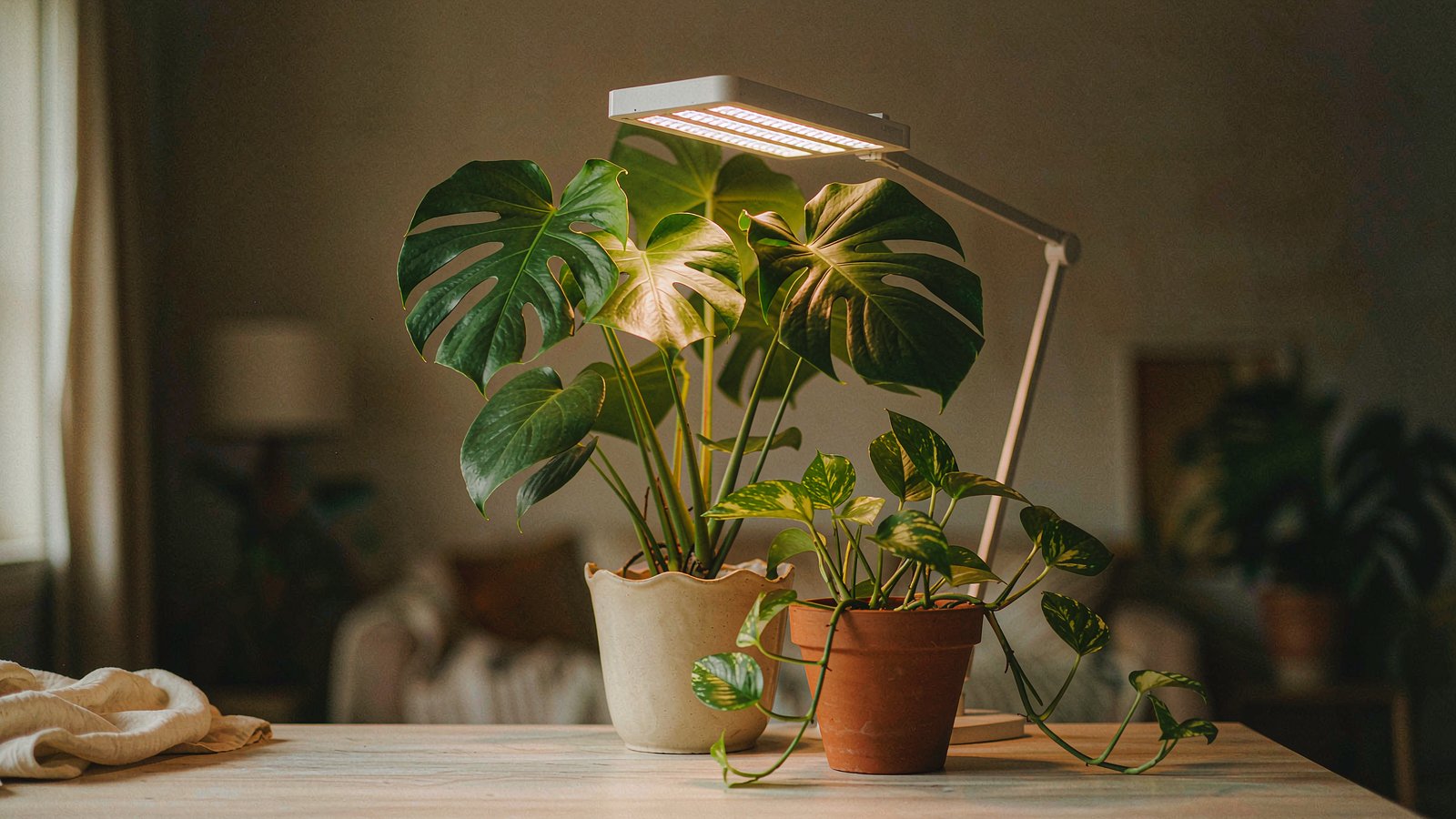
Two exceptions. Winter bloomers such as Christmas cactus, poinsettia, African violets, and most orchids do real work in the dark months, so they get a dilute feed at a quarter to half strength while they’re in bud. Anything under a grow light running twelve or more hours a day stays active enough for a light feed every six to eight weeks (how far to hang that light is covered in our grow lights for indoor plants guide).
Slow-release granules are the riskier fall choice, because their release rate tracks soil temperature, not the calendar. A warm living room in December keeps feeding a plant that stopped growing in October, and there’s no dial to turn down. A liquid feed diluted to half strength does the same job with a dial on it.
One more thing before the bottle goes away: flush the pots. Run water through until it drains freely and you’ll wash out the salt that a summer of feeding left behind.
Move plants to their brightest windows
Summer told you where the light was. That map goes stale around the equinox.
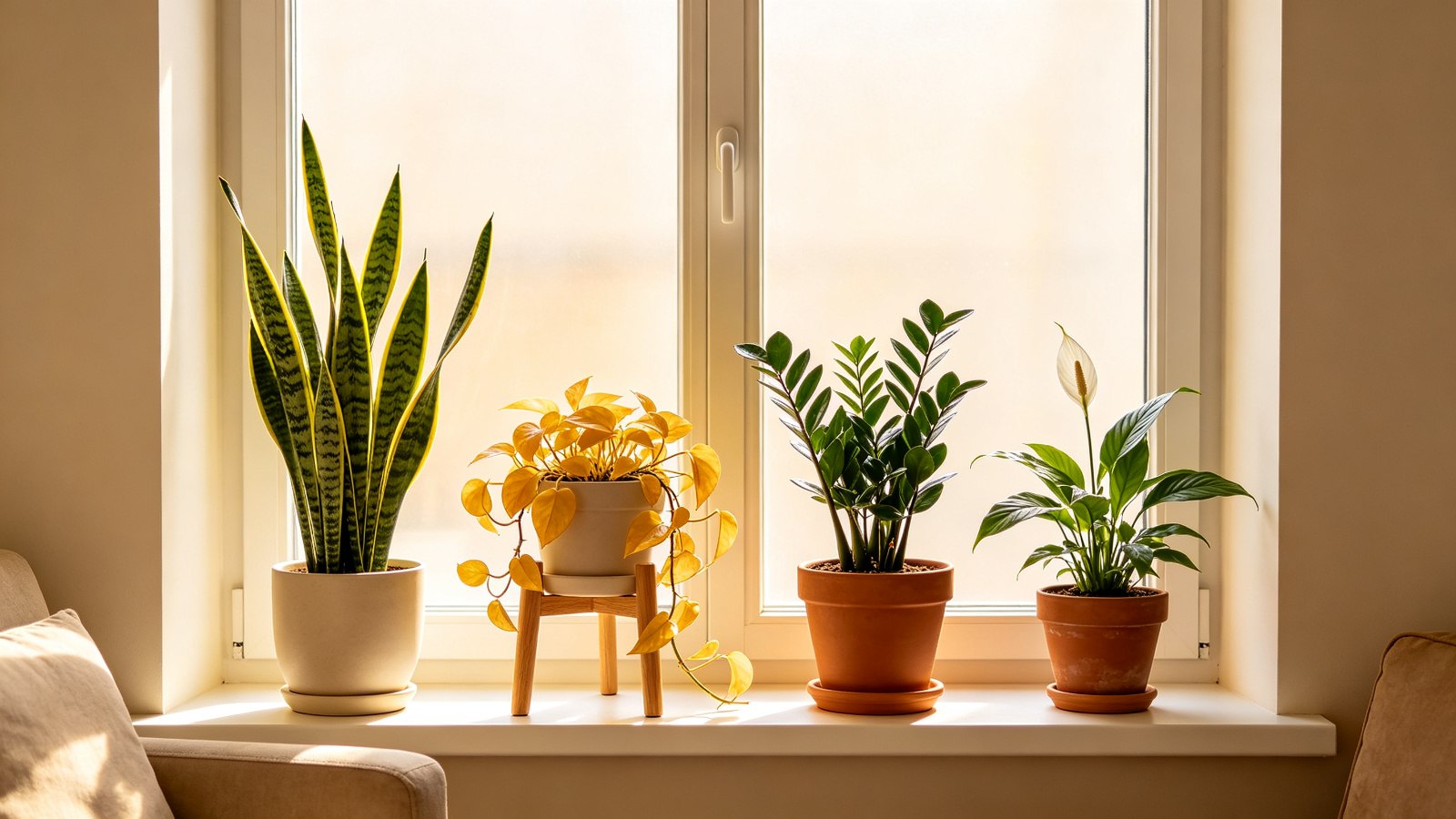
Recheck each spot with the back of your hand. If you can’t feel the sun’s warmth on a bright afternoon, the plant is living on borrowed light. South and west windows win from fall through spring, east is next, north is last. The plants that limped through summer in the shade are usually the ones that need to move.
Give each pot a quarter turn once a week. Plants lean toward light, and a weekly turn keeps a tall one from growing into a permanent tilt.
Then clean the glass and clean the leaves. Dust on a leaf blocks light from reaching the leaf surface, and a film on the window does the same thing an inch earlier. Five minutes with a damp cloth buys more light than any lamp you could order today.
A closed curtain traps cold air between the glass and the fabric, so once the outdoor temperature drops below freezing, pull plants back off the sill at night.
Raise humidity before the heat comes on
Most people get here in January, when the tips are already brown. Go in October instead.
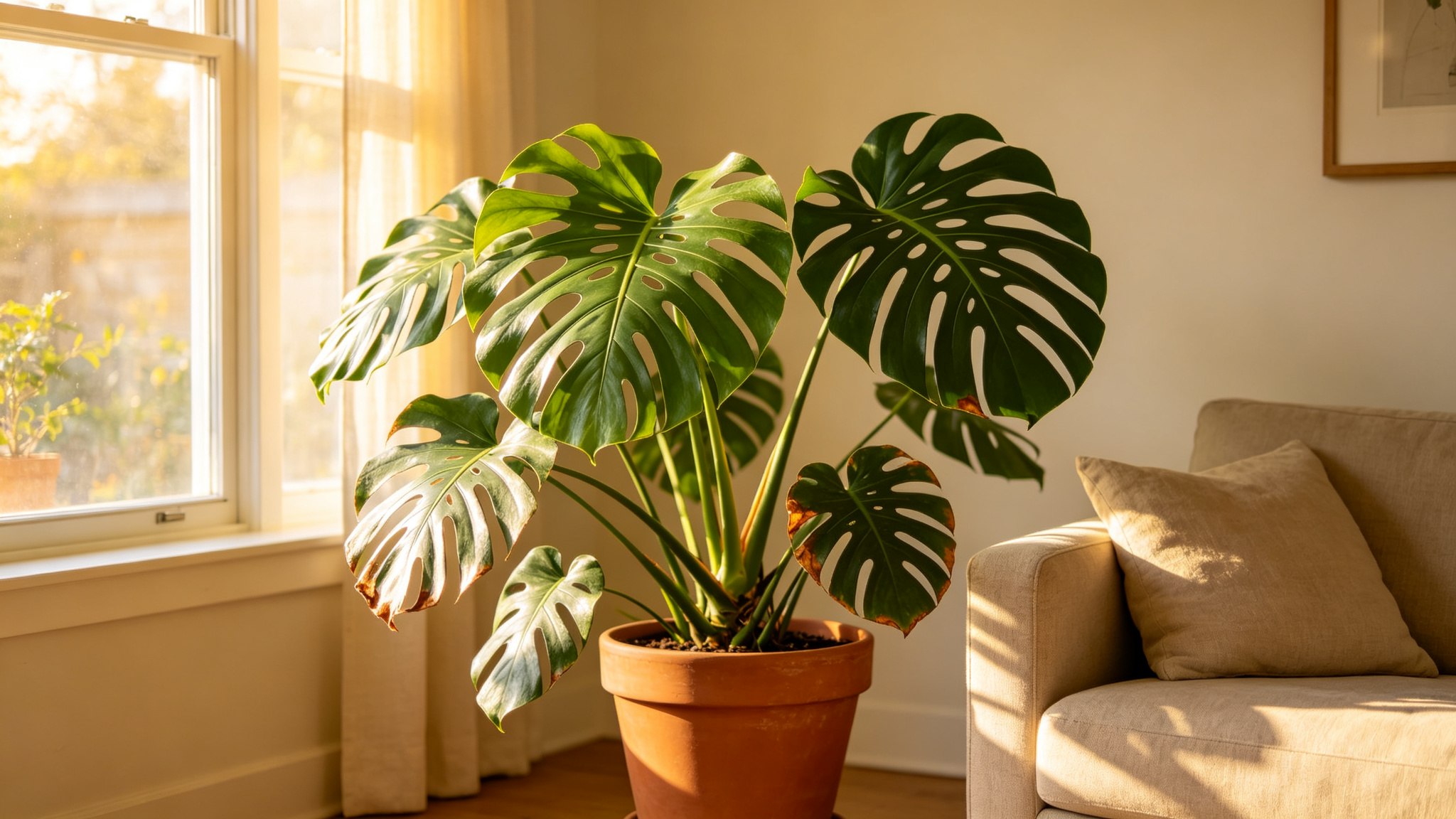
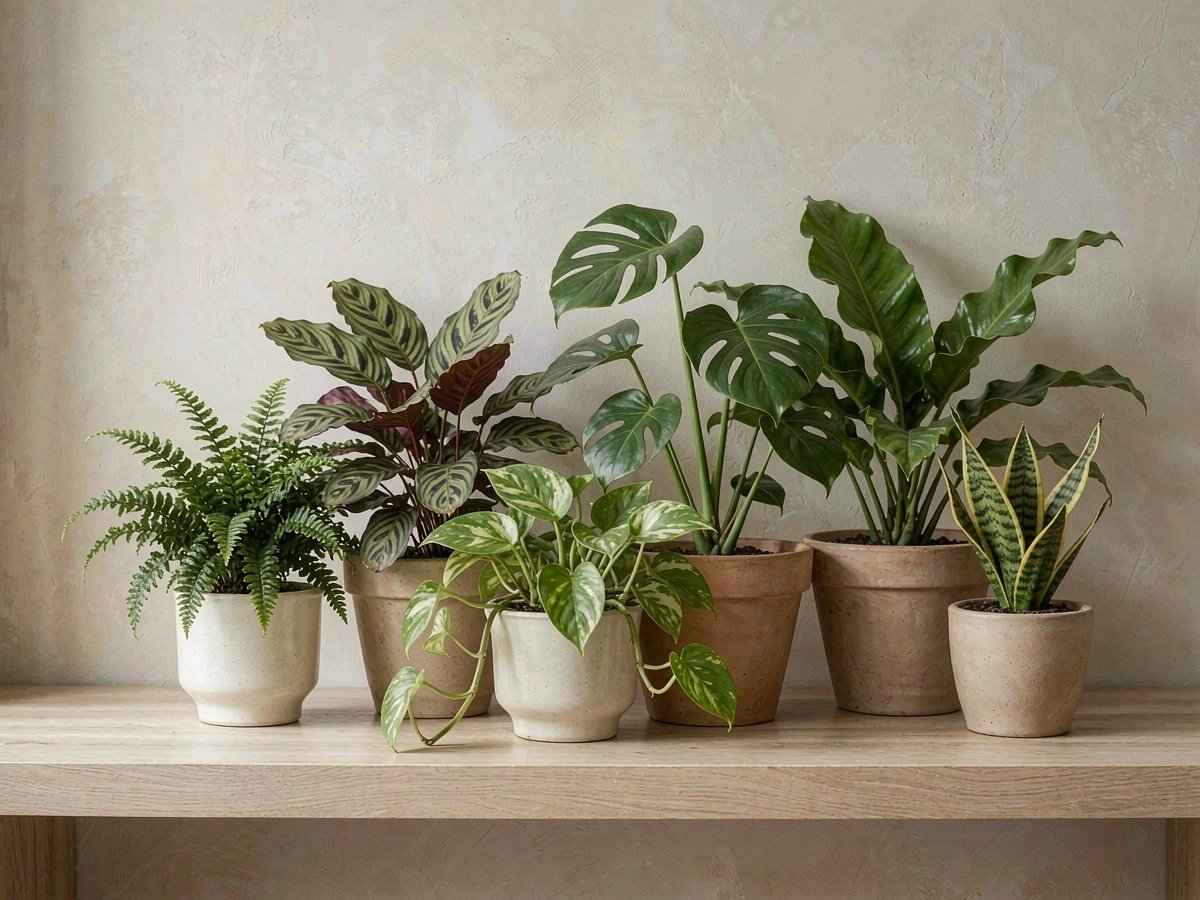
Most houseplants want 40 to 60 percent relative humidity. Heated air routinely falls below that, and the thin-leaved plants complain first: calathea, ferns, peace lilies, spider plants. Crisp brown edges come next, then curling leaves and a growth stall that looks like disease and isn’t. Those same brown edges are what nearly killed my monstera one September, and the full fall rescue story walks through the fixes that brought it back.
Grouping plants is free and it works. Leaves release moisture, and a cluster builds a pocket of humid air around itself. The effect is biggest with several plants in a small room with low airflow, which is usually where they end up anyway. Keep the group clear of vents and radiators, since those dry the air exactly where the leaves are.
A pebble tray adds a little. Fill a tray two to three inches deep with pebbles, add water to just below the top of the stones, and set the pots on top so their bases stay above the waterline. A pot sitting in water is a rot problem, not a humidity fix.
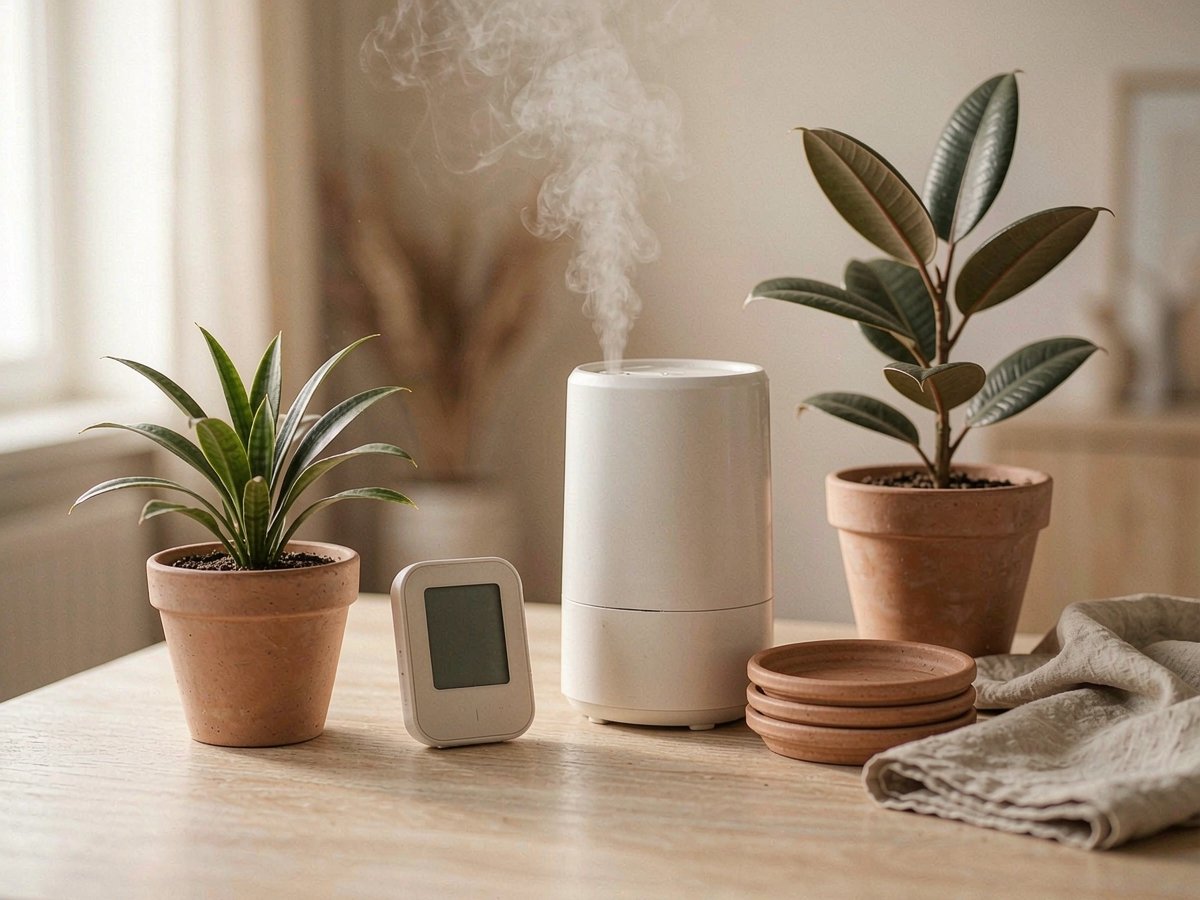
For a real number, run a small humidifier close to the plants rather than across the room, for several hours a day. Put an inexpensive digital hygrometer at canopy height so you’re measuring instead of guessing. Two honest drawbacks before you buy: the tank needs refilling most days, and tap water leaves a fine white mineral dust on leaves and furniture, so plan on distilled or filtered water. In a small sealed room it can also push humidity high enough to invite mold, which is the other reason the hygrometer matters as much as the machine.
Check for pests before they move in
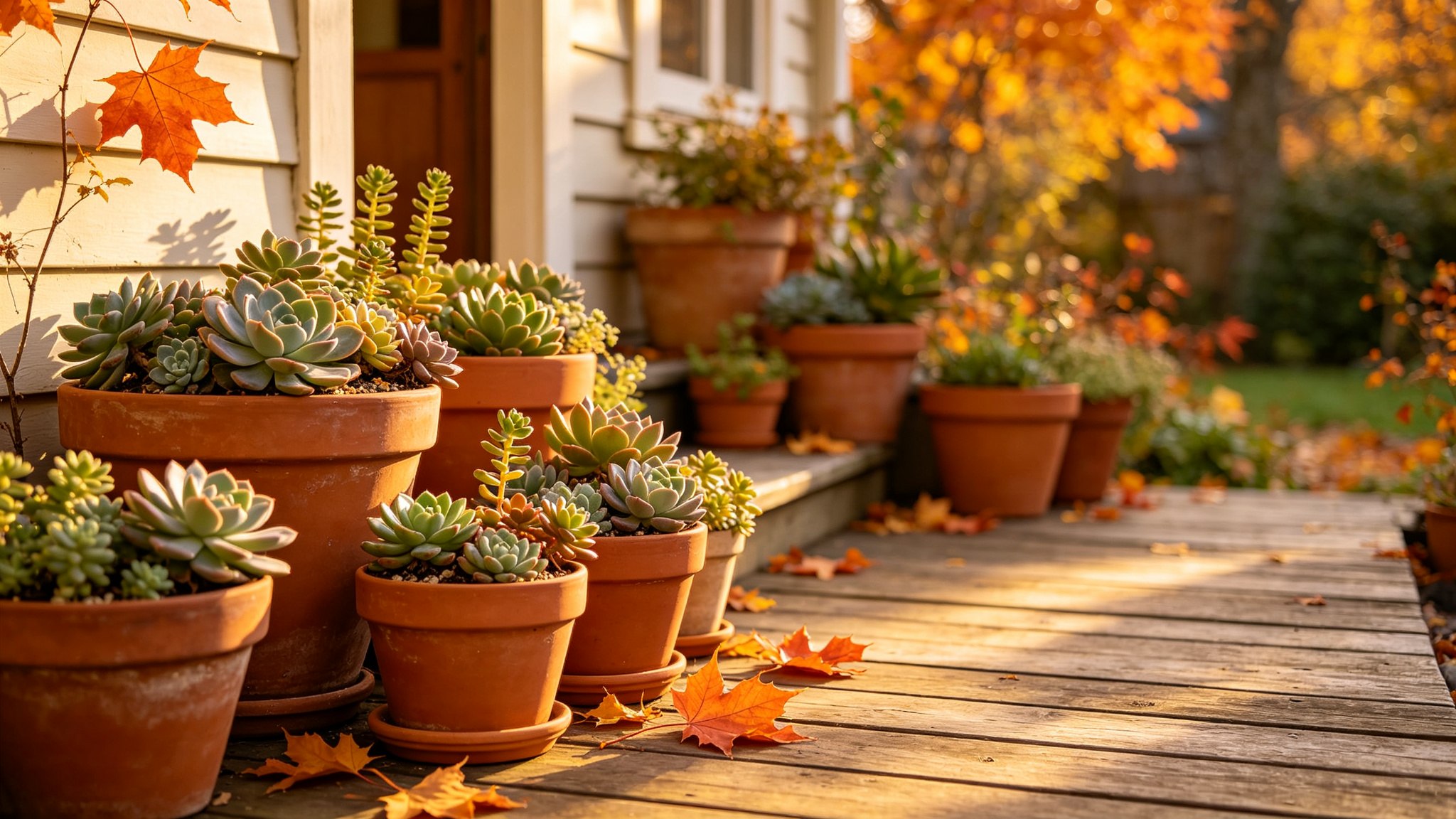
If a plant spent the summer outside, its deadline is a temperature, not a date. Bring it in when nighttime lows settle in the low 50s. Many houseplants show damage in the mid-40s and nearly all die below freezing. Succulents and cacti get a little more leeway, down to roughly 45 to 50 degrees, and the full version of that move lives here.
What rides along is the reason to hurry. Mealybugs tuck into leaf joints, spider mites hide on the undersides of leaves, and fungus gnats arrive as larvae in the top inch of soil. Outdoors, rain and predators keep them in check. Indoors, nothing does.
Run the fall houseplant pest check outside, before the pot crosses the threshold:
- Rinse the whole plant, pot included, and let the foliage dry completely.
- Inspect the undersides of the leaves, the leaf joints, and the soil surface. White cottony tufts, fine webbing, and pale stippled leaves are the three you’re hunting for.
- Wipe the rim, the saucer, and the drainage holes, where scale and ants tend to sit.
- Keep the plant away from your other houseplants for three to four weeks. Most problems announce themselves in that window, and one plant parked in a hallway beats an infestation across a shelf.
Then keep looking every time you water. Warm, dry air is exactly what spider mites want, which is the other reason to fix humidity in October.
The 7-step fall checklist
| # | Stop doing this | Do this instead |
|---|---|---|
| 1 | Watering on the summer schedule | Check two inches down or lift the pot; water less often, but thoroughly |
| 2 | Feeding | Last feed by mid-October; dilute feed only for winter bloomers |
| 3 | Leaving plants in their summer spot | Move to the brightest window and turn each pot a quarter turn weekly |
| 4 | Ignoring dry air | Group plants, add a pebble tray, run a humidifier, watch a hygrometer |
| 5 | Letting outdoor plants walk in unchecked | Rinse, inspect, then quarantine three to four weeks |
| 6 | Leaving leaves against cold glass or a vent | Pull plants back at night; keep foliage off radiators and doors |
| 7 | Repotting because you have a free afternoon | Wait for spring growth, when roots can recover |
Every line is a subtraction. Fall rewards a light hand, and the plants that suffer most are usually the ones that got the most attention.
FAQ
When should I bring houseplants inside for winter?
When nighttime lows settle in the low 50s, which is the trigger Iowa State and University of Minnesota extensions both cite. Most houseplants show damage in the mid-40s and nearly all die below freezing. Don’t wait for the first frost; the damage shows up days later.
How often should I water houseplants in fall?
A working rule of thumb is 25 to 50 percent less often than in summer, decided by the soil rather than the calendar. Something watered weekly in July usually wants water every 10 to 14 days by November.
Should I fertilize houseplants in fall?
Taper through September and stop by mid-October for most plants. Winter bloomers are the exception: Christmas cactus, poinsettia, African violets, and orchids want a dilute feed at a quarter to half strength while they’re in bud.
What temperature is too cold for houseplants?
Below 50 degrees is where tropical houseplants start to struggle, the mid-40s causes visible damage, and below freezing kills most of them. Succulents and cacti handle 45 to 50 degrees better, especially when the soil is dry.
Most of fall care is deciding not to do something. Start with the watering can.
Disclosure: Some links in this post are affiliate links. If you buy through them, I may earn a small commission at no extra cost to you. See the full affiliate disclosure.