How Often to Water Houseplants: One Test Beats the Calendar
Ask ten people how often to water houseplants and you’ll get ten different numbers. Most of them are wrong, including the ones that happen to be right for someone else’s plant.
There is no schedule. There is a test, it takes ten seconds, and once you trust it you stop killing plants on a timetable. This page is about that test and everything downstream: dry soil, water depth, top versus bottom, and telling a drowning plant from a thirsty one when the two look identical.
Fall is when this starts to matter most. The heat comes on, the days shrink, and the plant that drank its pot dry in July now sits in wet soil for twice as long. Nothing changed except the room.
As an Amazon Associate I earn from qualifying purchases. Some links in this post are affiliate links — if you buy through them, I may earn a small commission at no extra cost to you.
Why More Houseplants Drown Than Dry Out
People assume the killer is neglect. It’s usually the person who cares the most.
Roots need water and oxygen, and a healthy pot holds both: water fills the air pockets in the soil, then drains, and air moves back in. Water too often and those pockets never refill. The roots sit in a soggy, airless medium, they can’t take up what they need, and they rot. The plant looks thirsty because in a way it is: the roots are damaged, so nothing reaches the leaves even though the soil is soaked.
That’s why a little water every day is the most common way to kill a houseplant: small daily sips keep the soil permanently damp and never let it breathe. Deep, infrequent watering is the fix.
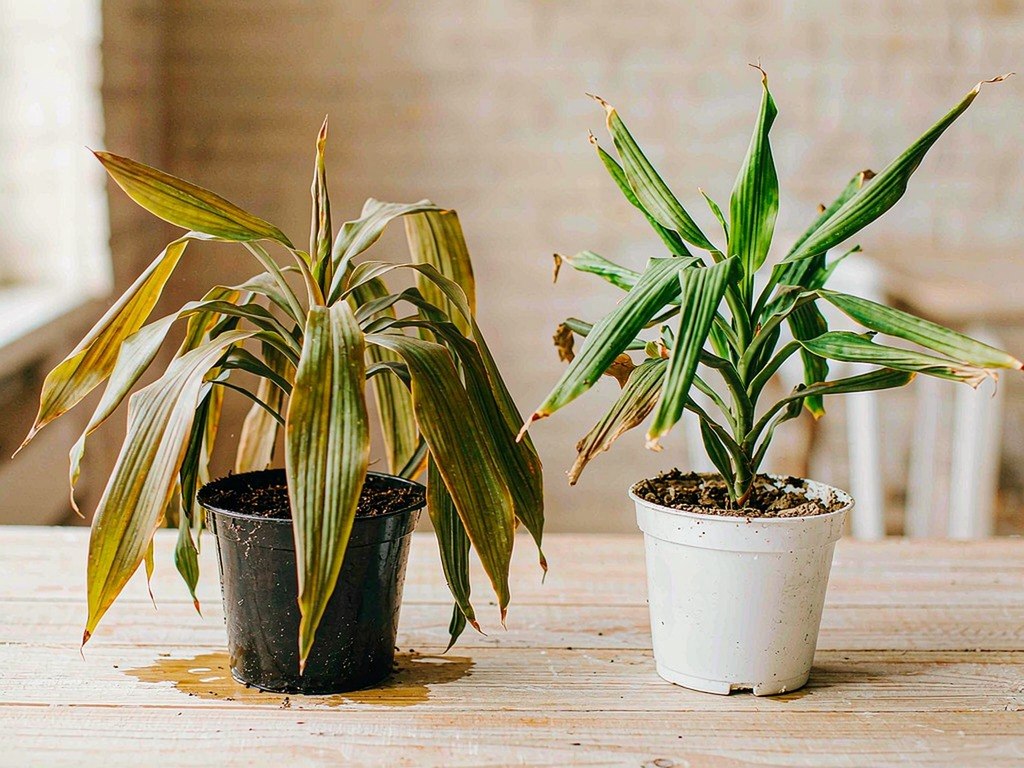
The cruel part: overwatered and underwatered plants look the same from across the room. Drooping, yellowing, a sad slump. You can’t tell them apart by looking, so you check the soil first.
The One Question: Is the Soil Actually Dry?
Before you water anything, answer one question: is the soil dry where the roots live? Not the surface. The roots.
Surface Dry Is Not Dry
The top inch dries out fast. Sun and warm air pull the moisture out within a day or two, and it turns light and crumbly while the soil three inches down is still dark and damp. Water whenever the surface looks dry and you water long before the plant needs it, drowning roots that were perfectly happy. The surface is a liar. Check deeper.
Three Ways to Check Moisture (and Which to Use)
Three tools. The right one depends on the pot in front of you, not your budget.
Finger Test: The Two-Inch Rule
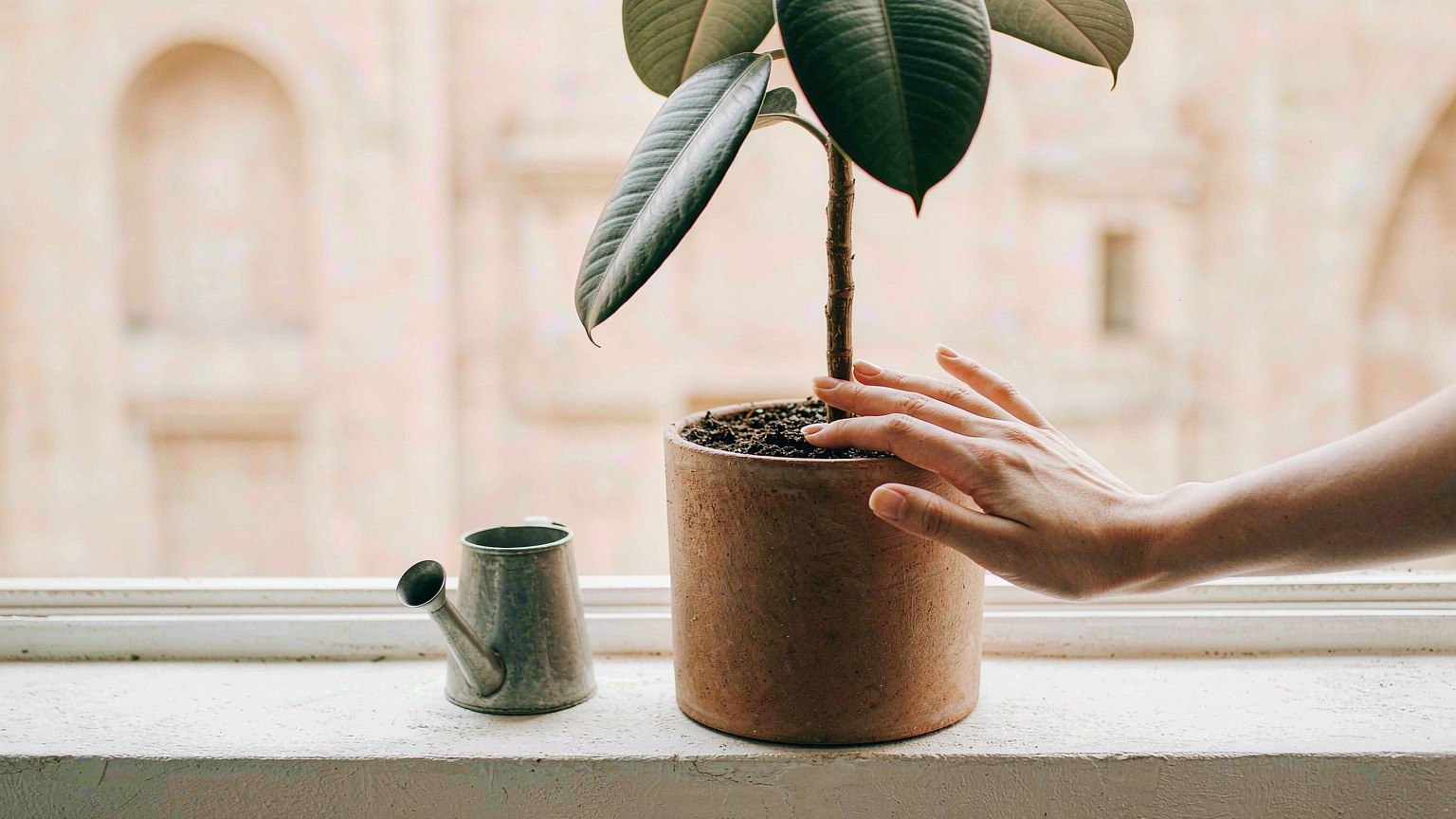
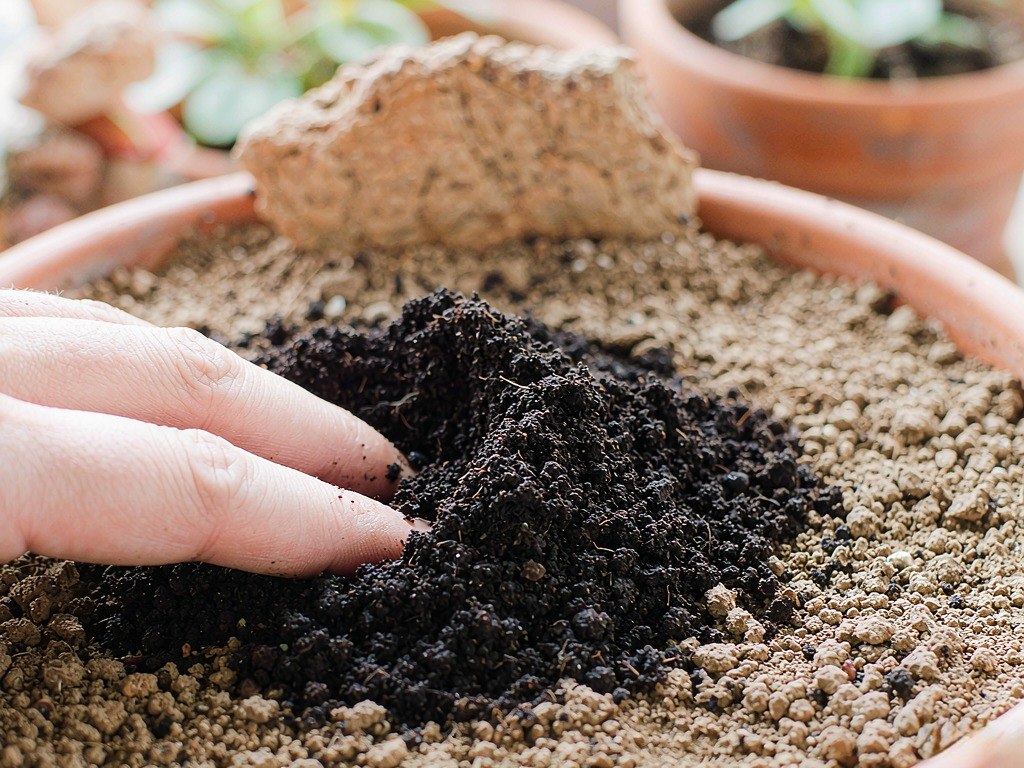
Learn this one first. Push a finger in past the second knuckle, about two inches down. Damp or cool means wait. Dry all the way means water.
Two inches is about where the top of the root ball sits in a standard six- to eight-inch pot. Small pots dry through the whole root zone at once; big pots need a deeper look. Your finger is also the one tool that never lies about the soil where it matters. Meters can be fooled. Skin can’t.
Pot Weight: For Big Pots You Cannot Reach Into
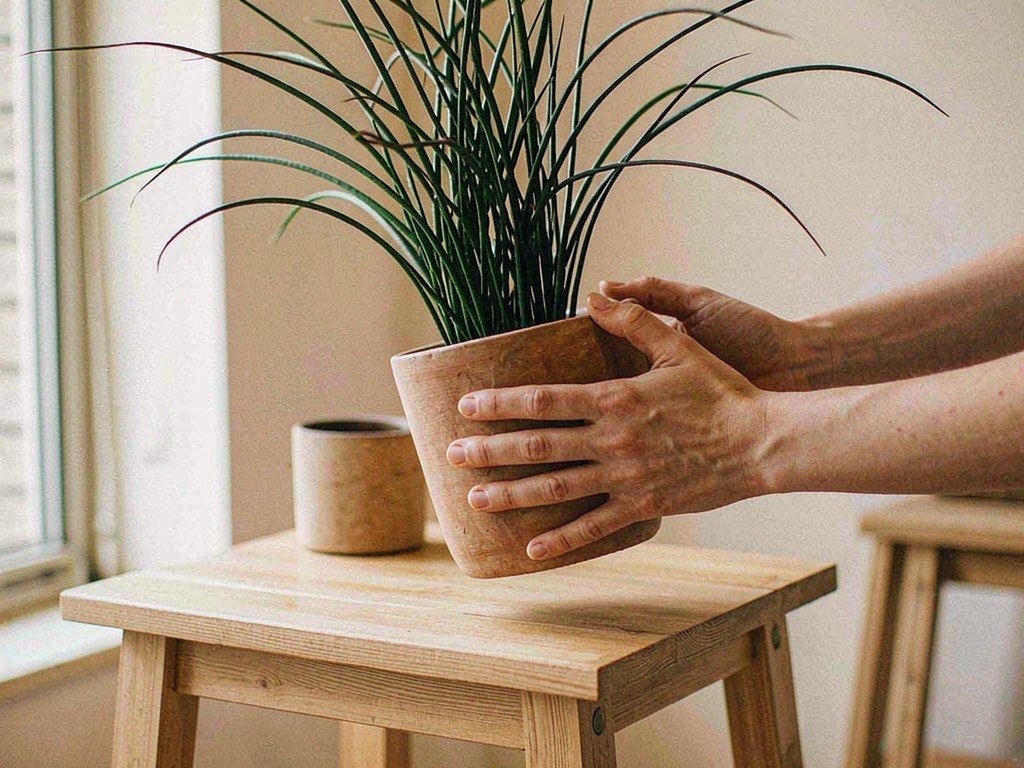
A ten-inch pot is too deep for a finger to mean much. Lift it instead.
Heft the pot right after a thorough watering, then again a few days later. The difference is bigger than you’d guess, and after a couple of months your hand answers before your brain does. A dry pot is startlingly light; a wet one has real weight. This is the fastest check, and the one to lean on for big floor plants, because it catches the sodden mass at the bottom that a surface check never sees.
Wooden Skewer and Moisture Meter: Confirm, Do Not Replace
A wooden skewer works like a cake tester. Push it deep, leave it a few minutes, pull it out. Damp and dark means hold off, dry means water. It reaches the bottom of a deep pot, where your finger cannot.
A moisture meter does the same with a dial, and it’s useful for one thing: reading the base of a pot too big to lift. Just know what you bought. The cheap ones don’t measure water; they measure how well the soil conducts electricity, and fertilizer salts conduct electricity too, so a pot fed all summer can read wet when it’s bone dry. Use the meter to confirm what your hand already told you. Never let it overrule you.
If you do want a meter for those big floor pots, the Long Probe Soil Moisture Meter is built around exactly that use case: a probe 5.5 inches (14 cm) longer than a standard meter’s, battery-free, with a color-coded dial. It reaches the bottom of a deep pot where finger and short-probe meters can’t. Who it is not for: anyone with only six-to-eight-inch pots, since the two-inch finger test covers that range without gear. Short-probe owners with small collections also don’t need to upgrade.
How Deep and How Much: The Deep Soak Rule
Once the soil is dry, soak it all the way.
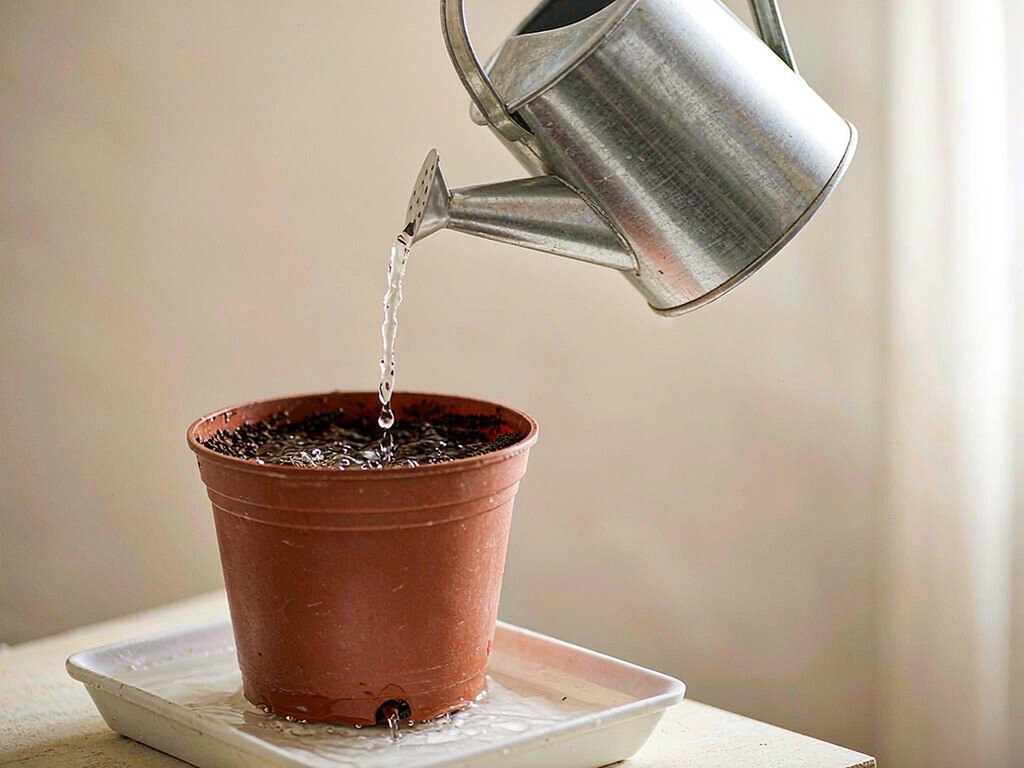
Water slowly and evenly across the surface until it runs out of the drainage hole. That runoff is proof you’ve pushed water through the whole root ball, not just the top layer. Then empty the saucer within an hour. A pot left in its own runoff is drowning from the bottom up.
Pouring slowly and evenly is what a wide-mouth can can’t do, which is why the stainless steel long-spout watering can exists: 35 oz capacity, thin gooseneck spout that directs water to the soil without blasting the surface, wood grip. Who it is not for: people only watering small succulent pots who can use a measuring cup, and anyone watering a whole garden outdoors who needs a two-liter rose-head can instead.
Skip this for small daily sips and something predictable happens: the top stays wet, the bottom stays dry, and roots grow upward into the wet zone instead of filling the pot. You get a shallow, weak root system and a plant that wilts the day after you water it. It’s part of why the drainage in our container gardening mistakes article matters so much: no drainage hole means no deep soak, and no deep soak means no healthy roots.
Top Watering or Bottom Watering?
Both work. They solve different problems.
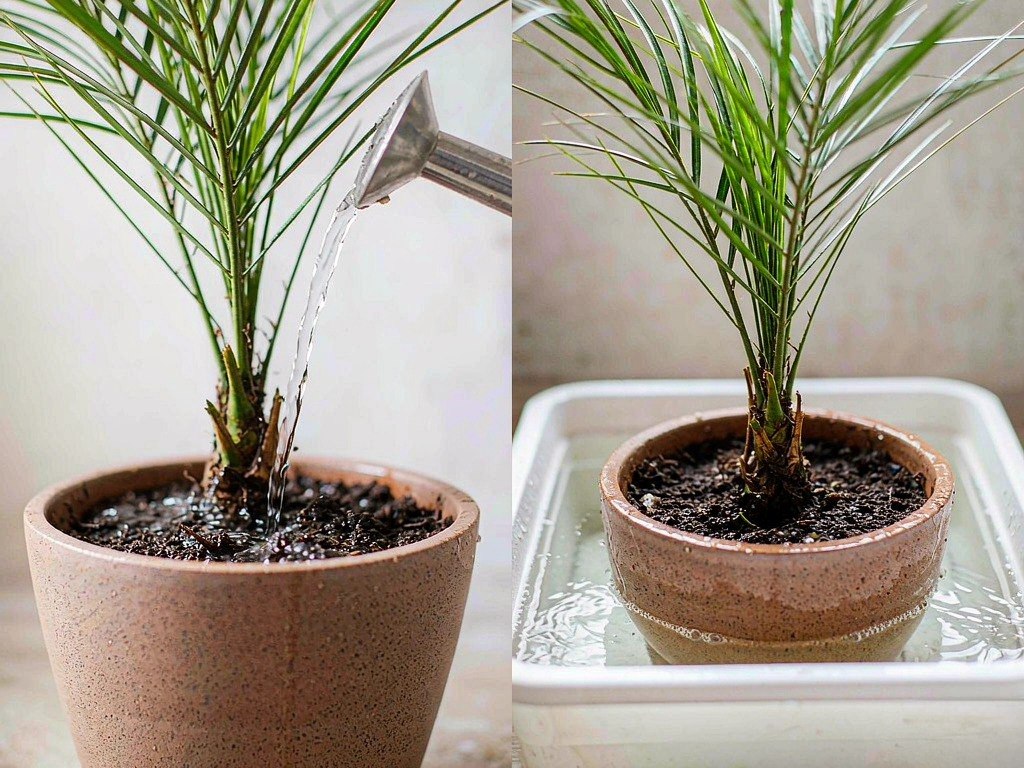
Top watering is the default: faster, closer to rain, and the soak from above pushes salts down and out. Pour slowly so water sinks in instead of running down the sides and straight out.
When Bottom Watering Wins
Bottom watering means setting the pot in a tray of water and letting the soil pull moisture up from below. It wins in three cases.
- The soil has gone hydrophobic. Peat-based mixes can dry so completely they repel water, so a top pour just channels down the sides and out while the root ball stays dry. Set that pot in water and it finally drinks.
- The leaves hate getting wet. African violets, begonias, and other fuzzy-leaved plants spot and rot when water sits on the foliage.
- The pot is small and dries fast. A two-inch seedling pot wicks up water in minutes.
Leave the pot in water for fifteen to thirty minutes, until the soil surface feels damp, then pull it out and drain. Don’t leave it overnight. That’s how bottom watering turns into root rot.
Bottom watering only works if you have a tray deep enough to hold water under the pot for half an hour. The 9-inch heavy-duty plant saucers come as a three-pack, thick PP plastic that holds water long-term without cracking, sized to sit under a standard ten-inch nursery pot without wobbling. Who it is not for: people who only top-water and empty their saucers immediately, and anyone already using self-watering pots that have their own built-in reservoir.
Why You Still Flush From the Top
Here’s the catch: bottom watering leaves the salts behind. As water evaporates, fertilizer salts stay in the pot and build up near the surface. Bottom water for a year without a flush and you get a crusty white ring and a plant that’s slowly being pickled.
So once a month or so, water from the top and let a good volume run through. Bottom water for the plant, top water for the soil.
Six Things That Set Your Watering Rhythm
This is why the calendar fails. Six things change how fast a pot dries, and they shift at once.
Pot material and size. Unglazed terracotta breathes and dries fast. Glazed ceramic and plastic hold moisture. A small pot dries faster than a big one with the same plant in it.
The potting mix. A light mix full of perlite or bark drains fast; a dense mix holds water like a sponge. Same pot, different soil, different rhythm.
Light. More light means faster growth and faster water use. A plant in a bright south window drinks down its pot long before the same plant in a dim hallway. If a plant dries out oddly slowly, light is often the real problem, and our grow lights guide covers the fix.
Temperature. Warm rooms speed up evaporation and growth. Cool rooms slow both. A spot near a radiator is a different world from one across the room.
Humidity and airflow. Dry, moving air pulls water out of the soil and the leaves faster than still air does.
Growth stage. A plant pushing new leaves in spring and summer drinks hard. One that’s gone semi-dormant in winter barely touches its water. The same plant can want very different care in June and December.
Notice what’s missing: a number.
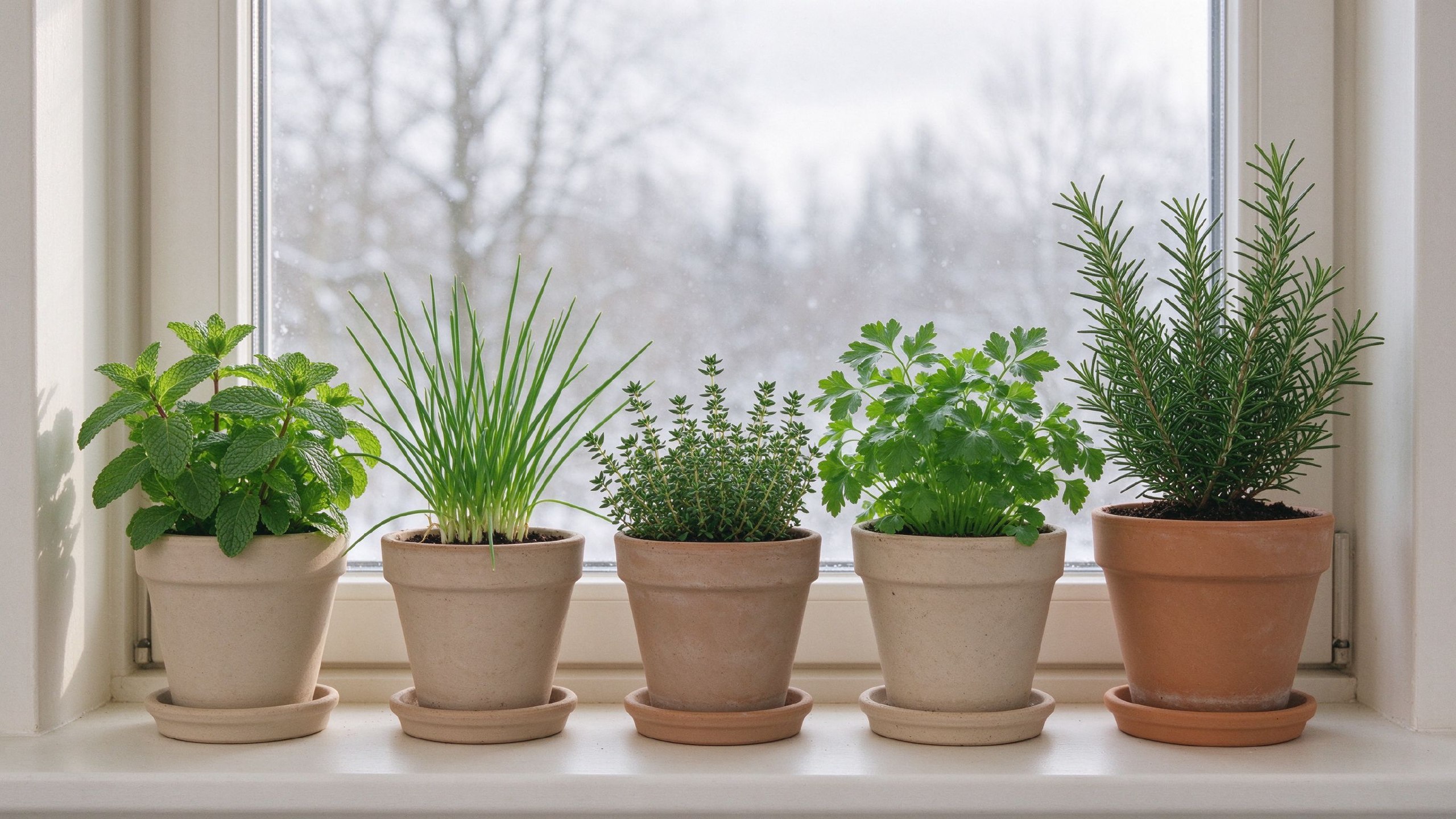
Every one of those six is a reason your number isn’t someone else’s, and isn’t even your own from two months ago. When the season turns, several move at once, which is exactly what our fall houseplant routine walks through. The rule underneath never changes: check the soil, then water. If your plants live on a windowsill and happen to be herbs, the same rule is the one that keeps them alive, and we break it down in our windowsill herb guide.
Overwatered or Underwatered: Same Droop, Opposite Fix
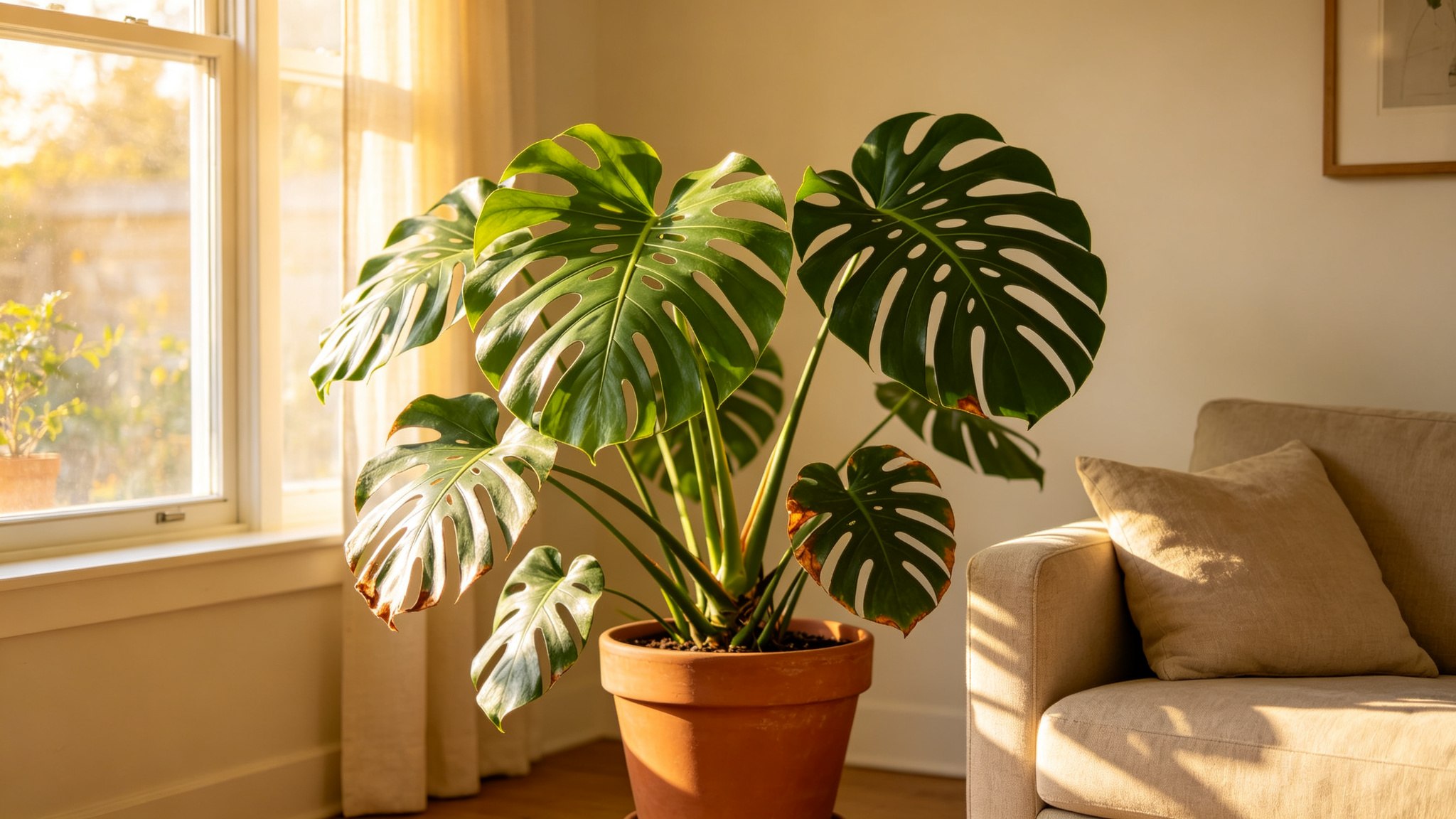
The symptoms overlap almost completely. A thirsty plant and a drowning plant both droop, both yellow, both stall. Guess wrong and you make it worse: add water to a drowning plant and you finish it off, cut water from a thirsty one and you kill it faster.
Tell them apart in two steps.
Feel the soil. This settles most cases. Soggy or damp soil under a drooping plant means overwatering, no debate. Bone dry means underwatering. Trust your hand over the leaves.
Read the leaves. Only if the soil is somewhere in the middle does the foliage matter, and the tells are in the details.
| What you see | More likely overwatered | More likely underwatered |
|---|---|---|
| Leaf color | Yellow, soft, mushy in the middle | Yellow or brown, crisp at the edges |
| Leaf texture | Limp and floppy, may feel cold | Thin, dry, curling inward |
| Lower leaves | Yellow and dropping while the soil is still wet | Brown, dry, and crispy |
| New growth | Stunted, black or rotting at the base | Slowed, leaves small and dull |
| Soil | Wet for days, may smell sour | Dry all the way through, pulling from the pot edge |
| The pot itself | Heavy | Light |
The tell that cuts through everything is the soil. A yellow leaf on wet soil is a drowning signal. A yellow leaf on dry soil is a thirst signal. Same color, opposite cause.
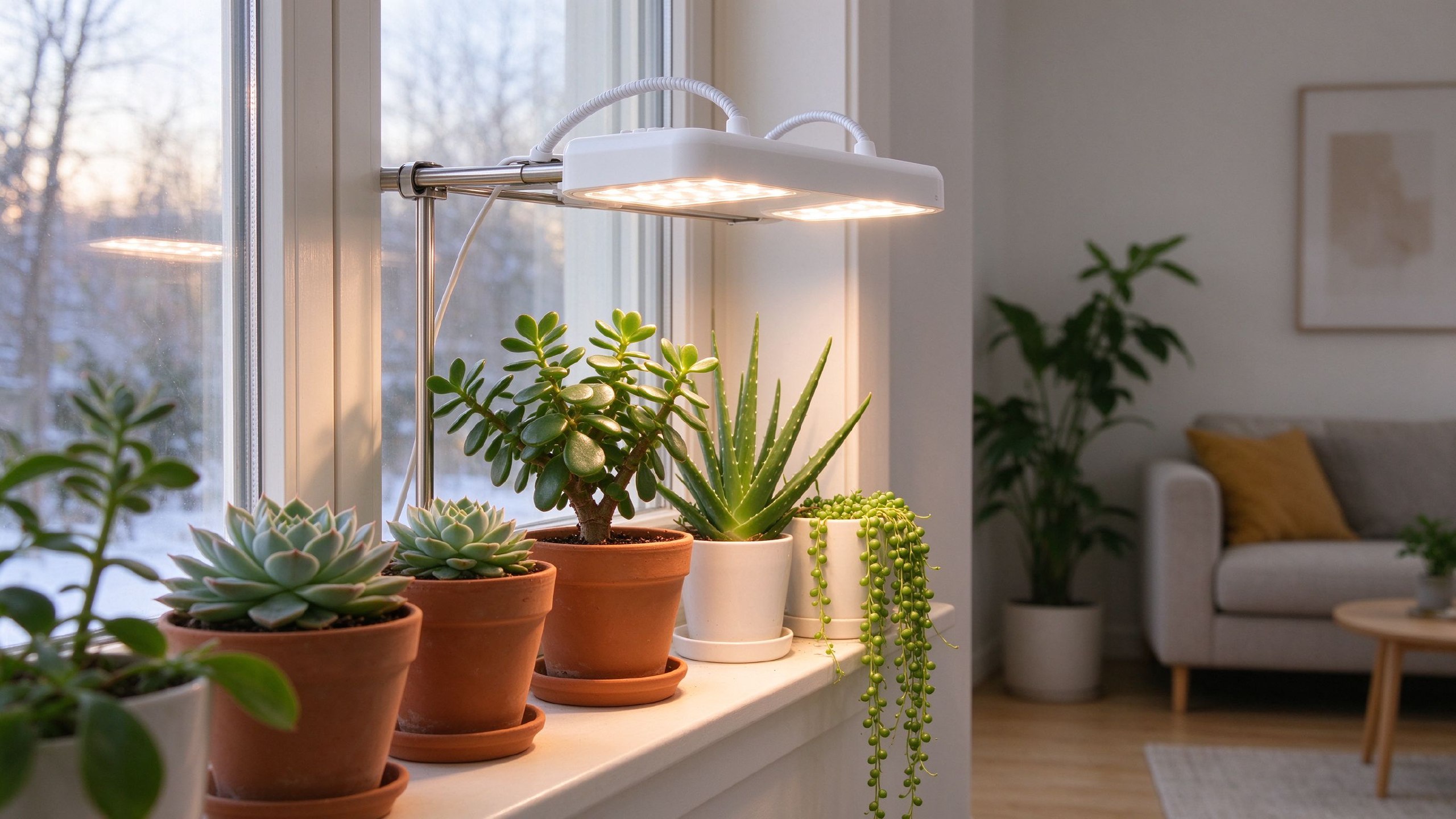
If your plant is a succulent or a cactus, the math tilts hard toward overwatering, and the cold-month recovery is different enough that we keep it in our guide to bringing succulents indoors.
Water Quality and Temperature: What Matters
Short answer: temperature matters more than people expect, water quality matters less than the internet suggests.
Use room-temperature water. Cold tap water can shock the roots of a warm-room plant and slow uptake, so let the can come to room temperature before you pour. It’s a free fix.
Should tap water sit before watering? It depends on your water. If your municipality uses chlorine, leaving a jug out overnight lets it off-gas, and that helps. If it uses chloramine, sitting out does almost nothing, because chloramine doesn’t evaporate. Most houseplants tolerate normal tap water either way, so don’t lose sleep over it.
Skip softened water if you can. Softeners trade calcium for sodium, and sodium builds up in potting soil. Rainwater is the quiet winner if you have easy access: free, soft, and plants like it.
The First 48 Hours: How to Rescue Either Way
Two opposite problems, two opposite rescues. Diagnose first, then act.
If it’s overwatered: stop watering now. Move the pot somewhere warm and airy so the soil can dry, check that the drainage hole isn’t blocked, and empty the saucer. If it’s still soaked days later, slide the plant out and look at the roots. Healthy roots are firm and pale; rotten ones are brown, mushy, and smell like a swamp. Trim the rotten parts with clean scissors, repot into fresh, dry, airy mix, and don’t water for a while. It sounds drastic. It’s the only thing that works once rot sets in.
If it’s underwatered, or the soil has gone hydrophobic: don’t just pour and hope. Set the pot in a bowl of room-temperature water and let it soak from the bottom for half an hour, until the soil surface feels damp, then pull it out and drain. That’s the fastest way to re-wet soil that has stopped absorbing from above.
Whichever it was, resist the urge to fuss. Most rescues fail because the grower panics and does three things at once. Do one thing, then wait.
FAQ: Your Watering Questions Answered
How often should I water my houseplants?
There’s no honest number. Anyone who hands you one is guessing about your room, your pot, and your soil. Check two inches down. Water when it’s dry, wait when it isn’t. In summer that may be more often than you expect; with the heat on in winter, usually less. The test decides, not the calendar.
What’s the best time of day to water?
Morning, so the plant has all day to use the water and any splash dries before evening. Evening watering leaves foliage wet overnight, which invites fungus. That said, if a plant is bone dry at 8 p.m., water it. Not letting a dry plant sit matters more than the clock.
How do I water a pot with no drainage holes?
Carefully, and rarely. Without a hole, water pools at the bottom and rots the roots. If it’s a cachepot with a nursery pot inside, take the inner pot out to water and let it drain before putting it back. Otherwise water far less than you think and tilt it to pour off the excess. Better still, move the plant into something with a hole. Our container gardening mistakes piece explains why that’s the fix worth making.
Do houseplants need less water in winter?
Usually, yes. Shorter days, slower growth, and drier indoor air all push water use down, so the soil takes longer to dry. But less is a direction, not a number. Check the soil the same way you always do.
Can I water with ice cubes?
Some orchids tolerate it, but it’s not a good general habit. Ice delivers cold water in tiny amounts and can chill roots that don’t want chilling. If the soil is dry, water it properly. An ice cube is a novelty, not a method.
Should I mist my plants?
Misting raises humidity for a few minutes and then it’s gone. It doesn’t replace watering, and wet foliage invites disease on some plants. For humidity, group plants or run a humidifier. To water, water.
I’m going away. What do I do?
Water deeply the day you leave, move plants out of direct sun so they dry slower, and group them to hold humidity. For a week that’s usually enough. For longer, set up a wick system with cotton string and a reservoir, or ask a neighbor to check the soil and water only if it’s dry. Give them the two-inch test, not a schedule. And if a pot came in from outside this fall, run the pest check before you water more, since damp soil and hidden bugs are a bad pair.
If you travel often and don’t want to rely on string wicks, the yarlung 5-inch self-watering planters are the finished version of that same principle: six pots with inner feet that lift the root ball above a water reservoir, wicking water up as needed with a water-level window you can read from the side. The honest caveat: the fill opening is small, so a narrow-spout funnel helps, and the level window is approximate rather than precise. Who it is not for: people who enjoy checking soil moisture by hand, anyone growing succulents or orchids that need a dry-down cycle between waterings, and anyone with large plants outgrowing a five-inch pot.
If you remember one line from all of this, make it this one: check the soil, then water. The calendar never met your plant. The soil has. Learn the test, use it every time, and the numbers take care of themselves.
This one is knowledge first. The method works without buying anything, and the few tools linked above are only for the spots where the method is hard to follow without them. If you want to know how we put these posts together, the process is on our methodology page.
Disclosure: Some links in this post are affiliate links. If you buy through them, I may earn a small commission at no extra cost to you. See the full affiliate disclosure, and read how we research on our methodology page.
Sources
The mechanism here is standard extension-service guidance, not our invention. Two pages we leaned on:
- Oregon State University Extension Service, “Soil moisture monitoring to support irrigation scheduling” (EM 9868): https://extension.oregonstate.edu/catalog/em-9868-soil-moisture-monitoring-support-irrigation-scheduling
- Montana State University Extension (Flathead County), “Proper watering is critical to the success of your plants”: https://www.montana.edu/extension/flathead/documents/ag/yard-garden/Proper%20Watering.pdf