My Monstera Started Dying: The Fall Care That Saved It
My Monstera Started Dying: The Fall Care That Saved It
The first Saturday of September, I found the brown edge.
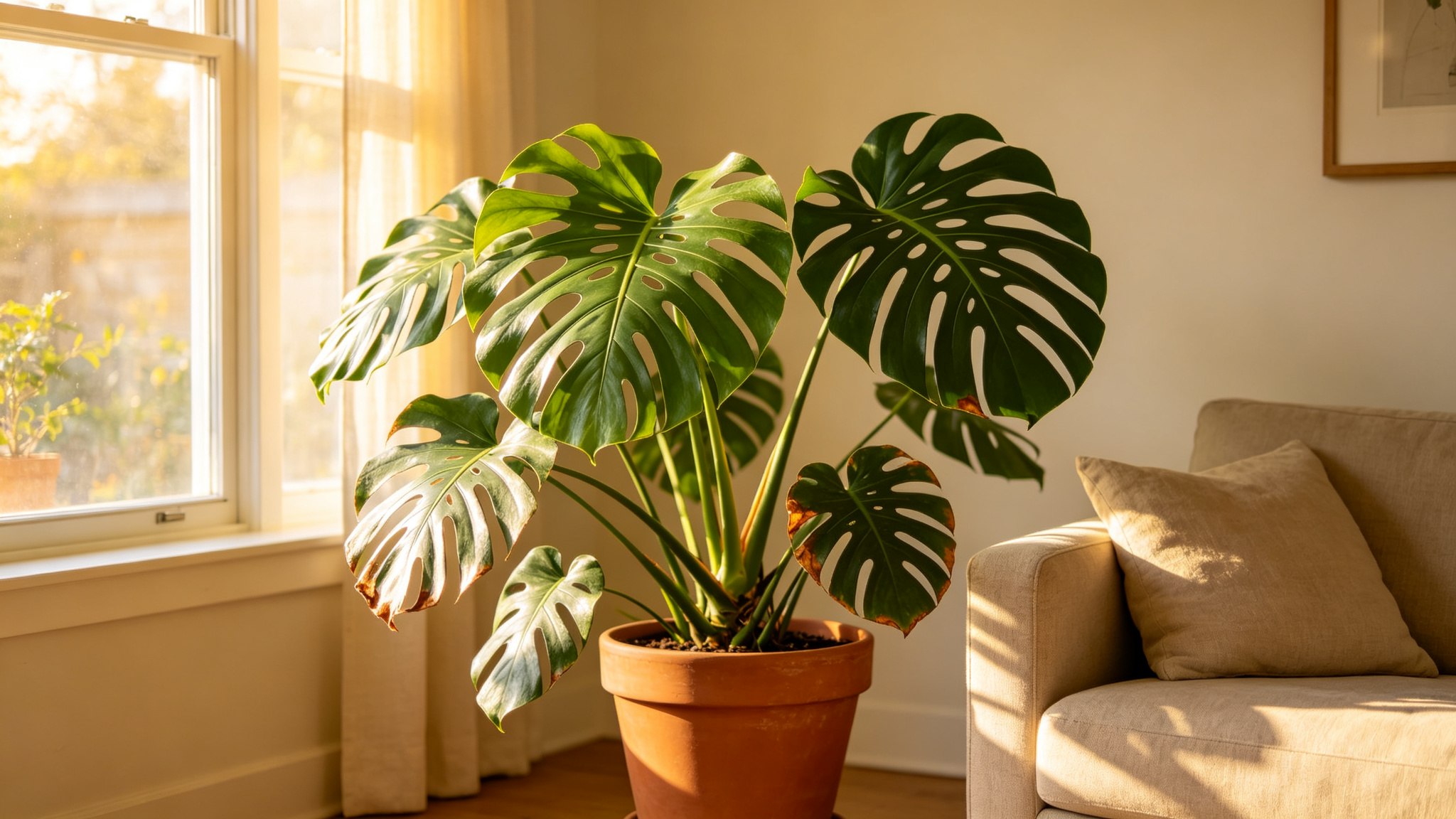
It was on the biggest leaf, the one I’m a little proud of, the one with the deepest splits. The edge was dry and crispy, like paper that had been held too close to a flame, and it ran along the whole left side. I told myself it was nothing. A scrape. A weird draft. Then, the next morning, the leaf next to it had the same crisp brown line, and the new leaf that had been slowly unrolling for two weeks was still half-curled, like it had given up mid-effort.
My monstera — two years old, five feet tall, the plant I’d bragged about all summer — was quietly falling apart, and I had no idea why.
If you’re here because your monstera started doing something weird as the days got shorter, this story is for you. Fall care for monstera is genuinely different from summer care, and most of what I did wrong was simple: I kept treating September like July. Here’s what went wrong, in order, and exactly what fixed it.
The Summer I Got Too Confident
Let me back up. From May through August, that plant was the easiest thing in my house. New leaves every couple of weeks, each one bigger than the last. The aerial roots were reaching across the room like it was trying to shake hands with the bookshelf. I watered it every Sunday, threw a splash of liquid fertilizer in once a month, and it just… grew. I started to think I had some kind of gift. (Everything I should have been doing differently in September is in the fall houseplant care checklist, by the way.)
I did not have a gift. I had a plant that was doing fine on momentum, and the momentum ran out in September.
What Actually Happened First
Looking back, the warning signs were all there, but they were spread out enough that each one seemed minor:
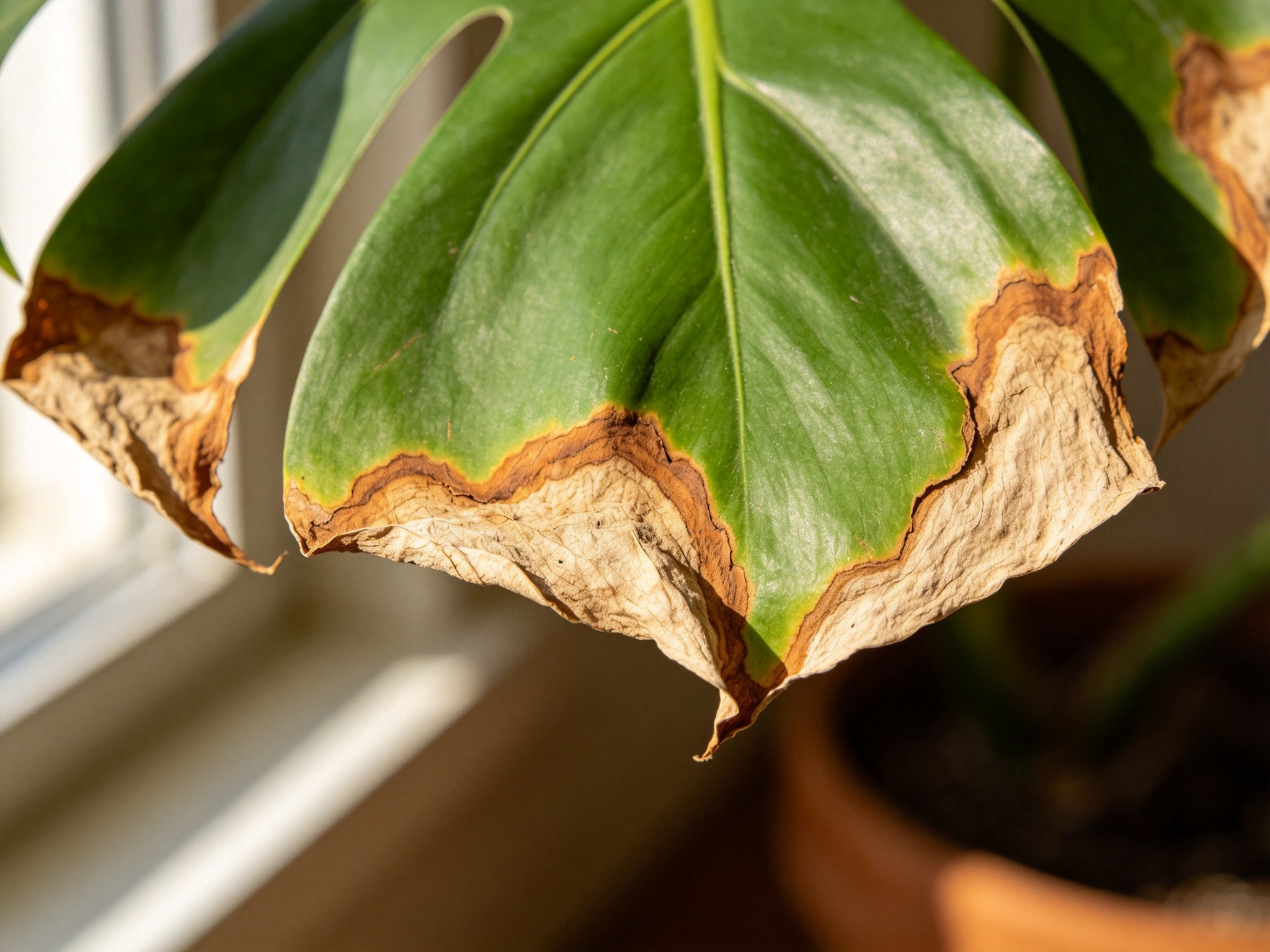
- The leaf edges turned brown and crispy, starting on the oldest leaves.
- The newest leaf stalled — it stayed curled up for over two weeks.
- The soil on top looked dry, but when I stuck my finger in, it was still damp two inches down.
- The plant looked fine at a distance, so I almost ignored all of it.
I was still watering every Sunday, because that’s what had worked since May. That was mistake number one, and it wasn’t even the biggest one.
The Real Culprit: Dry Indoor Air
Here’s the thing nobody tells you about monstera care in fall: the plant doesn’t care about the calendar, but the air in your house does.
The first night the temperature dropped below 50°F, I turned the heat on. Within a week, the humidity in my living room dropped from somewhere comfortable to about 30% — I checked with a little hygrometer I bought for ten bucks after I started suspecting the air. Monstera deliciosa comes from tropical cloud forests. It wants 50–60% relative humidity. At 30%, the leaves lose water faster than the roots can supply it, and the edges dry out first. That’s exactly where my brown edges were: not in the middle, not as spots, but along the leaf edges and tips, crisp and dry to the touch.
Dry, crispy edges on a monstera are almost always a humidity problem — or an underwatering problem. Soft, mushy brown patches are something else entirely. If your edges are crispy, start with the air.
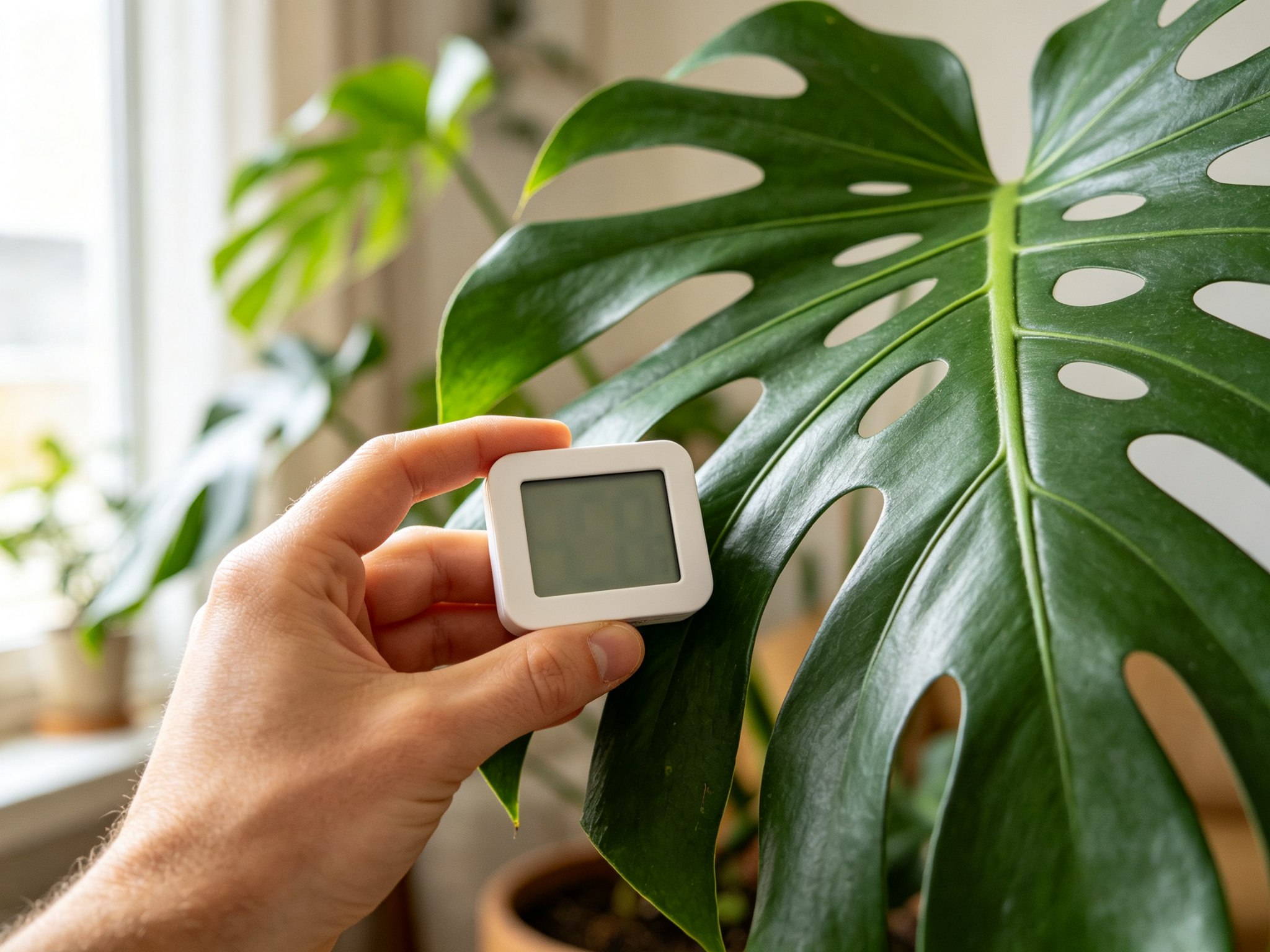
The fix that worked: I bought a small humidifier and put it on the shelf next to the plant, aimed at the leaves from about three feet away. I also set the pot on a pebble tray — a shallow dish with water and pebbles, with the pot sitting on the pebbles, not in the water. Within a week the humidity around the plant was reading 50% and the browning had stopped spreading. The edges that were already brown never turned green again — that’s not how leaves work — but no new crispy edges appeared.

One more thing: check where your plant sits. If it’s near a heating vent or a radiator, the hot dry air is blasting straight at the leaves. Two feet away can make a real difference. Mine was three feet from a vent; moving it to the far side of the shelf helped almost immediately.
Watering: I Was Still on Summer Schedule
My second mistake was the watering. In summer, with long bright days and the plant actively growing, watering once a week was right. In fall, growth slows way down, the days are shorter, and the plant drinks less. My Sunday watering habit was keeping the soil wetter than the plant wanted — which is why the soil was still damp two inches down, even though the top looked dry.
The fix: I stopped watering on a schedule entirely. Now I stick my finger two inches into the soil. If it’s dry at that depth, I water — thoroughly, until water runs out the drainage holes. If it’s even slightly damp, I wait a few days and check again. In September and October, that has turned out to be roughly every ten days to two weeks for my plant, depending on the weather. If you’re in a warmer climate or your plant is in brighter light, it’ll be sooner. Trust the finger, not the calendar.
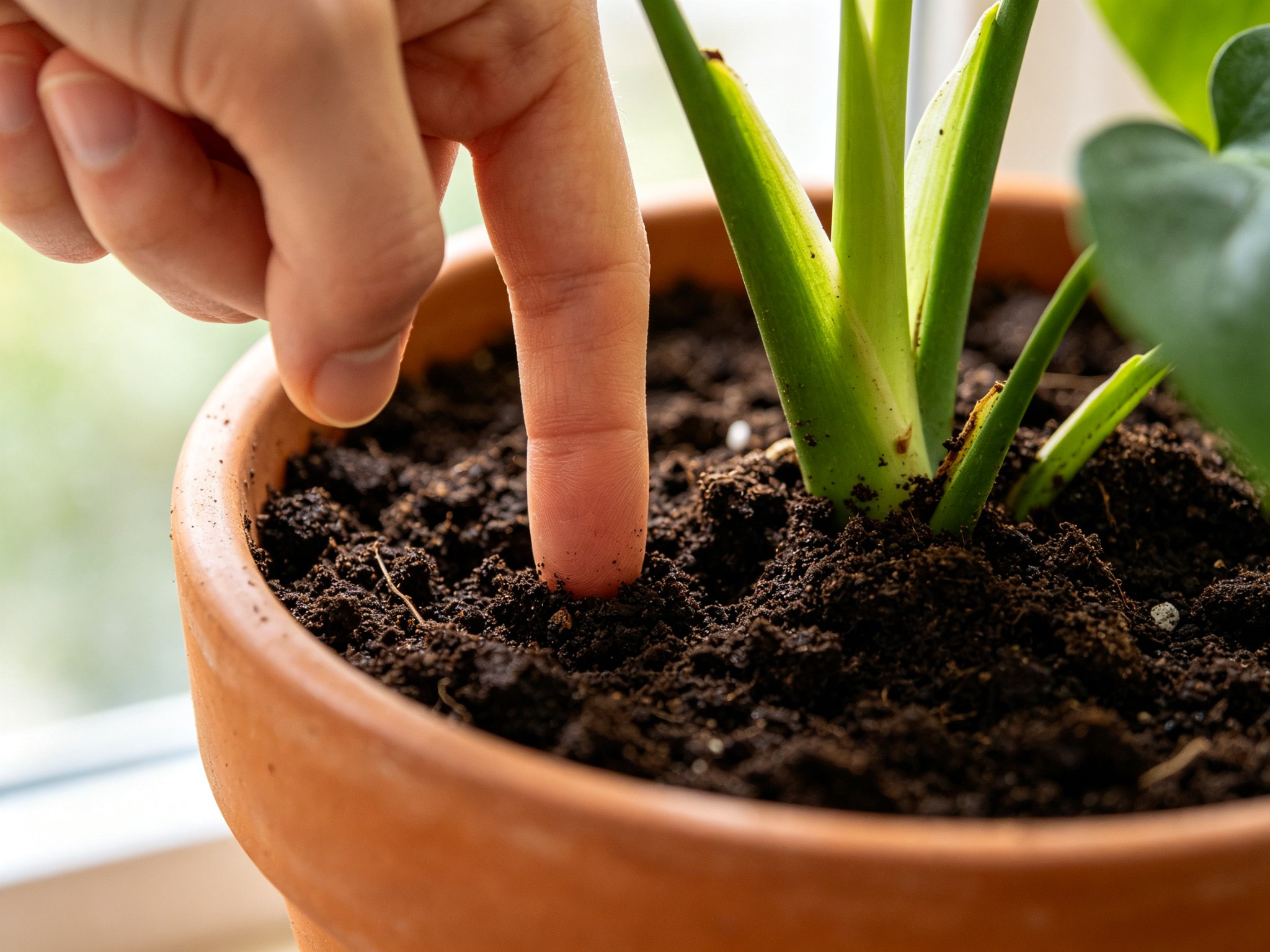
This matters more in fall than any other season, because the plant won’t bounce back from overwatering the way it does in summer. Cold, wet soil is how monstera roots rot.
Fertilizer: I Was Feeding a Plant That Wasn’t Hungry
This one I feel dumb about. In summer, monthly liquid fertilizer at half strength kept the leaves dark and pushed out growth. In fall, the plant is slowing down — it can’t use the extra nutrients, and they build up in the soil as salts, which can burn the roots and cause brown tips all on their own.
The fix: I stopped fertilizing at the start of September. For a monstera in a typical home, that’s usually right — ease off through the fall, skip it entirely in winter, and start again in spring when new growth kicks in. If your monstera is under a strong grow light and still actively pushing out leaves, you can stretch it to a lighter feeding once a month, but for most of us, fall is a no-feed season. If you’ve been feeding monthly all summer, your plant will thank you for the break.
Light: The Days Got Shorter and I Didn’t Notice
Monstera is a “bright, indirect light” plant, and in my apartment the window spot that was perfect in July — bright but filtered — was noticeably dimmer by mid-September. The sun is lower, the days are shorter, and plants absolutely notice. Less light means less growth, which is normal, but if your monstera is in a dark corner, the slowdown turns into decline.
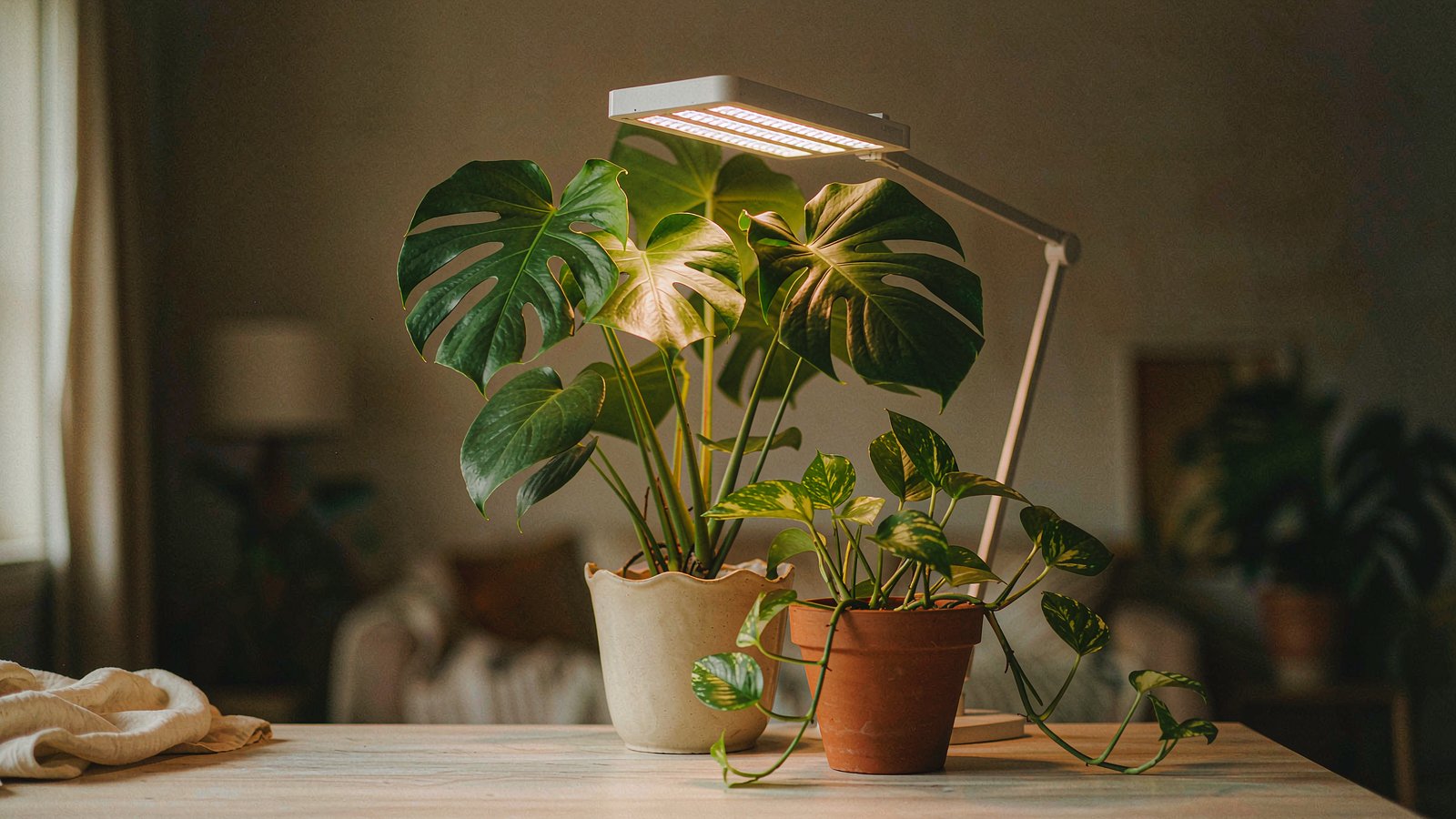
The fix: I moved mine to the brightest spot in the room, a few feet back from a south-facing window where it gets bright indirect light most of the day. I did not put it in direct afternoon sun — monstera leaves can scorch, especially after a summer of being used to filtered light. If you don’t have a bright window, a grow light makes a huge difference. Mine is a simple full-spectrum LED bulb in a regular lamp, on for about six hours in the evening. It cost me about twenty dollars and honestly, it did more for the new leaf than anything else.
Also worth saying: keep the plant away from cold glass in fall. The temperature right against a window at night drops fast, and a monstera leaf pressed against cold glass can brown from the cold alone. A couple of feet back fixes that too.
What It Looked Like Three Weeks Later
The browning stopped spreading by the end of the first week. The leaf that had been stalled for two weeks finally unrolled — it came out slightly smaller than the summer leaves, and it has one small brown nick on the edge where it must have gotten too dry while it was stuck, but it’s clean and green and fully open.
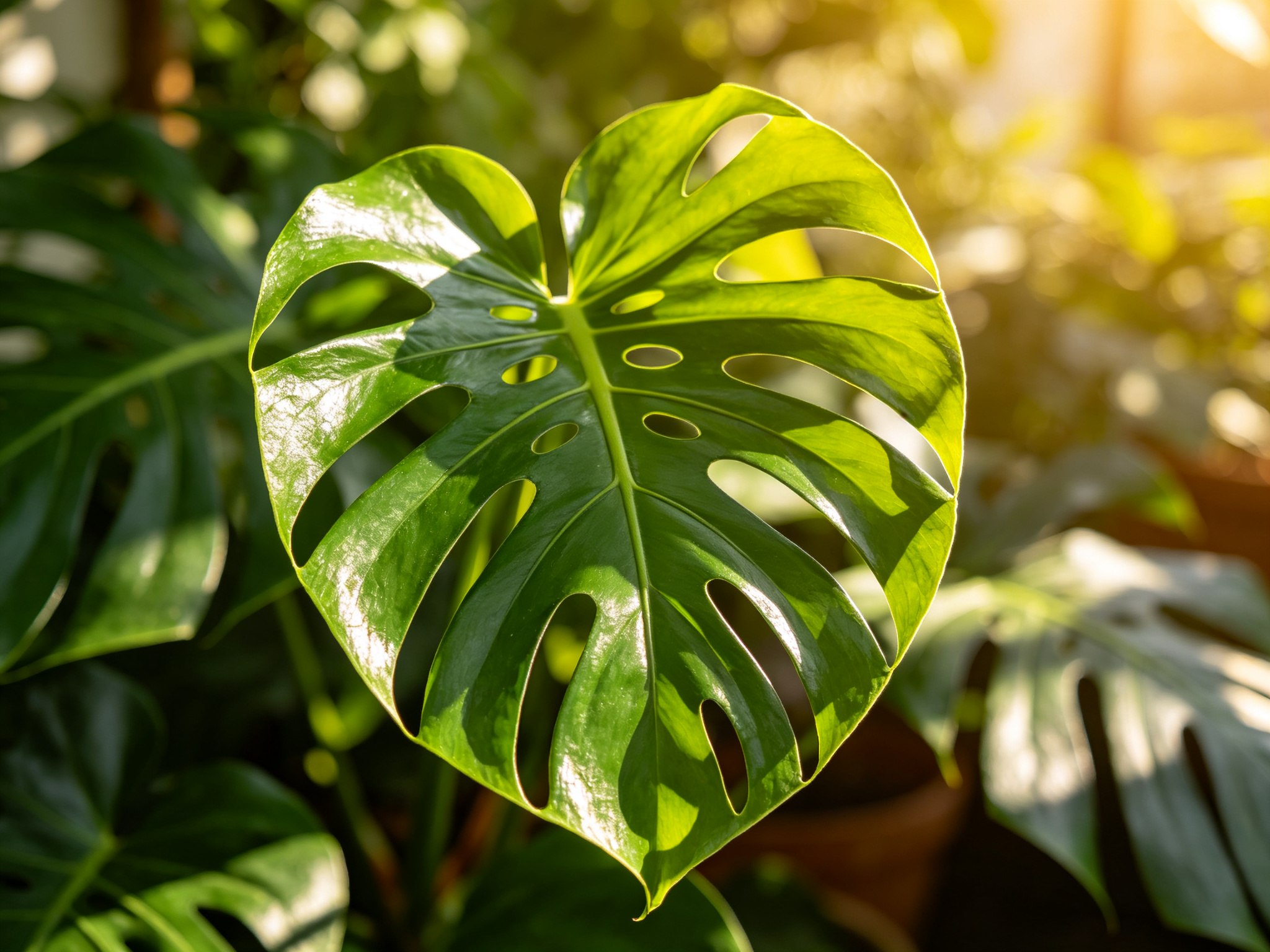
The plant isn’t the showpiece it was in June. It doesn’t need to be. It’s September, it’s alive, it’s healthy, and it’s going into winter the right way — with soil that dries out between waterings, air it can breathe, and no fertilizer salt piling up in the pot. That’s the actual goal of monstera fall care: not growth, but survival done properly, so spring starts from a strong place instead of a rescue.
Your Monstera Fall Checklist
If your monstera is showing crispy edges, stalled growth, or just looks a little sad as the season turns, here’s the list I wish I’d had in September:
- Check the humidity around the plant — if it’s below 40%, add a humidifier or a pebble tray
- Move it away from heating vents, radiators, and cold windows
- Stop watering on a schedule — use the finger test and let the top two inches dry out
- Expect to water every 10–14 days in fall, not weekly — but trust your finger, not the number
- Stop fertilizing through the fall and winter
- Move it to your brightest spot, or add a grow light for a few hours a day (here’s our grow lights for indoor plants guide)
- Don’t panic about the leaves that already browned — they won’t heal, but the plant will
The Honest Ending
I spent most of September convinced my monstera had a disease. I googled fungus, I googled root rot, I nearly repotted it into new soil for no reason. What it actually had was a bedroom at 30% humidity, a watering habit left over from June, a weekly fertilizer habit it no longer needed, and a window that was getting dimmer by the day. Four boring problems. No drama. And every single one of them was fixable for under thirty dollars.
Plants tell you what they need. They just don’t use words. The brown edge was the first sentence, and I almost didn’t read it. If your monstera is talking to you right now — brown edges, a stalled leaf, soil that won’t dry — listen to it before you buy anything or repot anything. Start with the air, then the water, then the food, then the light. In that order.
And if you want to skip the guessing, the two tools that actually settled mine were a cheap hygrometer and a finger. Everything else was just patience.
Happy growing — and keep an eye on your edges as the heat comes on.
Disclosure: Some links in this post are affiliate links. If you buy through them, I may earn a small commission at no extra cost to you. See the full affiliate disclosure.