3 Signs Your Succulent Needs a Grow Light (and 5 That Work)
Succulents are tough. They shrug off missed waterings, sit in tiny pots for years, and forgive most of what we forget. What they can’t forgive is a dark winter. When daylight shrinks and your window stops delivering, your plant starts telling you. The problem is that most of us read the message wrong and buy more water or more soil when the real fix is light.
Here’s how to read the signs, understand why your window fails in winter, and pick a light that actually fits how you grow. All five picks below are based on verified buyer reviews, not on our own testing.
As an Amazon Associate I earn from qualifying purchases. Some links in this post are affiliate links — if you buy through them, I may earn a small commission at no extra cost to you.
3 Signs Your Succulent Is Begging for More Light
You don’t need a light meter to catch a light-starved succulent. You need to look at it once a week and notice three things.
1. The stem stretches and the leaves spread out. This is called etiolation. The plant reaches toward whatever light it can find, so the stem gets long and pale, and the gaps between leaves get wider than they should be. A rosette that used to sit flat suddenly looks like it’s on stilts. Once a succulent stretches, it won’t shrink back, so the goal is catching it early.
2. The color washes out. Healthy succulents keep rich greens, blues, purples, and reds. A plant that isn’t getting enough light starts to look pale and faded, sometimes almost white. The deep color comes from the plant’s response to bright light, and without it, the pigment fades.
3. Growth stalls. The plant simply stops doing anything. No new leaves, no color change, no response to water or feed. Some succulents rest in winter on purpose, but if yours was growing in fall and suddenly froze, low light is a likely suspect. Leaves may also feel softer or look slightly deflated even when the soil is dry.
If any of these sound familiar, the fix is almost always more light, not more water. Give the plant more water while it can’t use it, and you risk rot on top of the stretch.
Why Your Window Isn’t Enough in Winter
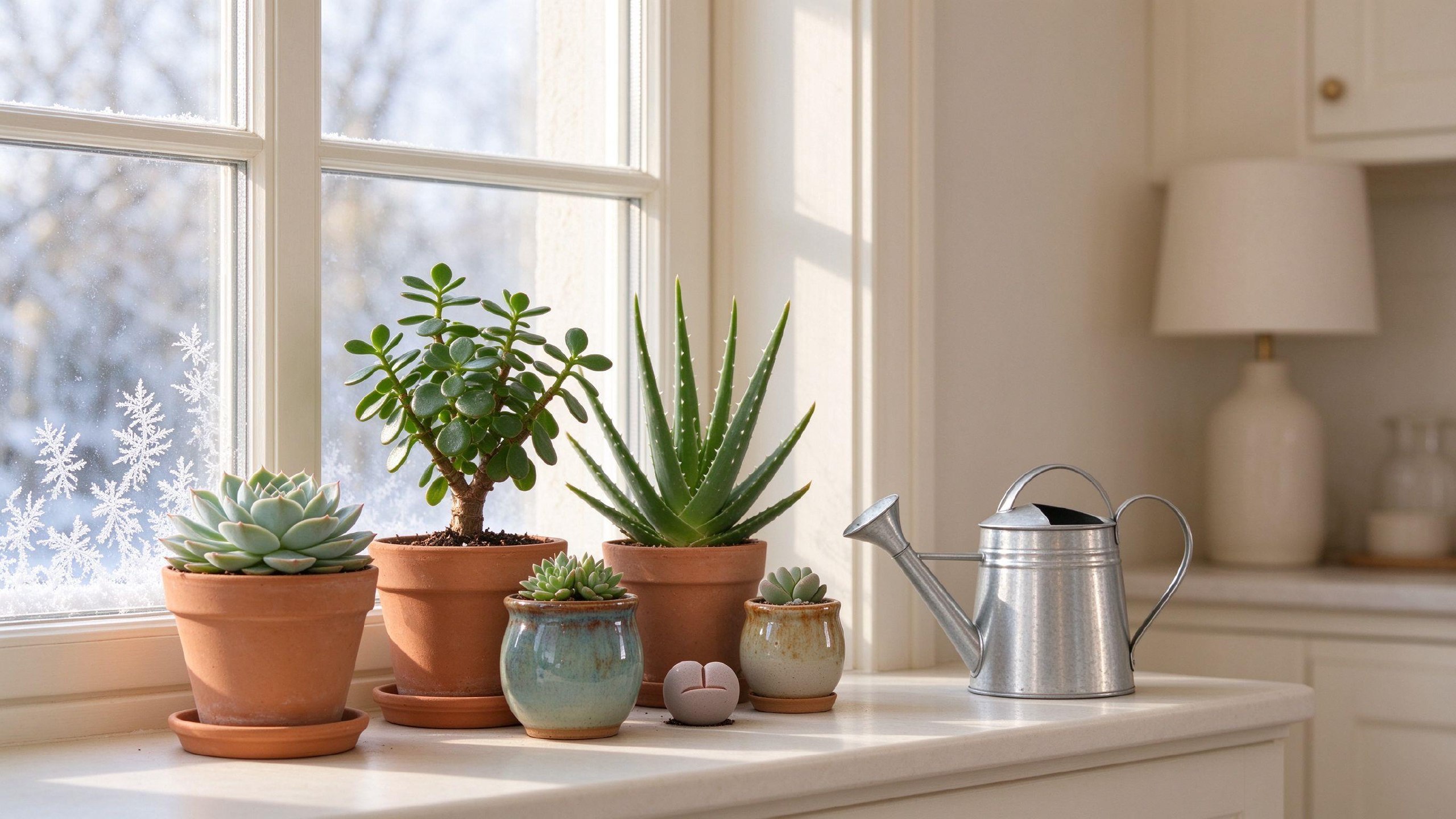
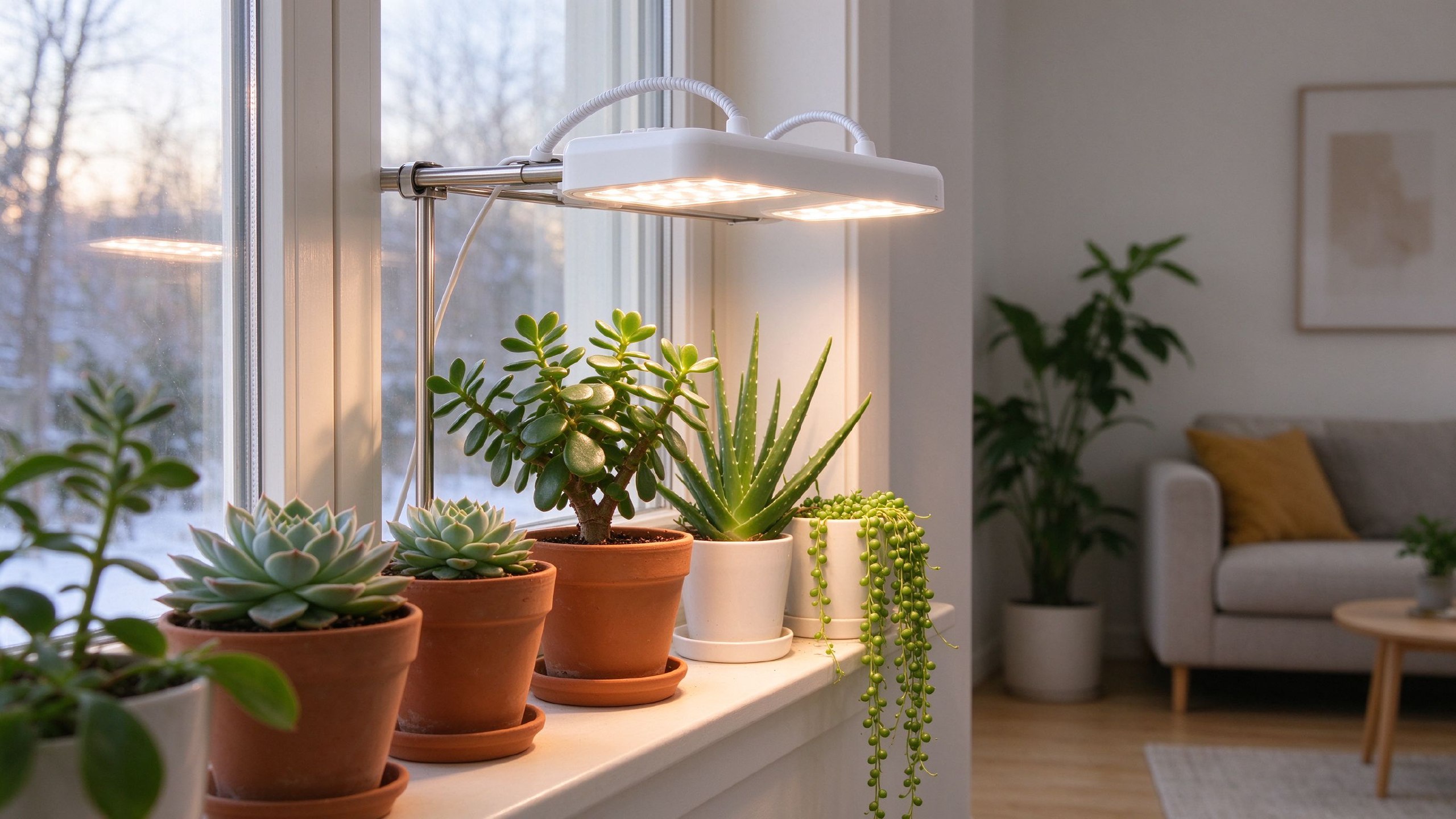
Here’s the part that surprises most people: your south-facing window is not the same light in January as it is in June. Winter sun comes in at a low angle, days are short, and overcast stretches are common across much of the US. A north window may as well not exist for a succulent.
Add the window glass itself. Glass blocks a meaningful share of the light that hits it, and anything sitting a few feet back in the room gets a fraction of what the plant would see outside. Succulents evolved in deserts and rocky hillsides where they get hours of direct sun. A dim living room corner in December is closer to a cave than a desert.
Buyers who live through this every year describe the same pattern. One reviewer bought a light specifically because winter was coming and said it worked great for adding light to plants during the winter months. Another mentioned moving plants under lights because they had to come in for the winter, and a third said the extra warmth from their bulb was great for plants in winter. The need is real, and it comes back every year. If you’re still weighing the move indoors, our guide to the 50°F rule for bringing plants inside covers the timing.
5 Grow Lights That Actually Work for Succulents
These five picks cover the setups most succulent keepers actually have: a single pot on a desk, a multi-tier shelf, a lamp you already own, a tight spot on a nightstand, and a tabletop that gets used all day. Specs and reliability notes come from what buyers reported; check the current price on each product page. If you’d rather compare fixture types in general, our full breakdown of grow lights for indoor plants goes deeper on the options.
Budget Clip-On for a Single Pot
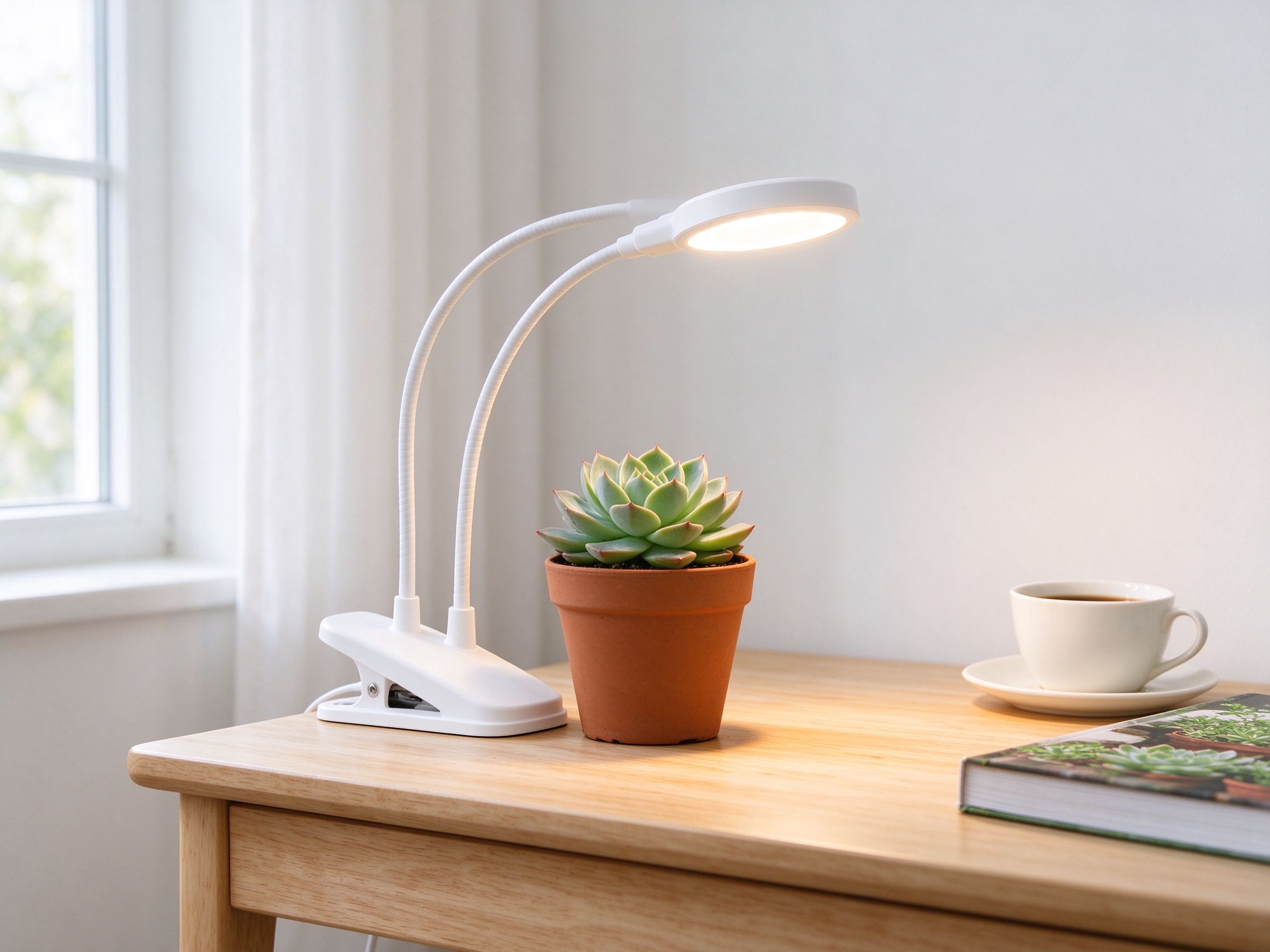
The bseah grow light is the answer for the classic setup: one pot, one clamp, no drilling, no permanent install. Its whole job is to hang onto the edge of a shelf or desk and point light at your plant.
Buyers consistently praise the clamp and the gooseneck arms. One 5-star reviewer called the clamp strong and said it attaches securely to a plant stand or table, with flexible gooseneck arms that make it easy to adjust the angle. Another said the arms are adjustable and hold their position without sagging, which is the thing budget clip lights usually get wrong.
The built-in timer is the feature people mention most. The same reviewer described setting it for a set number of hours each day, with the light turning on and off automatically, which saved them from remembering to plug it in or turn it off every day. A reviewer who left for a three-week trip set the timer button to run up to 12 hours and came back to plants thriving better than ever.
It’s not perfect. A 4-star reviewer noted that it’s not strong enough to start seedlings from seed, and that the plug-in adapter runs warm on the two-arm model. A 3-star review flagged short cords, around 54 inches, which can be annoying on tall shelves, plus a protective film over the LEDs that is frustrating to remove. Multiple reviewers also warn about durability, with some units reportedly breaking within months of use. For the price, it’s an easy first light, not a buy-it-for-life tool.
Grab the bseah clip-on grow light if you want a cheap, adjustable light for one pot on a desk or shelf.
Grow Light Strips: Shelf Coverage for a Whole Collection
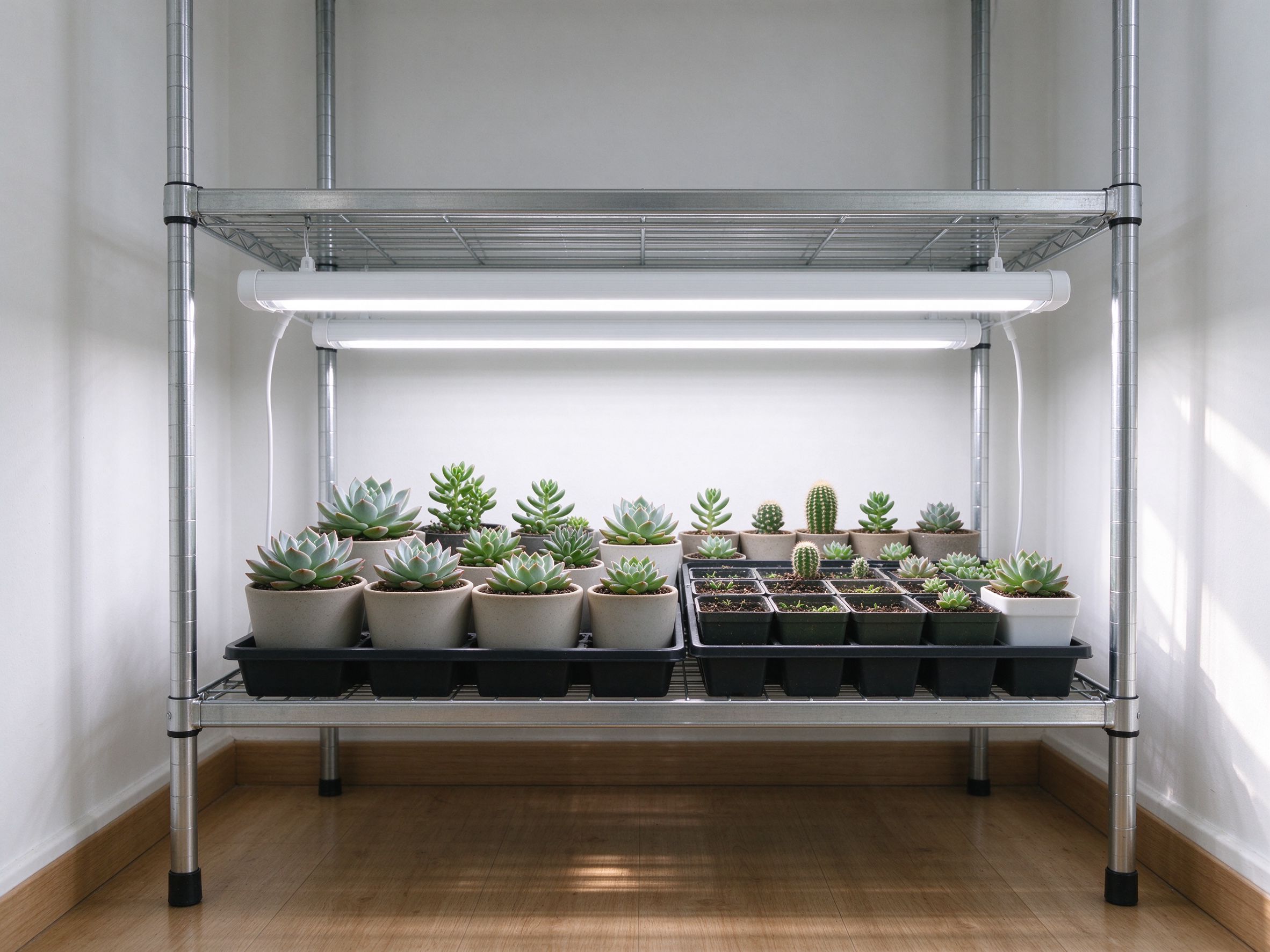
If you have a wire shelf or a rack of plants, strips beat clip lights. The Barrina T8 1FT six-pack is built to be mounted under a shelf and daisy-chained together so one outlet powers several lights.
One detailed 5-star review called these the entry grow lights, plug-and-play with a clean daylight color that’s the closest thing to the sun among budget lights without the harsh pink glow. The same reviewer liked that they daisy-chain easily and praised the customer support after some cables were missing from the box. Another reviewer reported a near 100 percent germination rate with seedlings kept a few inches from the strips, and said the result was healthy plants that didn’t get leggy. A third called them outstanding for coverage, with nearly no heat and fewer cords thanks to the daisy-chain connection.
The common gripes are practical, not fatal. The six-pack only comes with three wall cords, so you can’t run all six lights independently; you’ll always daisy-chain two per outlet. Reviewers also mention short power cords and a switch placed awkwardly in the middle of the cord, and there’s no way to dim them. A few buyers reported durability hiccups, including one set where lights fell down after about a week, so it’s worth checking your mounting hardware. For shelves and seed starting, the coverage per dollar is hard to beat.
Check out the Barrina T8 grow light strips (6 pack) if you’re lighting a whole shelf or starting seeds.
Grow Light Bulb: Screw Into a Lamp You Already Own
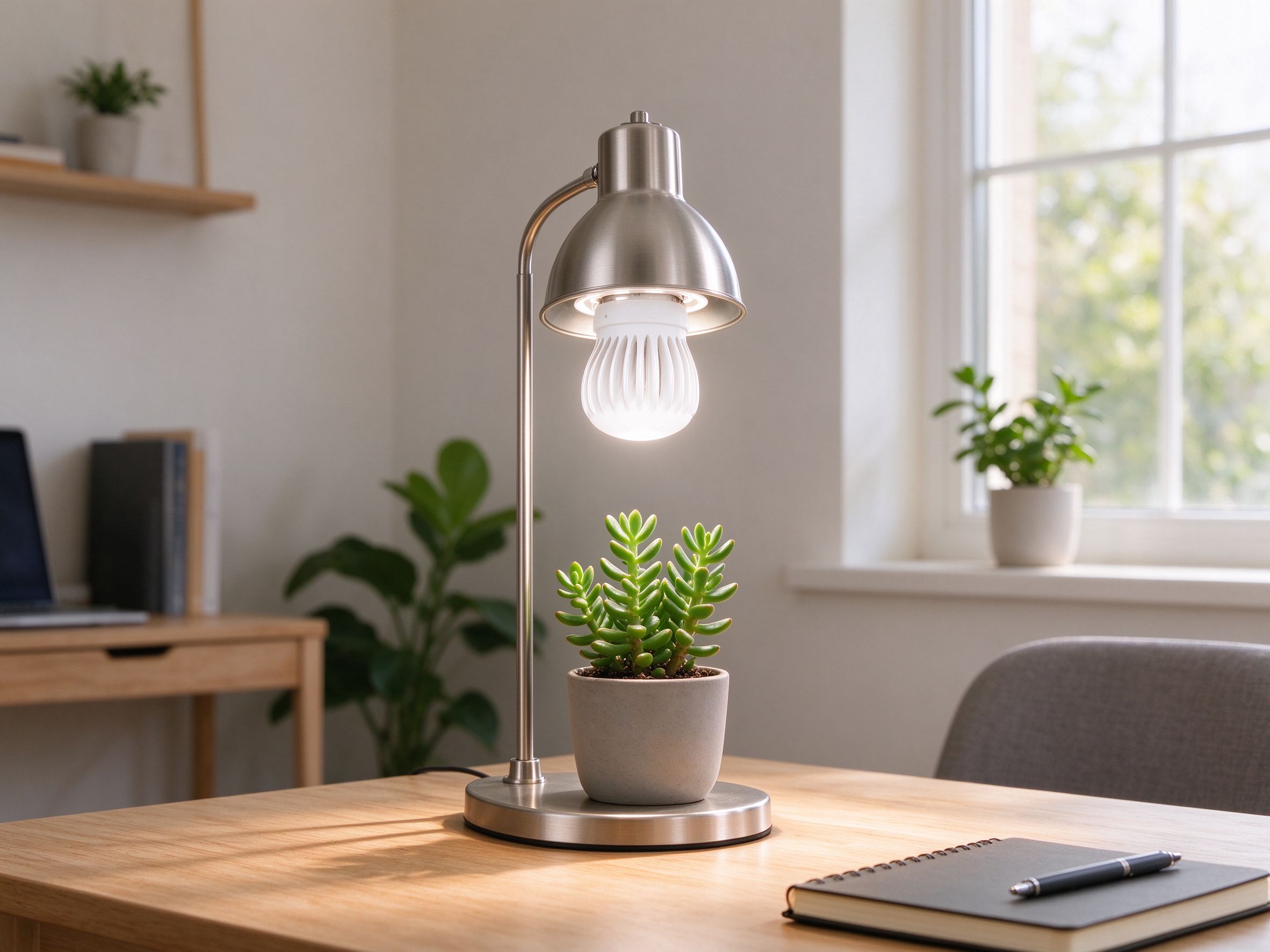
If you already have a floor lamp or a desk lamp, the cheapest upgrade is a bulb swap. The SANSI 36W grow light bulb drops straight into most standard lamp sockets.
The standout review on this bulb compares the 15W, 24W, and 36W versions after years of use. The reviewer recommends the 36W for a medium collection or anyone growing fruit or vegetables, and notes that independent reviewers with spectrometers confirmed a proper full spectrum including a little UV. The same reviewer measured roughly 22K lux a foot below the bulb and about 8K lux at two feet, which tells you how much brightness drops with distance. Another buyer reported their monstera sprouting a new leaf and growing nearly 5 cm of aerial root within a week of use, and called it one of the brightest lights they’d ever seen.
The honest downsides matter here. The bulbs run hot after a full day, and reviewers warn against putting them in closed lampshades that restrict airflow; one said the diodes are too hot to touch with bare hands right after use. There’s also an audible coil whine on some units, the light cone is narrow and focused rather than broad, and the 36W is heavy enough to sag a flimsy gooseneck lamp. Reliability gets mixed reviews, with some buyers reporting bulbs dying within a couple of months. On the plus side, SANSI’s customer service shows up: multiple reviewers describe getting replacements sent free even outside the return window, including one case where the buyer had mistakenly used a dimmer socket.
Swap in the SANSI 36W grow light bulb if you want serious power without buying a whole new lamp.
Halo Plant Grow Light: A Compact Ring for One Pot
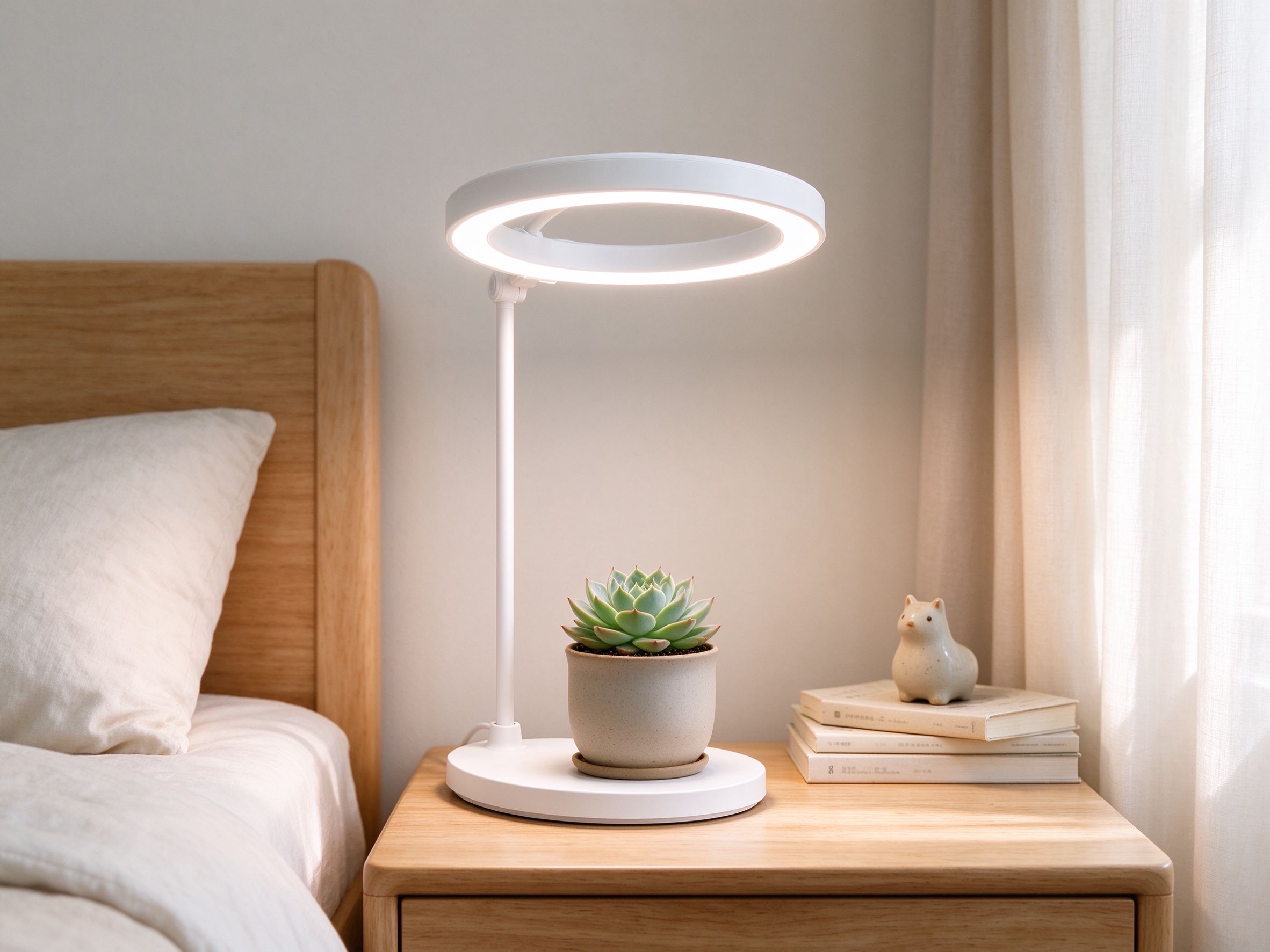
The Halo is the small-space option: a ring lamp on an adjustable stem that sits right over one plant. It’s explicitly marketed for succulents and small plants, and it’s small enough for a desk corner or a nightstand.
Reviewers like the timer and the adjustable brightness. One said the timer goes on at the same time every night, which is exactly what you want for a plant that needs consistent light. Another praised the sunrise and sunset style brightness modes and found the light bright and effective, though they recommend it for a single plant rather than a whole shelf. A third reviewer, using it on an office croton, said the changes were noticeable within the first week, with baby leaves emerging, and that the lamp stays cool to the touch. Another buyer confirmed no flickering and liked that the stem extends to fit different plant sizes.
Durability is the weak spot. Multiple buyers report the light burning out after a couple of months, and one reviewer’s pole broke during assembly and never stayed clicked together. The light ring can also pop off if you pull up on it. One 3-star reviewer’s unit worked great for about nine months and then shut off for good. For a few dollars, it’s a friendly first light, but treat it as a budget item.
Pick up the halo grow light for succulents for a tidy, single-plant setup that fits almost anywhere.
Full Spectrum Plant Light with Base: A Desktop All-Rounder
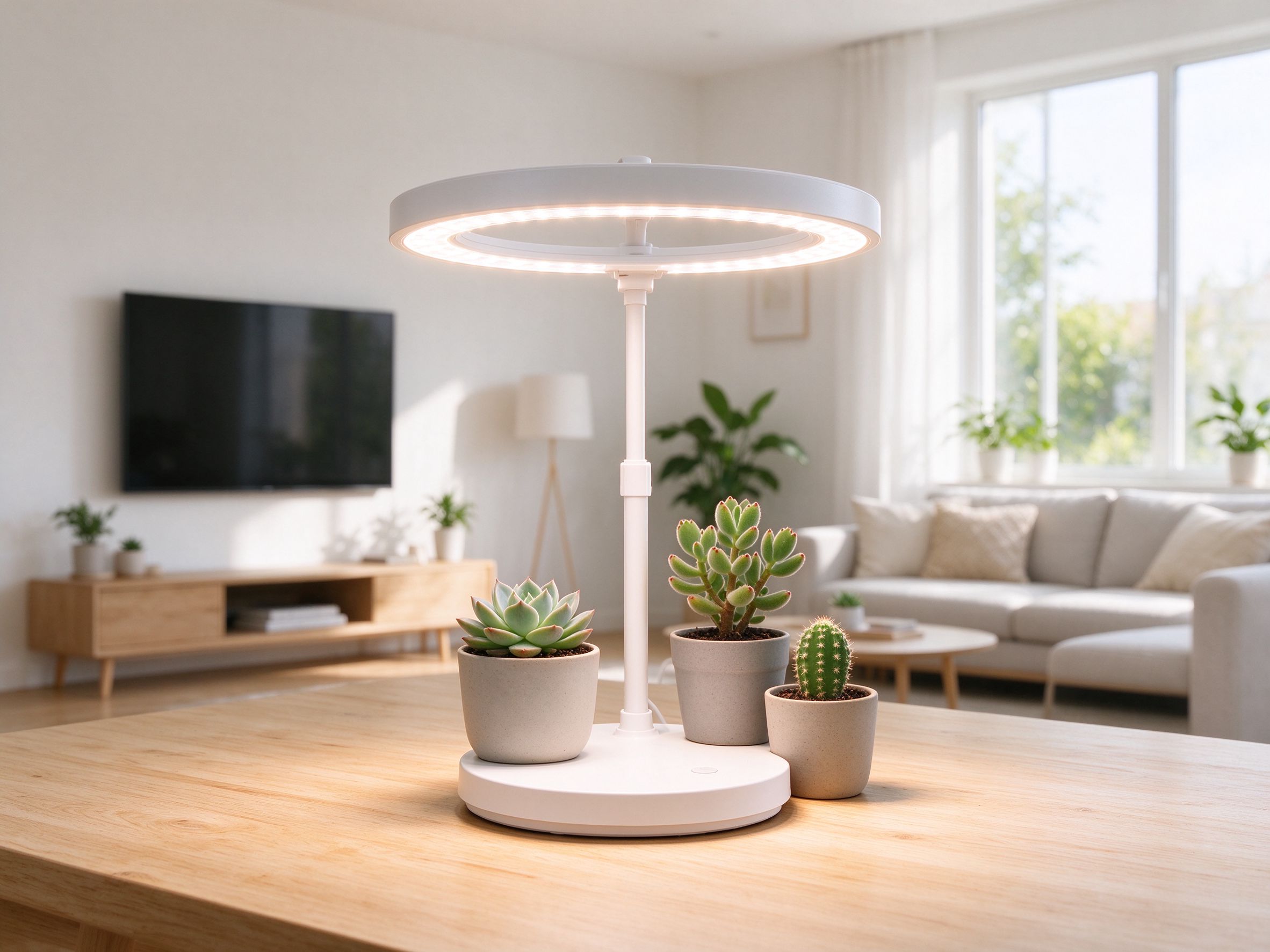
This one is the do-it-all desktop light: a full spectrum lamp with a base, an adjustable stake, and a halo design for even coverage. It works either way you mount it, stake pushed into the soil or stake clipped into the included stand.
Buyers call it easy to set up and say the adjustable height suits smaller plants and seedlings. One 5-star review liked that the halo design gives nice, even light coverage and that you can switch between different spectrum settings depending on what the plants need. Another praised the compact size and the timer, saying there was no noticeable spike in the electric bill after a winter of daily use. A third described setting the timer once and never touching it again, with the lights turning themselves on every morning.
The consistent complaints are stability and size. The stand is light and flimsy, with a base roughly an inch and a half wide, so a pot on top can sit at a tilt. Several reviewers say the light is top-heavy and sways or tips easily, and one found it hard to keep standing straight no matter which mounting method they used. It’s not built for tall plants, the stake doesn’t bend like a gooseneck, and a couple of buyers wished the cord were longer. Most buyers still call it a great value for small to medium pots.
Go with the full spectrum plant light with base if you want a stable desktop lamp you can move from pot to pot.
How Close and How Long: Distance and Daily Hours
Distance and schedule are where grow lights succeed or fail, and the reviews back up the simple version.
Distance. Start with the light 6 to 12 inches above the plant, then watch for response. The SANSI reviews make the physics obvious: one reviewer measured about 22K lux a foot below the bulb and roughly 8K lux at two feet, and noted the light cone is narrow and focused, so plants directly under the bulb get significantly more light than those around the edges. Another SANSI reviewer ran the bulb 6 to 10 inches from their plants with no burning. Strip lights and clip lights follow the same rule, closer is stronger, but leave enough room for the plant to grow without touching the diodes.
Daily hours. Most reviewers land in the 10 to 14 hour range. The bseah timers offer 3, 9, and 12-hour settings, the Halo offers 4, 8, 12, and 18 hours, and the base light offers 3, 9, and 12 hours, with several buyers setting 12 hours and forgetting about it. One Barrina reviewer runs a 16-on, 8-off schedule for seedlings, and one SANSI reviewer pushed 17 hours a day with strong growth. Twelve hours is a sane starting point for succulents in winter. A timer removes the whole “did I leave it on all night” question, which is why every pick in this list gets praised for its timer. The same setup keeps winter herbs going too — see which herbs actually thrive on a winter windowsill.
If leaves start looking bleached or scorched, move the light up or cut the hours back. One reviewer noted that high intensity runs hot and can shorten the LED life, and another said leaves can burn if the light is too strong or left on too long, so increase exposure gradually rather than blasting a new plant on day one.
Common Mistakes That Undo a Good Light
Even a good light fails if you set it up wrong. These are the mistakes that show up again and again in buyer reviews.
Hanging it too far away. A foot more of distance can mean a fraction of the light. The SANSI measurements in the section above show why: move the lamp up and the plant gets a small share of what it got before. Keep the light close enough to matter.
Blocking the airflow or using a closed shade. The SANSI reviewers are emphatic: don’t use hoods or closed lampshades, because the bulb is designed to shed heat through its hollow body. Trapped heat shortens the life of any bulb.
Plugging into a dimmer socket. One SANSI reviewer blew bulbs before realizing the problem was a dimmer socket, not the product. Use a standard outlet, not a dimmer.
Expecting a small light to do a big job. A clip light isn’t a seedling station, and a compact base light won’t cover a tall plant. Buyers who matched the light to the job were happy; buyers who didn’t left 3-star reviews.
Letting it tip over. Several base-light reviewers described pots doing a balancing act on a flimsy stand, and one Halo buyer’s pole broke during assembly. If your light wobbles, fix the mount before you trust it near a favorite plant.
Skipping the timer. The single most repeated compliment across all five products is the timer. The reviewers who used it stopped worrying; the ones who didn’t ended up with lights running all night or plants going dark for days. If your light has a timer, use it.
Not adjusting gradually. Succulents adjust to brighter light like people adjust to a sunny day after a cloudy week. Give the plant a week to adapt before you crank the intensity or the hours.
Start with the three signs, match a light to the spot where your plant actually lives, set the distance and hours, and let the timer do the remembering. A small light placed correctly beats a stronger light parked two feet too far away.
Disclosure: Some links in this post are affiliate links. If you buy through them, I may earn a small commission at no extra cost to you. See the full affiliate disclosure, and read how we research on our methodology page.