9 Hard-to-Kill Houseplants for Beginners: 3 Mistakes to Avoid
9 Hard-to-Kill Houseplants for Beginners: 3 Mistakes to Avoid
Most first plants don’t die from neglect. They die from kindness. Someone buys a cute little plant, waters it every Sunday like clockwork, and watches it rot in six weeks. The fix isn’t a greener thumb. It’s picking a plant that matches your actual light, your actual schedule, and your actual pets, then avoiding three mistakes that kill more first plants than any pest ever will.
This guide walks you through the nine easiest houseplants to keep alive, grouped by the four situations new plant parents actually live in. Each plant gets one line on why it survives you, and one line on how to care for it. Pick your situation, pick a plant, and skip the funeral.
The 3 mistakes that kill most first plants
Mistake 1: watering on a schedule. Plants don’t drink on a calendar. Water when the soil is dry, not when the app tells you to. Stick a finger two inches into the soil; if it comes out damp, close the watering can. A cheap soil moisture meter takes the guesswork out of the finger test.
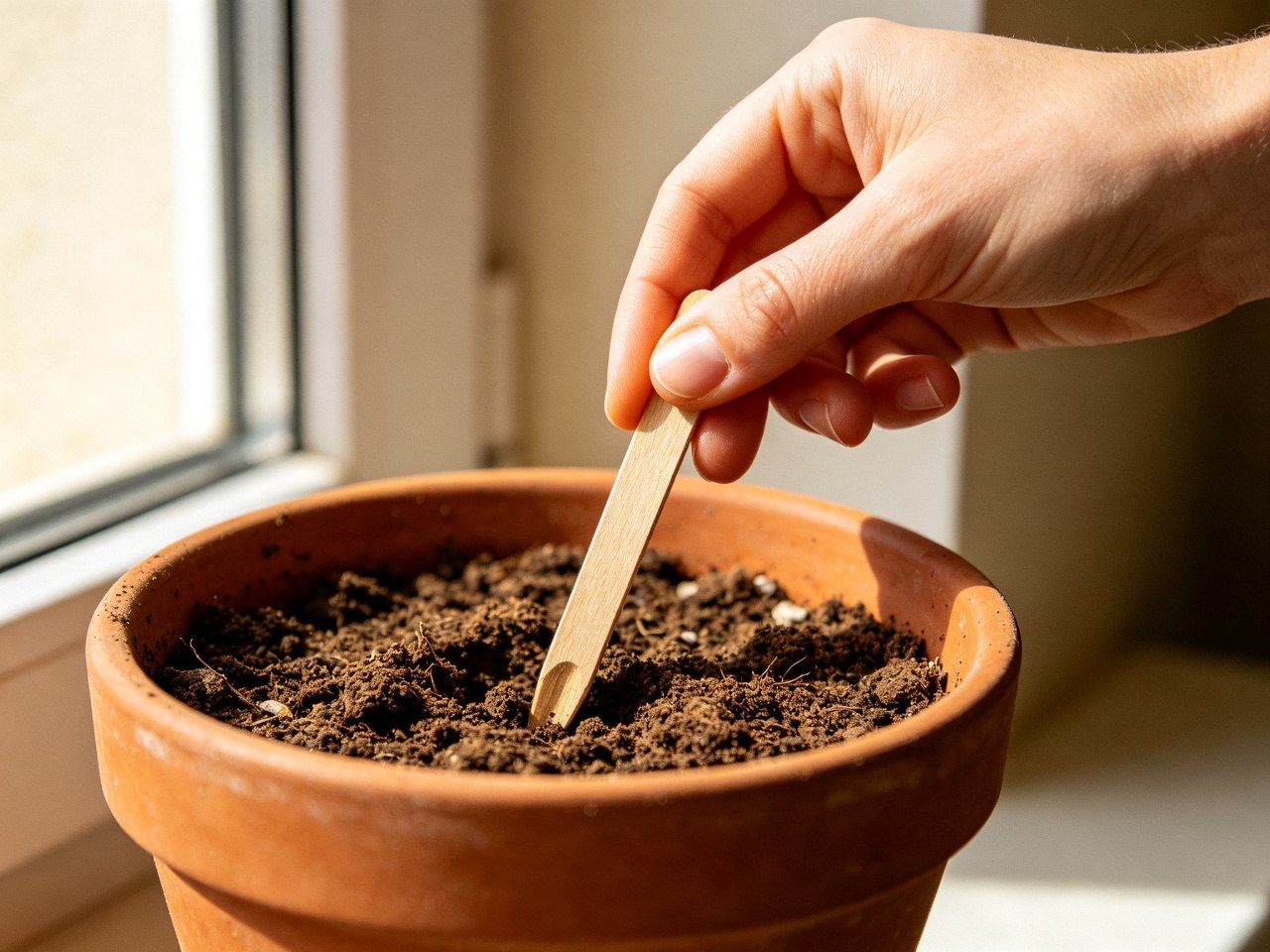
Mistake 2: choosing a plant for looks instead of light. That dreamy calathea with painted leaves will sulk on a dark shelf, and you’ll blame yourself. Match the plant to the room first. If the room gets almost no light, pick from Group 1 below and stop browsing the Instagram plants.
Mistake 3: fussing. Repotting the week you bring it home, moving it to a new spot every few days, fertilizing it to show love. Every change is stress. Give a new plant two weeks in one spot before you do anything except water it. If you’re tempted to do more, go make tea instead. (More on container basics and common setup slips in our container gardening mistakes post.)
Group 1: Low light: north windows, offices, bathrooms
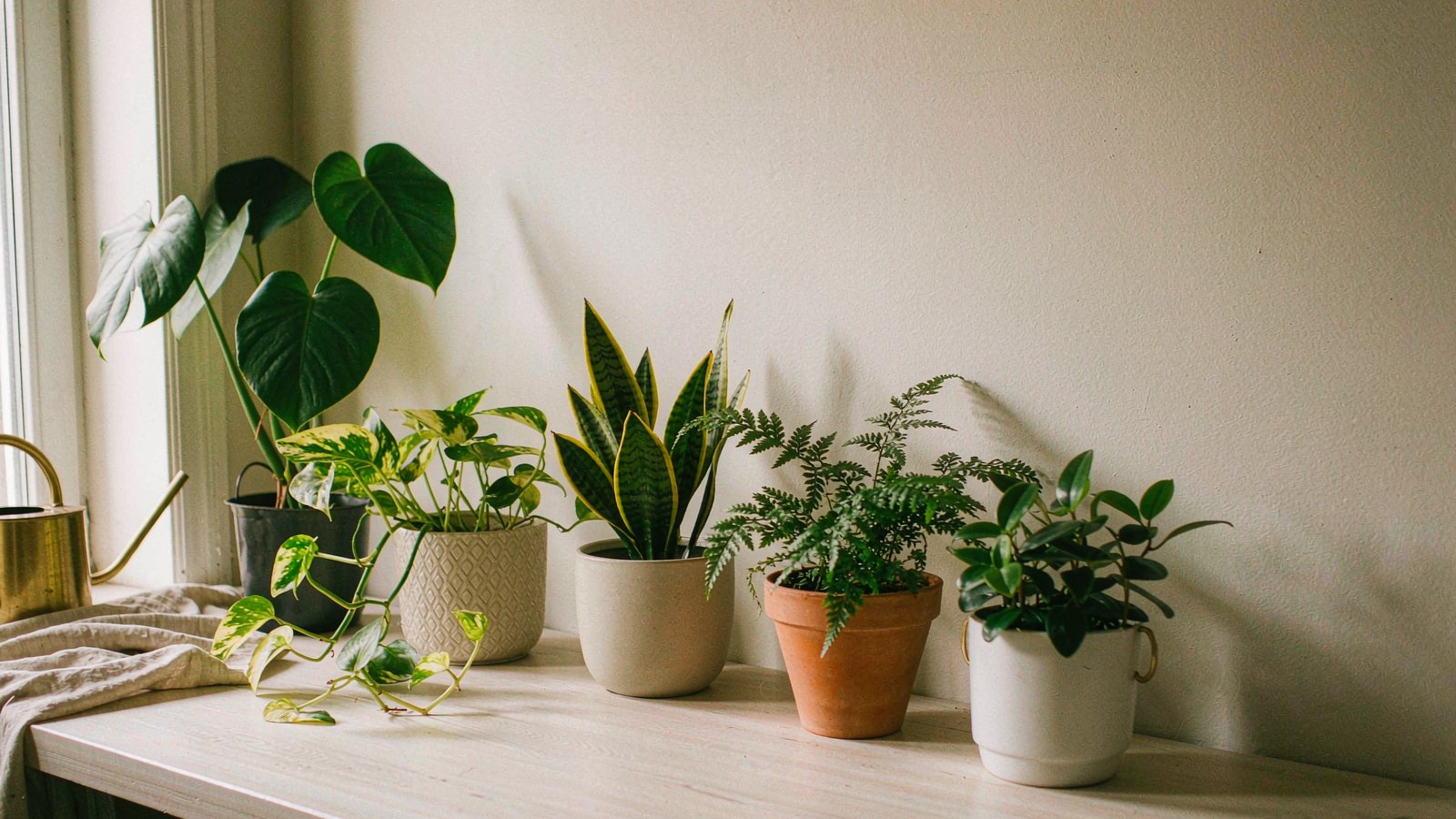
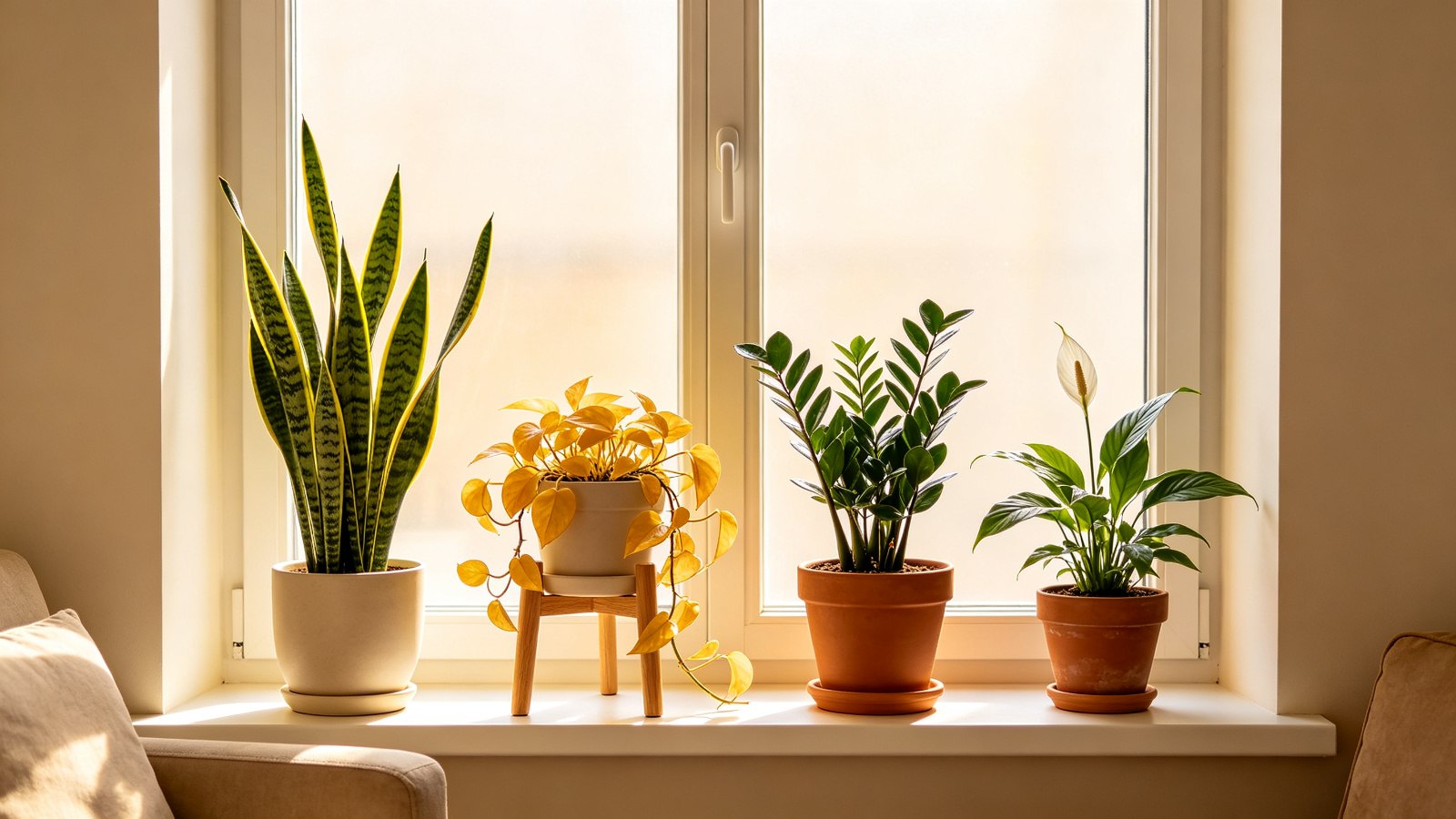
Snake Plant (Dracaena trifasciata). The plant that forgives everything. It tolerates low light, dry air, and weeks of neglect, and it only needs watering every two to three weeks. Why it survives you: it stores water in thick leaves and photosynthesizes on a slow schedule. Care: bright light is fine, dim light is fine; just don’t sit it in soggy soil.
ZZ Plant (Zamioculcas zamiifolia). The other unkillable low-light legend. Shiny dark leaves that look fake, growth that keeps going in a corner that gets morning light for an hour. Why it survives you: underground rhizomes hold water reserves, so missed waterings bounce right back. Care: water when the top two inches are dry, which can be every two to three weeks.
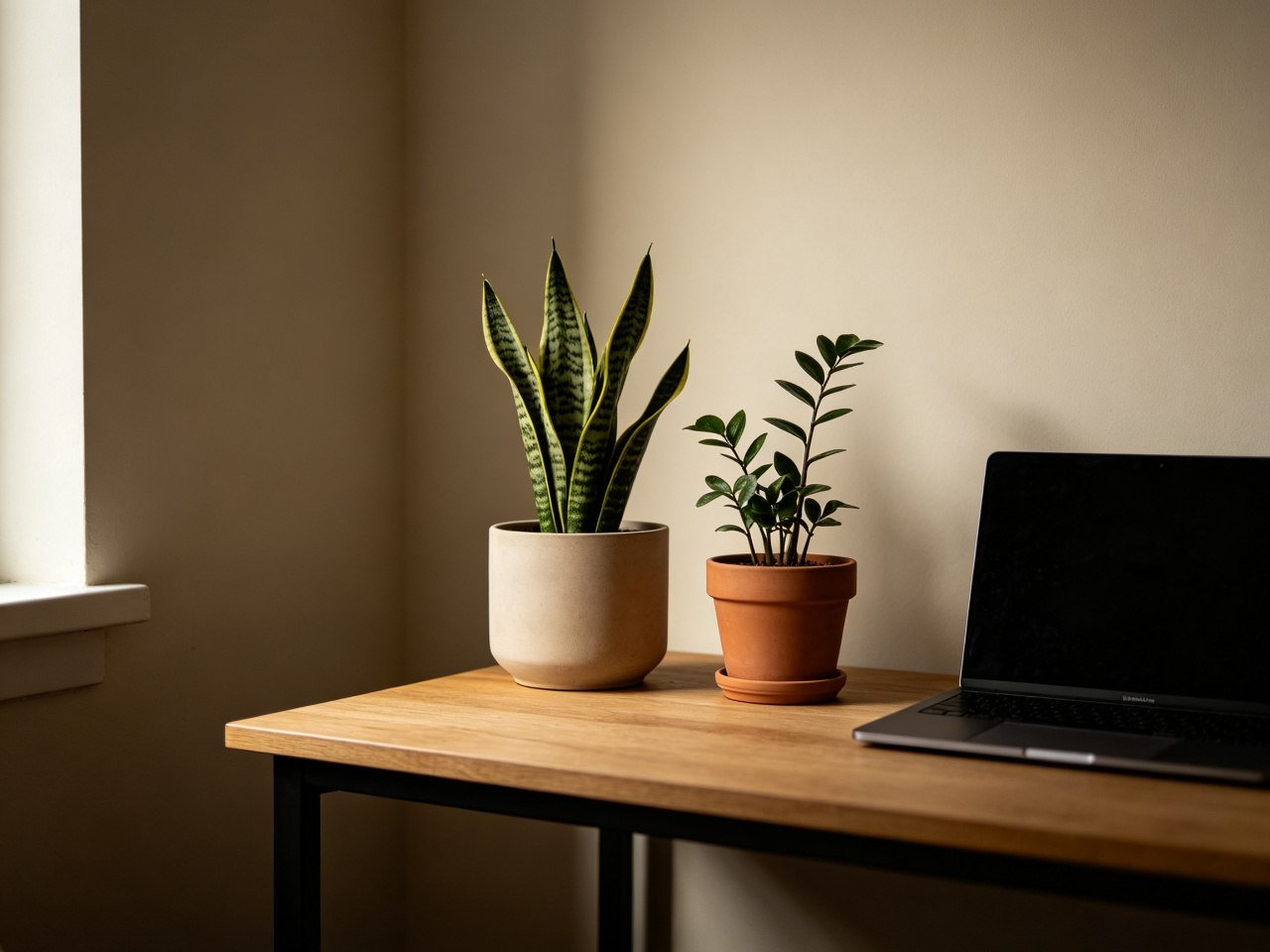
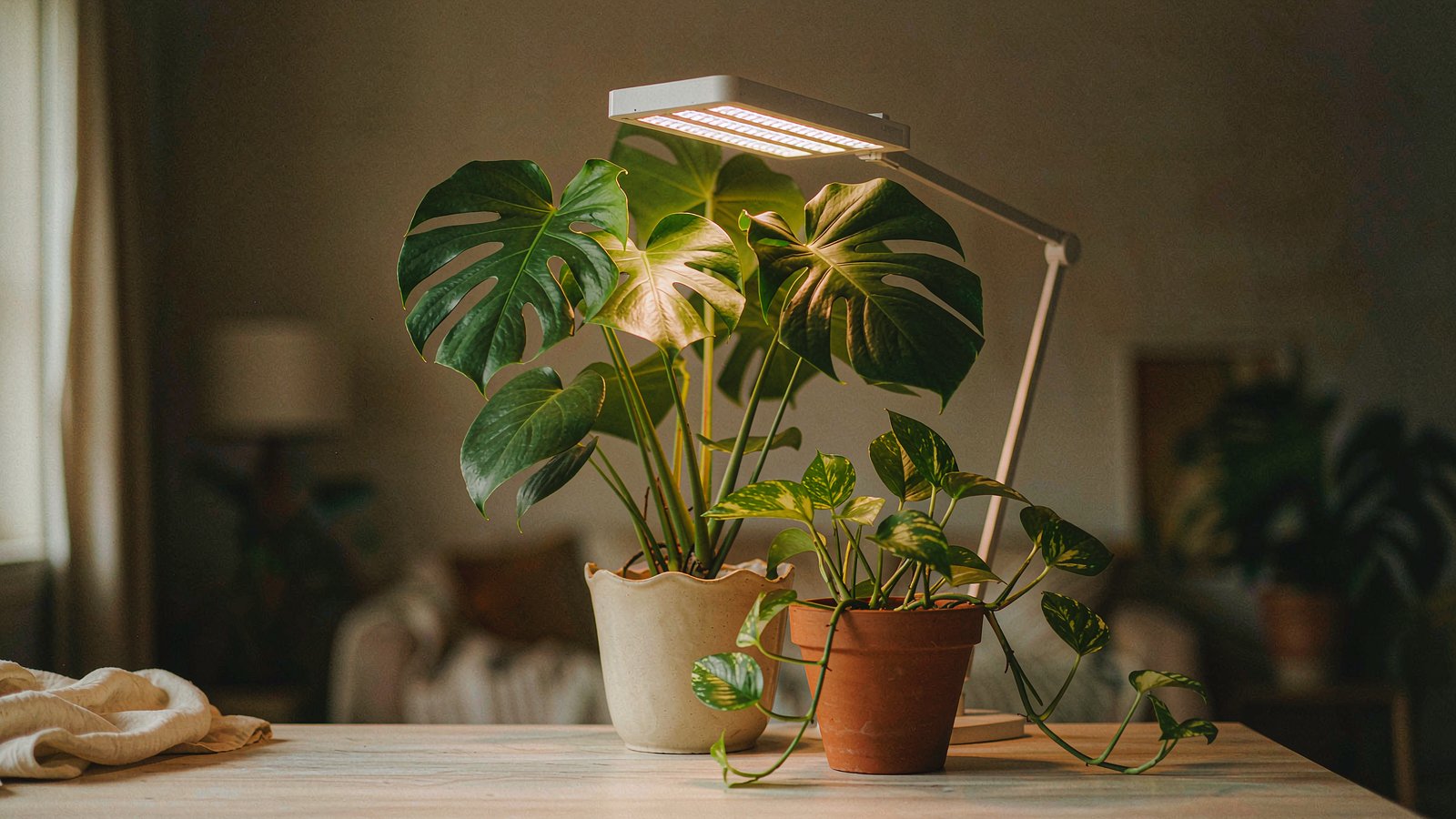
If your space has no real window light at all, even these two will eventually stretch. A full-spectrum grow bulb in a desk lamp can carry them for years on a north wall, and we explain exactly how far to hang it in our grow lights for indoor plants guide.
Group 2: Forgetting to water: busy schedules and travel
Golden Pothos (Epipremnum aureum). The plant that tells you when it’s thirsty: leaves droop dramatically, then bounce back within hours of a drink. Why it survives you: it forgives both under-watering and over-watering better than almost anything. Care: water when the top inch dries, bright indirect light or a modest window.
Hoya (wax plant). Thick waxy leaves store water like a succulent, so it genuinely prefers to dry out between waterings. Why it survives you: it wants to be forgotten. Care: water every two to three weeks, let it trail from a shelf, and leave it alone.
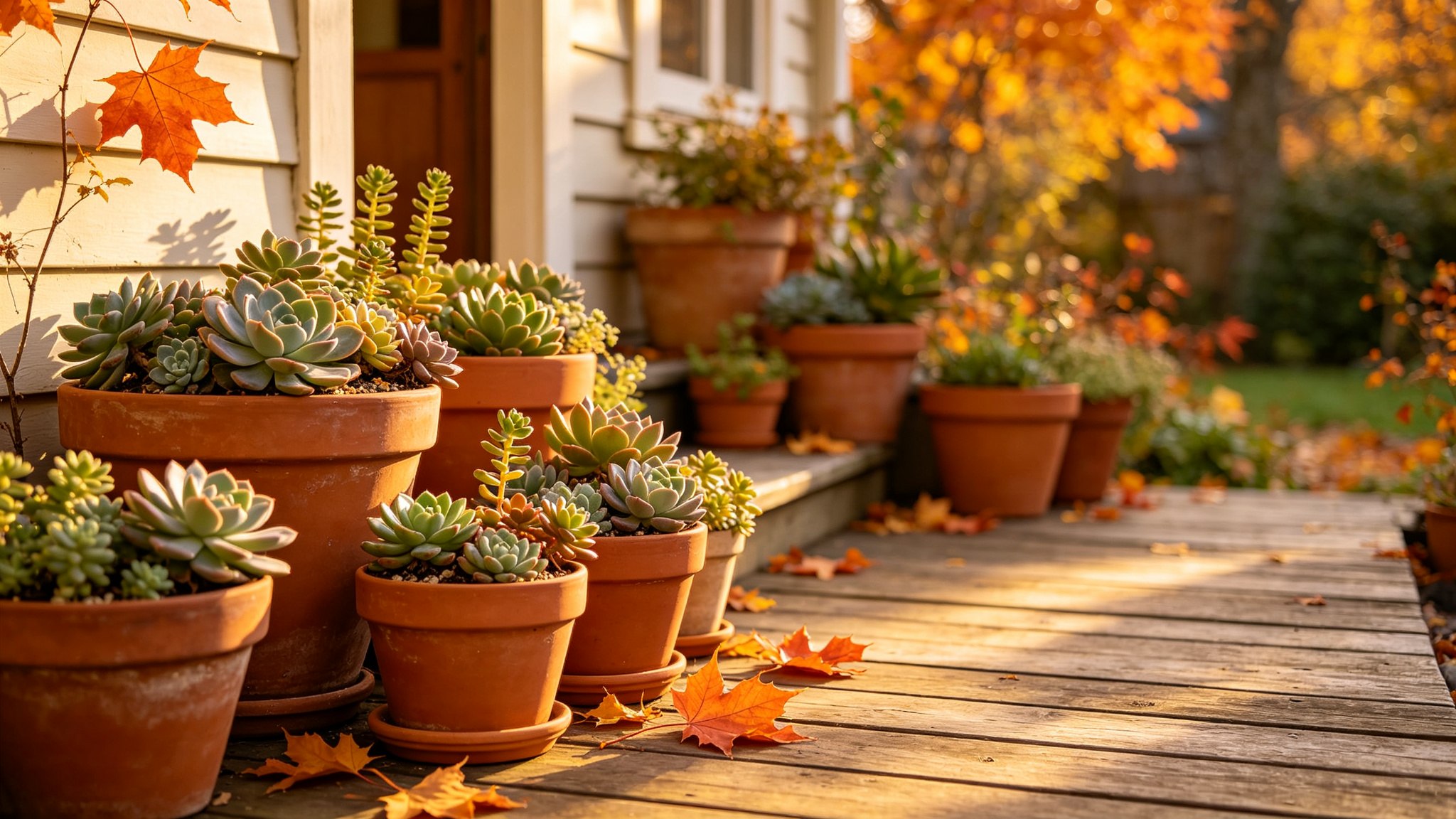
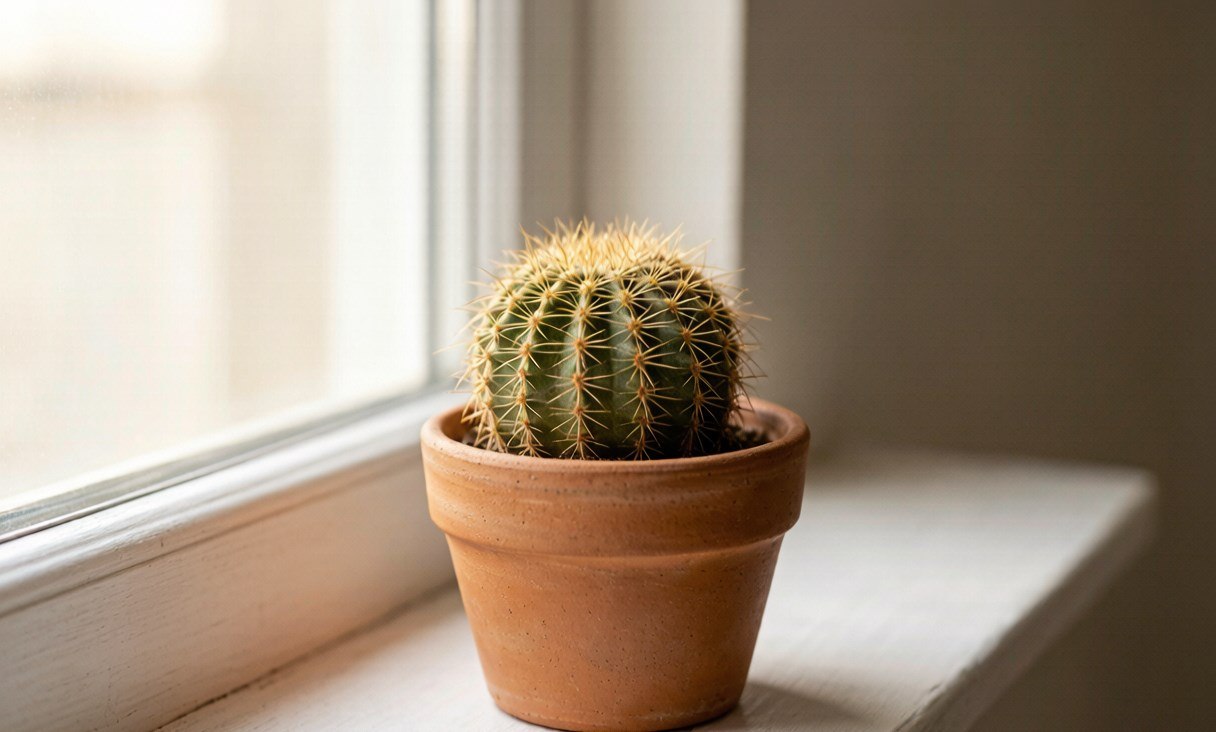
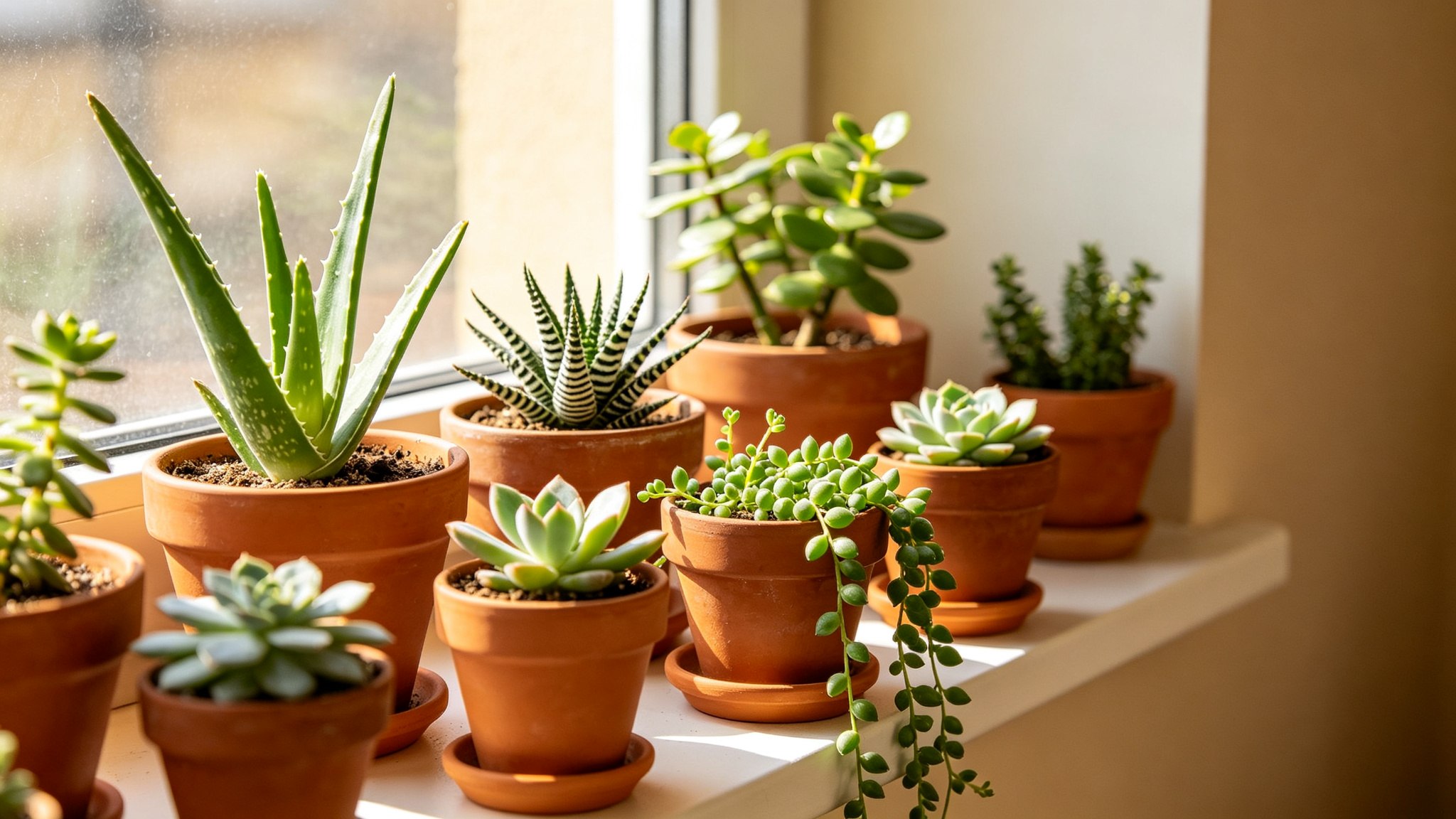
Succulents and cacti. The classic “I forgot about you for a month” plants. Why they survive you: they’re built for drought. Care: bright light, gritty soil, and water only when the soil is bone dry. If you want the full routine, we have a whole succulents for beginners guide and a cactus care walkthrough with the soil mix that actually keeps them alive.
Group 3: Humid rooms: bathrooms and kitchens
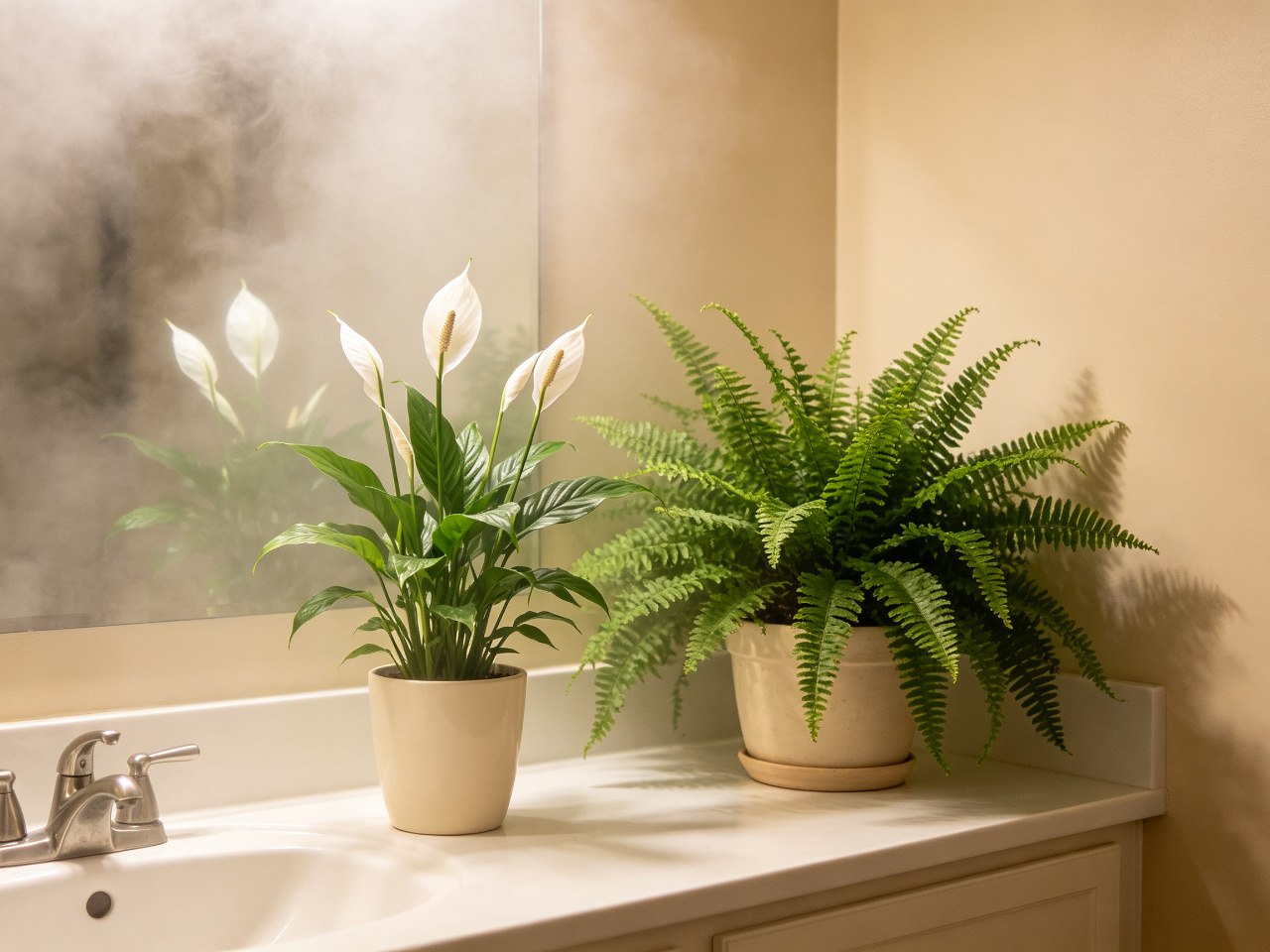
Peace Lily (Spathiphyllum). The plant that visibly faints when thirsty, then stands back up after a drink. Why it survives you: it’s loud about its needs, which is the opposite of most houseplants. Care: it likes the humidity of a bathroom, bright indirect light, and watering when the leaves start to droop.
Boston Fern (Nephrolepis exaltata). The humidity lover that thrives in steamy bathrooms and kitchens. Why it survives you: it’s forgiving as long as the air isn’t dry and the soil isn’t bone dry. Care: keep the soil lightly moist, give it indirect light, and trim the brown tips without guilt.
A note beginners get backwards: high humidity does not mean more watering. A fern in a steamy bathroom wants a drink only when the top inch of soil dries, not every day. In dry winter air, a small cool-mist humidifier on the counter keeps ferns from crisping at the tips.
Group 4: Pets at home: plants safe for cats and dogs
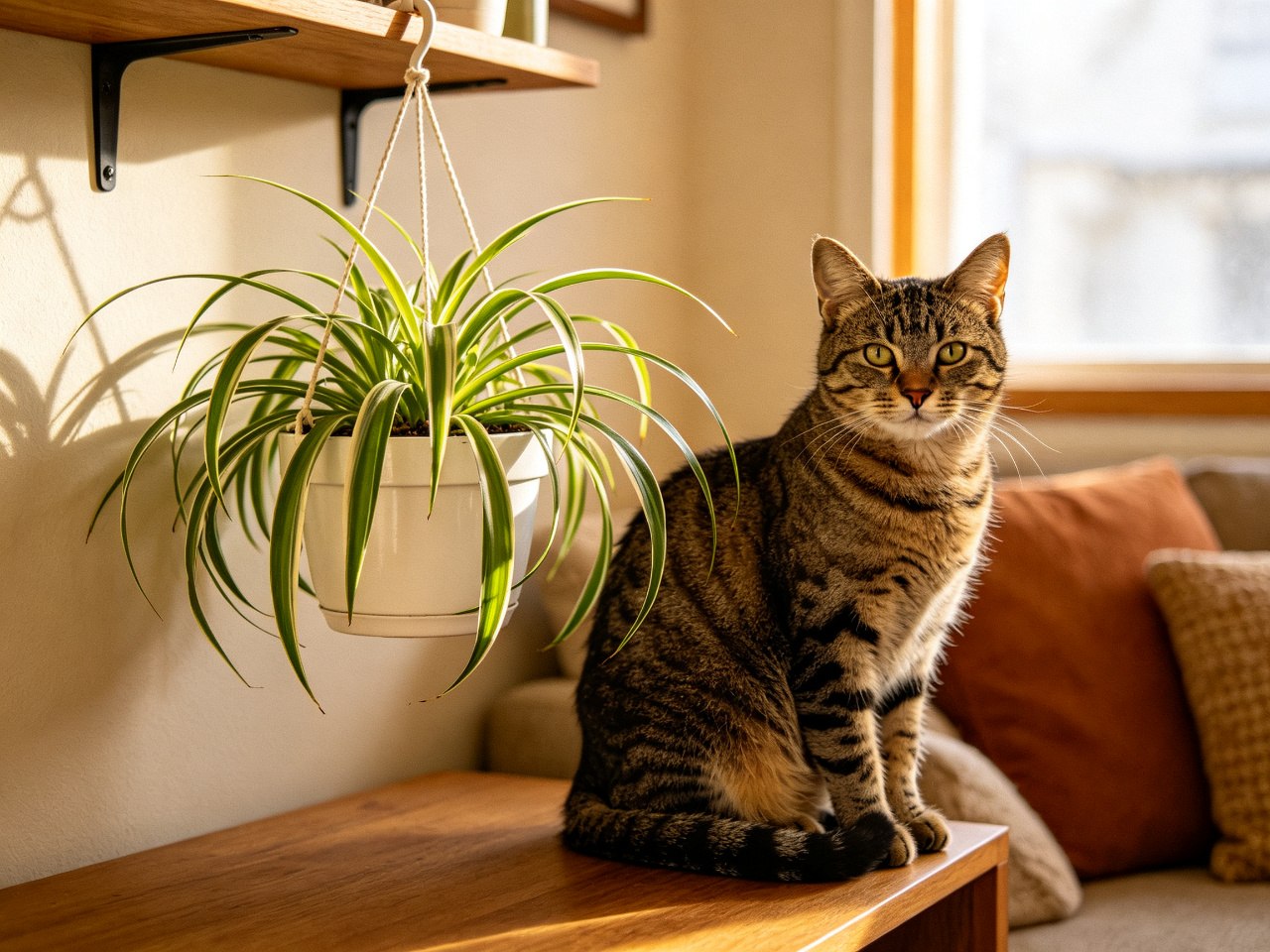
Spider Plant (Chlorophytum comosum). A safe, forgiving, fast-growing plant that cats sometimes nibble without harm. Why it survives you: it tolerates a wide range of light and bounces back from missed waterings. Care: bright indirect light, water when the top inch dries, and it’ll reward you with baby plantlets.
Calathea (prayer plant family). The prettiest plant on this list, and the pickiest. Why it survives you: with the right spot it’s reliable, and many varieties are non-toxic to pets. Care: it needs consistent moisture and humidity, so keep it in a bathroom or near a humidifier. Check the ASPCA’s toxic plant list before you commit to any plant, including these two, because individual tolerance varies.
What to actually buy for a first plant
You don’t need a shelf full of gadgets. Three things cover 90 percent of beginners:
- A pot with drainage. A simple pot with a drainage hole, or a decorative pot you lift the grower pot out of before watering, is the cheapest insurance you can buy. Root rot is the number one plant killer, and it starts with water pooling at the bottom.
- A bagged houseplant mix. A bagged houseplant mix with perlite drains faster and keeps beginners out of the mud-and-rot trap. Most houseplants hate dense, waterlogged soil.
- A moisture meter. Ten dollars that ends the “should I water it?” debate. If the needle says dry, water; if it says moist, walk away.
FAQ
What is the easiest houseplant to keep alive?
Snake plant and ZZ plant are the two that survive almost anything, including low light, missed waterings, and total neglect. For most beginners, a snake plant is the safest first plant on earth.
How often should I water my houseplants?
There’s no universal schedule. Check the soil: water when the top one to two inches are dry, which might mean once a week for a pothos and once a month for a snake plant. The plant, the pot, and the room all change the answer.
Can houseplants survive in a room with no windows?
For a few weeks, yes. For the long term, no plant thrives in true darkness. If you want plants in a windowless office, pair a low-light plant with a grow light (here’s our full grow light guide).
Are snake plants safe for cats and dogs?
No, snake plants are mildly toxic to pets if ingested. For pet households, the safe picks on this list are spider plants and many calathea varieties. Always check the ASPCA’s toxic and non-toxic plant database before buying.
The short version
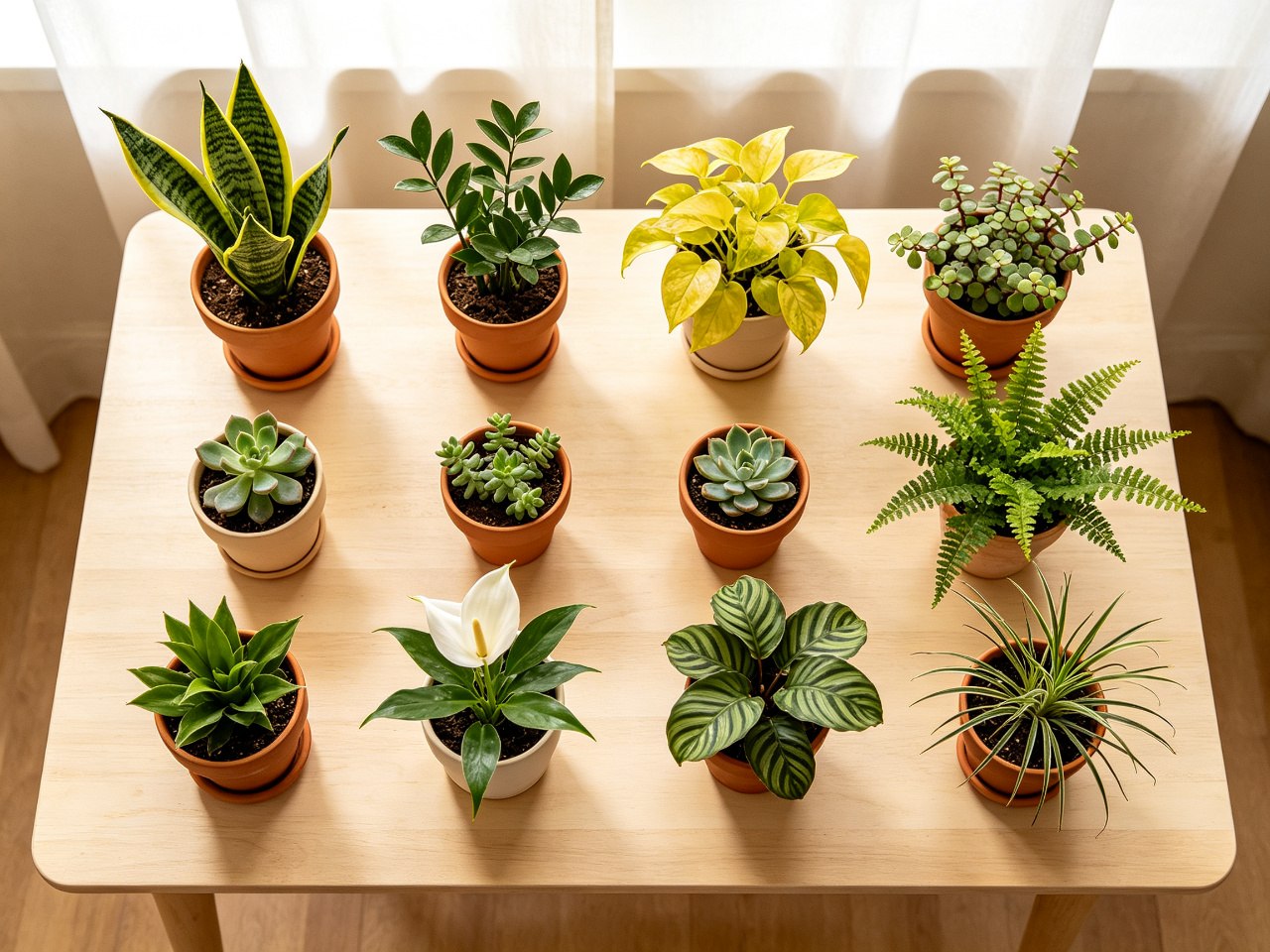
Pick your situation first: low light, a busy schedule, a humid bathroom, or a pet household. Pick one plant from that group. Give it a pot with drainage, soil that doesn’t hold water like a sponge, and water only when the soil says dry. Skip the schedule, skip the fussing, and let the plant tell you what it needs. That’s the whole secret, and it’s the same advice our fall houseplant care checklist builds on when the seasons change.
Happy growing — the watering can stays closed until the soil says otherwise.
Disclosure: Some links in this post are affiliate links. If you buy through them, I may earn a small commission at no extra cost to you. See the full affiliate disclosure.