5 Herbs That Thrive on a Winter Windowsill (and 4 That Struggle)
Winter turns a garden into a waiting room. The beds are frozen, the seed catalogs are still a month away, and the only fresh leaves within reach are the ones on your windowsill. If you live in a northern state, herbs that grow indoors in winter are a practical answer to that problem. The catch is that not every herb survives the move. Some settle in like they’ve lived there for years. Others put on a sad show for a few weeks and then collapse. The difference is rarely your skill. It’s whether the plant’s natural needs match what a winter window can actually deliver.
As an Amazon Associate I earn from qualifying purchases. Some links in this post are affiliate links — if you buy through them, I may earn a small commission at no extra cost to you.
Why a windowsill is harder than a garden bed
In summer, a garden bed gives a plant more light, more humidity, and more room to recover from mistakes. A windowsill in January gives it none of those. Two things change in winter, and they explain most of what goes wrong indoors.
The first is light. A south-facing window in summer gets hours of strong direct sun. In December the sun stays low, the days shorten, and that same window delivers only about 4 to 6 hours of direct light. An east or west window drops to 2 to 3 hours. That is a dramatic cut for plants bred to sit in full sun all day.
The second is air. Indoor heating dries the air out, and most herbs prefer some humidity around their leaves. Illinois Extension frames it simply: light levels and humidity are the two big limits on indoor growing. Get those two wrong, and no watering schedule, potting mix, or fertilizer will save you.
Ask why do indoor herbs die in winter, and the honest answer is usually written in those two numbers: hours of light and dryness of air. It is rarely a failure of care.
The window light check (do this before you buy anything)
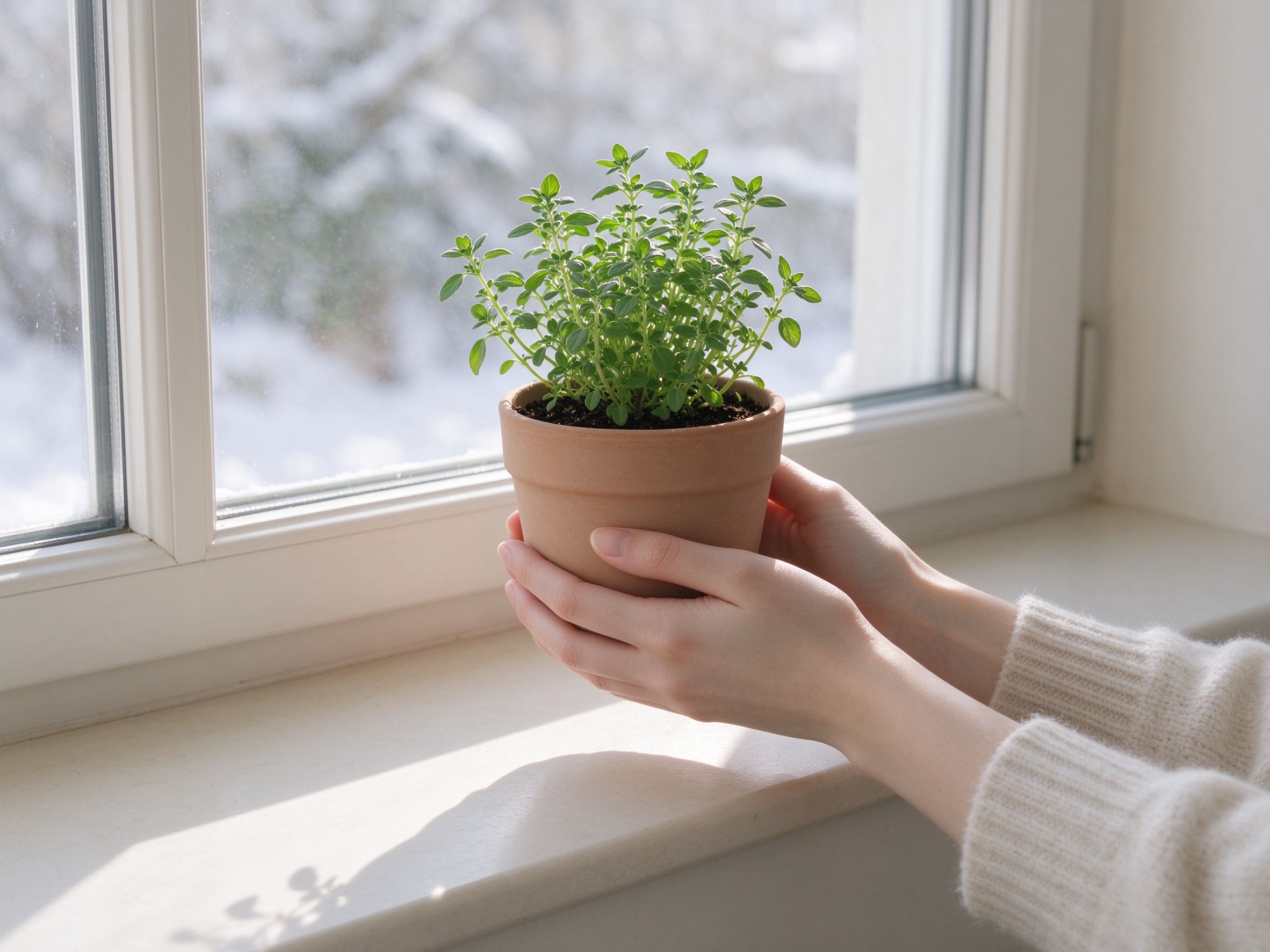
Before you trust any list of the best herbs for a windowsill, run one test on your own window. Here is the part everyone skips: bright is not the same as direct. A kitchen can feel bright all day and still give a plant almost nothing usable.
The practical test is shadows. At noon, hold a leaf or your hand between the plant and the window. If you can see a crisp, clear shadow on the sill, that is direct sun. No shadow, no direct sun, and the plant is working on borrowed light. A bright room does not count, and this one test will save you more plants than any care tip.
Here is what the window directions actually deliver in winter:
| Window | Direct sun in winter | What you can grow |
|---|---|---|
| South, unobstructed | 4 to 6 hours | All five herbs |
| East | 2 to 3 hours (morning) | Shade-tolerant only: mint, chives, parsley |
| West | 2 to 4 hours (afternoon) | Partial: mint, parsley, chives |
| North | Almost no direct sun | Not recommended without a grow light |
If you can grow herbs on a south facing windowsill, every plant in this article is in play. If your only window faces east, you are limited to the shade-tolerant group, and that is fine: it still covers the two most forgiving herbs on the list.
The five that hold up on natural window light
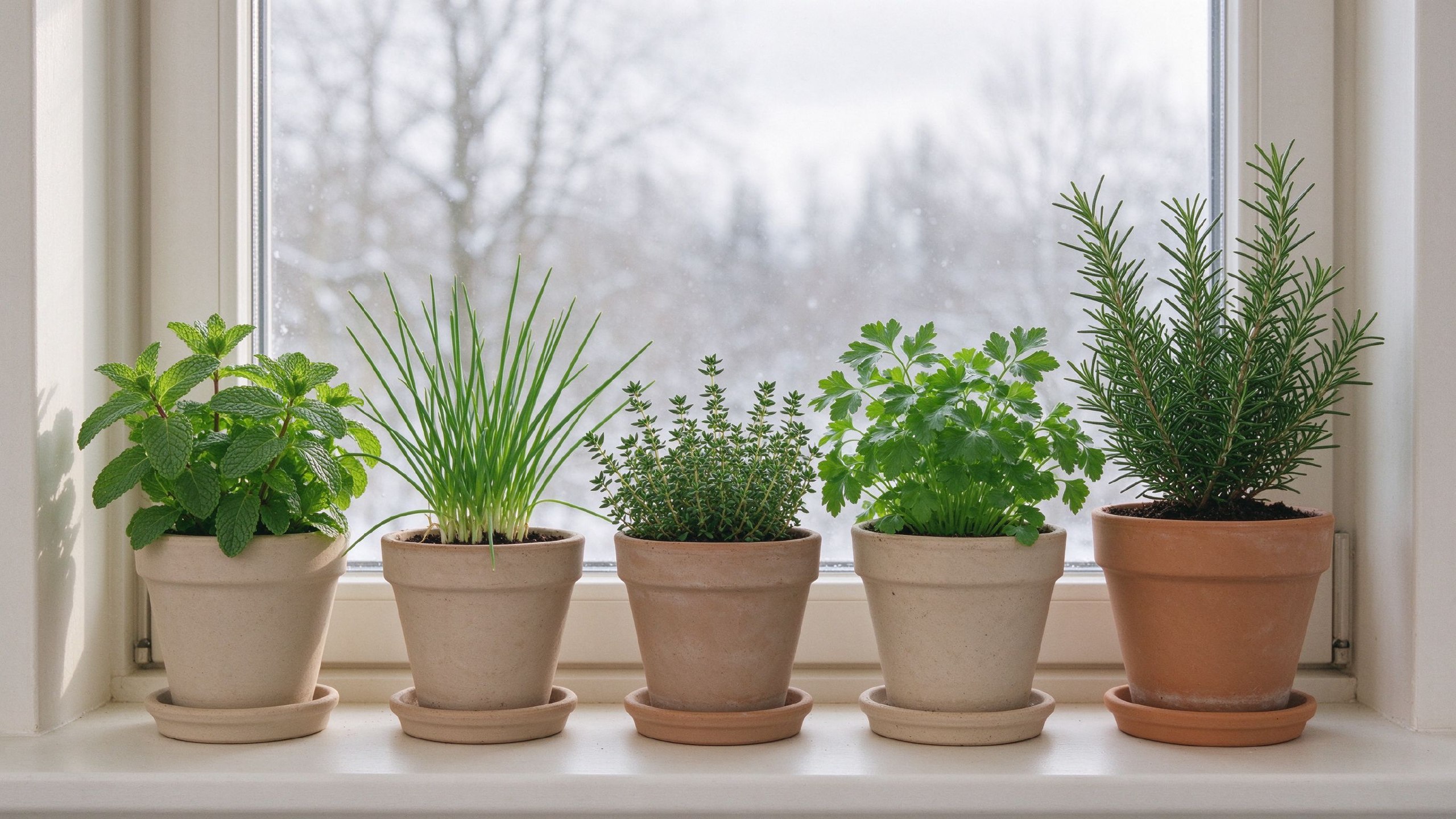
The five below are the herbs that don’t need grow lights to get through winter. They are also the practical answer to the question of herbs that survive winter indoors when your only tool is the window. So can herbs survive winter indoors? These five can, with the right window and a little patience.
Mint. Mint is the easiest plant on this list and the least fussy about light. It grows on an east sill and even tolerates a dim one, though it gets leggy. Water it when the top of the soil dries out, and don’t stress about humidity. Mint doesn’t go dormant in winter; it just slows down. Harvest by pinching off the top few leaves, which keeps the plant bushy instead of stringy.
Chives. Chives are almost as forgiving and the best choice if your window is weak. They tolerate lower light than the Mediterranean herbs and don’t demand much water. In winter they slow down and may look a little tired, but they keep producing. Snip what you need with scissors and always leave at least an inch above the soil.
Thyme. Thyme wants the brightest spot you have and a lean hand with water. It’s a Mediterranean plant, so it prefers the soil to dry out between drinks. It grows slowly in winter rather than going fully dormant. Harvest by cutting small sprigs, which keeps the plant compact instead of woody.
Parsley. Parsley is more patient with winter conditions than most people expect. It handles an east window, though it grows faster with more light. Keep the soil lightly moist, never soggy. It slows down but keeps sending up new leaves. Harvest outer stems from the base, and new ones keep coming.
Rosemary. Rosemary earns its place here but needs more attention than the rest: good airflow and careful watering, and it may go semi-dormant rather than keep growing. Give it the brightest window you own, water only when the top of the soil is dry, and never let it sit in a saucer of water. It is the plant on this list most likely to die from kindness. When it does grow, harvest small sprigs from the top.
Why basil, cilantro, dill, and tarragon keep failing
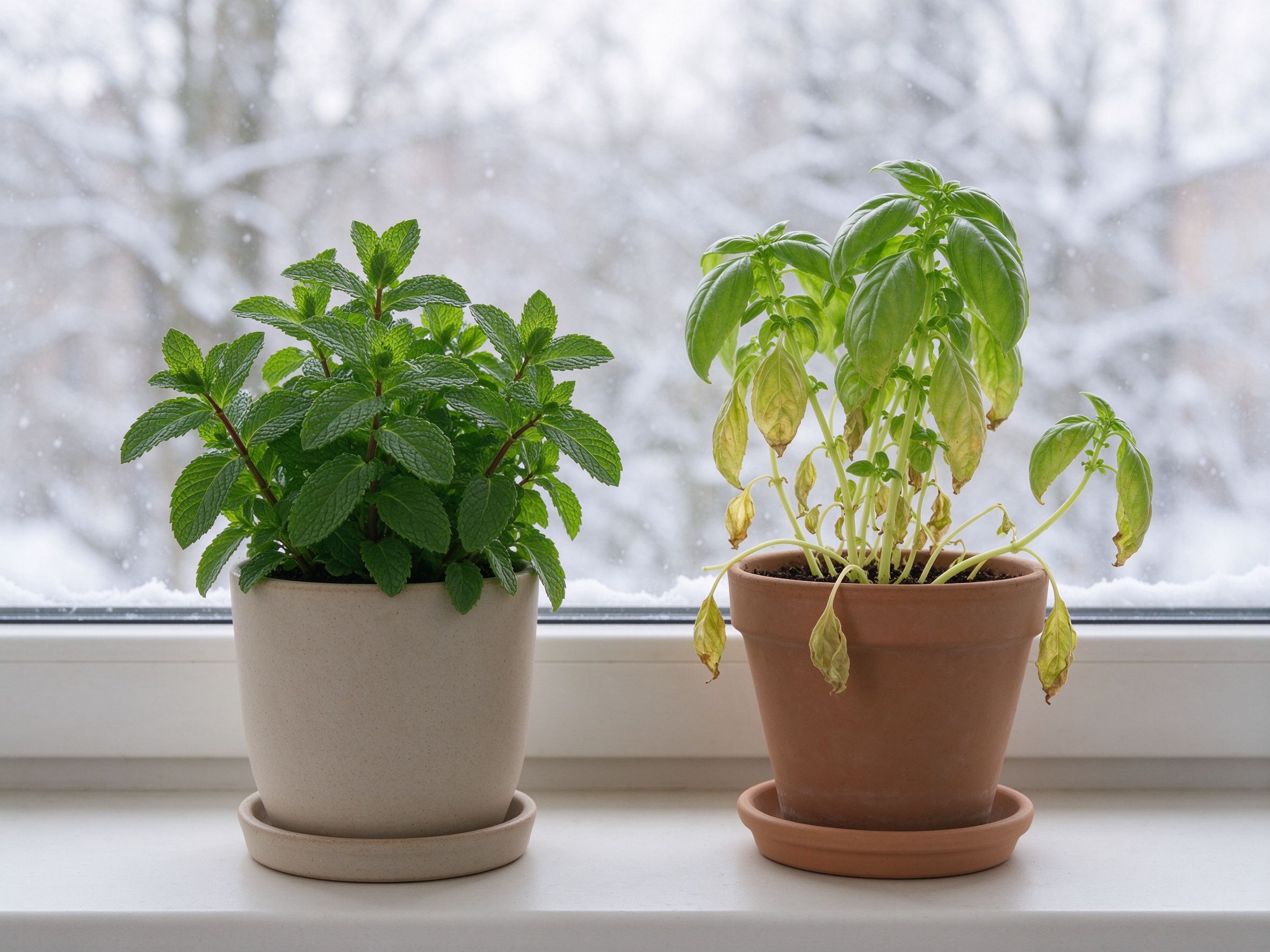
If you’ve been searching why is my basil dying indoors in winter, here is the real answer: it’s not you, it’s the room. Each of these four fails for a specific reason, and none of them is “it’s a bad herb.”
Basil. Basil wants soil and air at 70°F or warmer and 8 or more hours of direct light a day. A winter windowsill gives it neither. There’s also a colder problem people rarely notice: the air near a winter window can run 5 to 10°C colder than the room, so a pot sitting against the glass keeps cold soil around the roots, which slows the plant to a stop. Basil is not impossible indoors. It is a light-and-warmth problem. Give it a grow light running 12 to 16 hours a day and keep the pot off the cold glass, and it turns into an ordinary houseplant.
Cilantro. Cilantro’s problem is the opposite: it bolts. Long days and warm indoor air tell the plant it’s time to flower, and the moment it flowers, the leaves turn bitter and it stops being useful. To keep cilantro productive you have to hold the soil temperature under 75°F, which means keeping it away from heat vents and warm windows, and you have to harvest often to slow the rush to seed.
Dill. Dill fails for a physical reason: it’s a tall plant. On a windowsill it quickly outgrows the space, and with winter’s weak light it stretches even more, turns top-heavy, and flops over. Dwarf varieties under a grow light can work, but on natural window light alone it’s a losing game.
Tarragon. Tarragon isn’t failing because of your care. It needs a cold dormant period every year, and a warm indoor winter is the opposite of what it wants. Garden references are consistent on this one: tarragon simply does not perform indoors. Grow it outside in the ground, or pick a different herb for the sill.
None of these four is a bad herb. They are summer herbs being asked to perform in a winter window.
The grow light that changes the answer
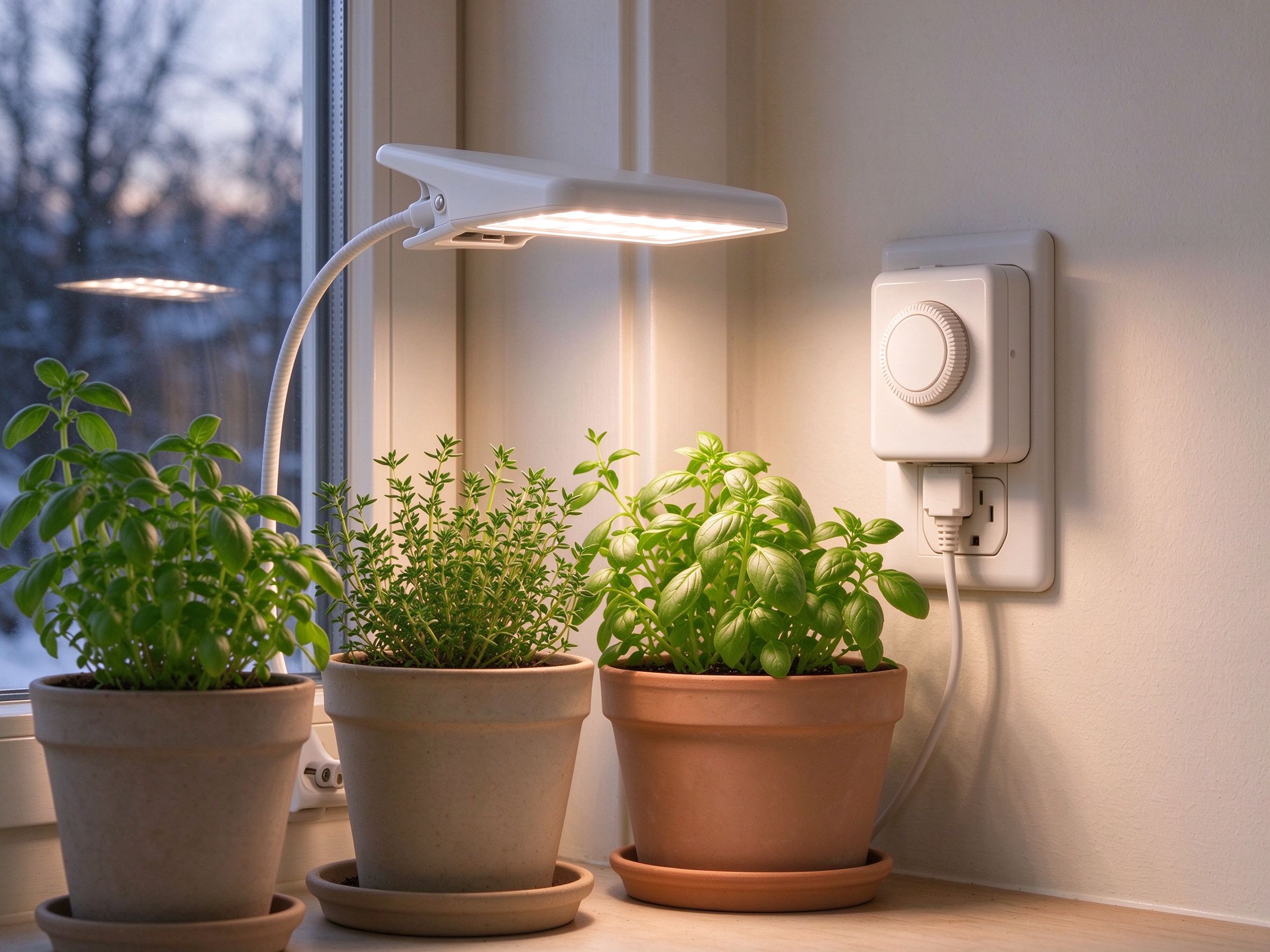
Add a grow light and the whole conversation changes. The herbs that fail on window light alone become ordinary houseplants. Basil and cilantro are the two clearest examples, and multiple garden sources agree: with enough light, both grow indoors through winter.
You don’t need a full light rack. Two tiers are worth thinking about.
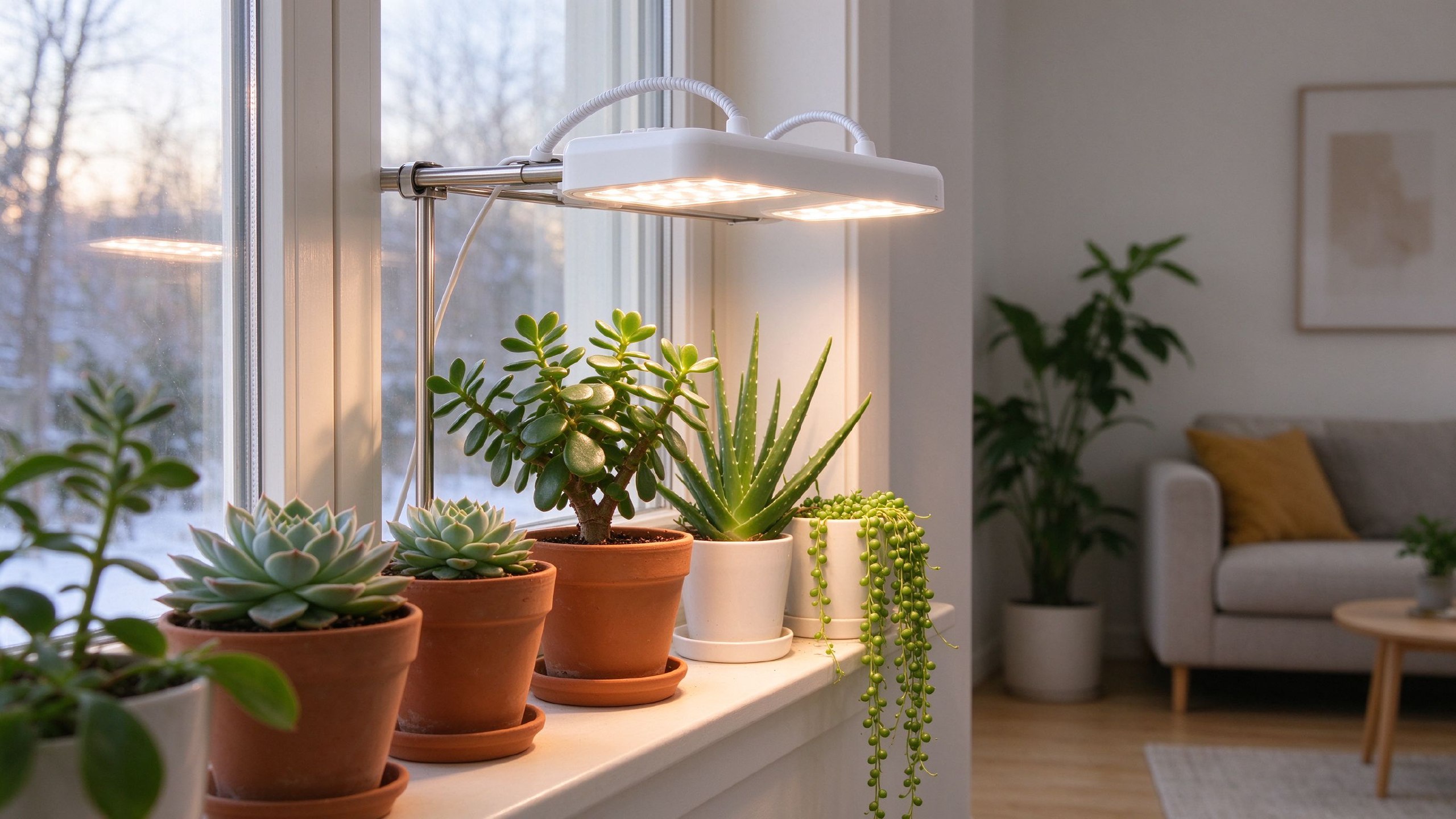
Tier one is a clip-on light. Attach a clip-on full-spectrum grow light to the window frame or shelf, run it 12 to 16 hours a day on a simple outlet timer, and basil becomes reliable. Rosemary gets much more reliable too. For a kitchen sill, this tier is genuinely enough.
Tier two is a panel. Step up to a full-spectrum bulb with wider coverage, and most herbs grow in almost any room, not just your brightest window.
If you want the details on choosing one, a grow light guide for indoor plants walks through the options without the jargon.
The four rules that keep any windowsill herb alive
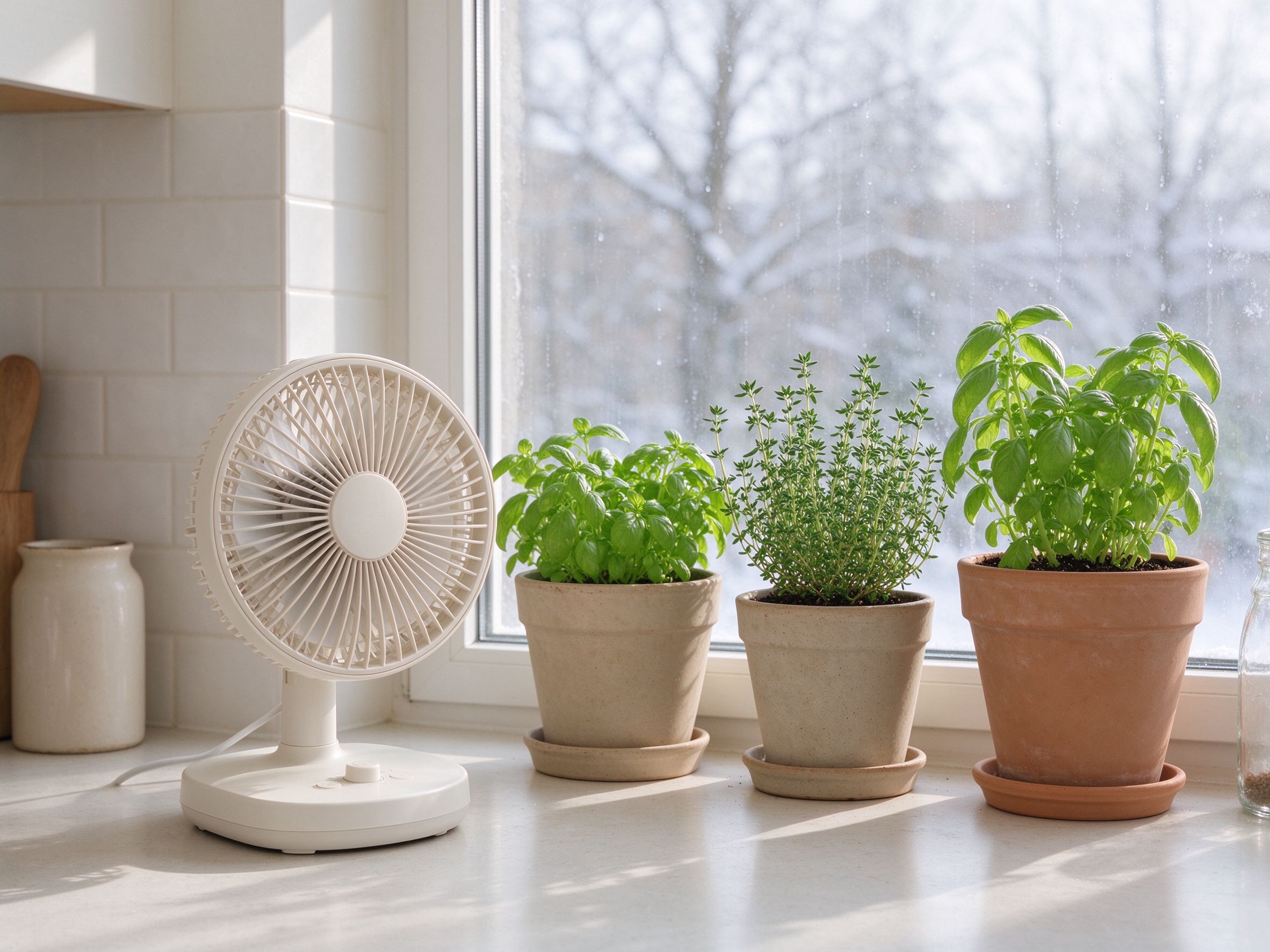
Four rules separate the windowsill that works from the one that doesn’t. They’re simple, and each one has a reason.
Keep pots off the cold glass. Leave a gap of 5 to 10 cm between the pot and the window. The glass in winter runs colder than the room, and cold soil slows or stops root activity. A few centimeters of air is enough to fix it.
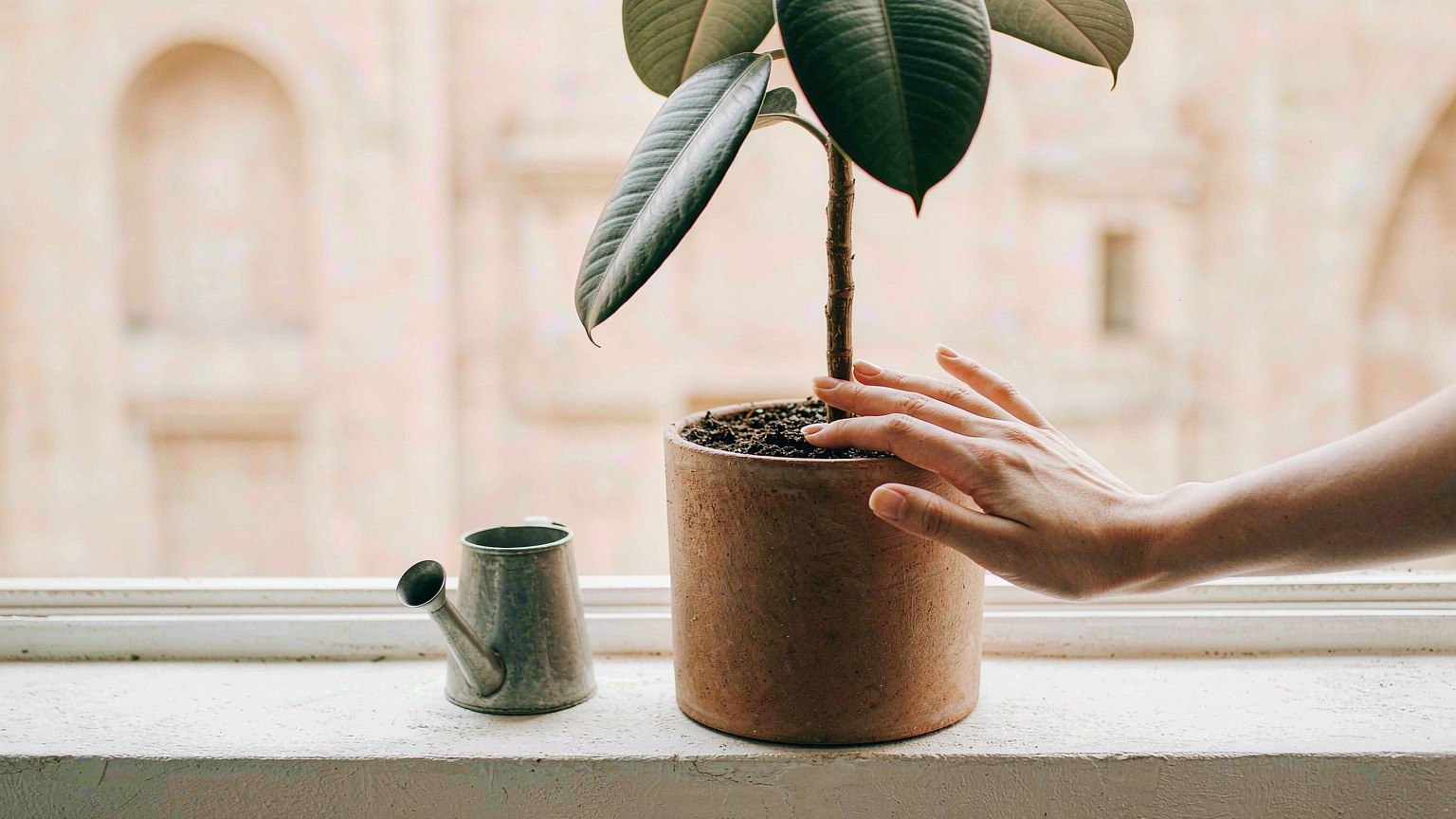
Water less in winter, and watch the soil, not the calendar. Start with unglazed terracotta pots and a well-drained potting mix so the roots never sit in soggy soil. Then water only when the top 2 to 3 cm of soil is dry, and use a cheap moisture meter if you don’t trust your finger. Overwatering in low light is the number one killer of indoor herbs.
Harvest on a schedule. Pick at least every 2 to 3 weeks. Herbs that aren’t harvested turn woody and stop producing. Regular picking keeps them busy.
Keep air moving. Stale, still air is the main reason sage and other Mediterranean herbs develop powdery mildew and look awful by February. Set up a small clip-on fan on low, pointed gently across the plants, to keep air moving without blasting them.
Bringing outdoor herbs in for the winter
Bringing potted herbs in from the garden is tempting, but the door opens after you’ve done one thing: checking plants for pests before they come inside keeps your whole sill safe. If your pots have run out of room, our notes on picking the right container cover the basics; the full pest routine is a separate article.
FAQ
Can I grow herbs indoors in winter without a grow light?
Yes, for some. On a south-facing windowsill with 4 to 6 hours of direct sun, chives, mint, thyme, parsley, and rosemary are the practical picks. Basil, cilantro, dill, and tarragon usually fail on window light alone, because they need more hours of light and more warmth than a winter sill provides.
Why does my basil keep dying indoors in winter?
Almost always one of three things: cold roots (winter glass can run 5 to 10°C colder than the room, so keep pots off the glass), not enough light (basil wants 8 or more hours of direct sun and 70°F or warmer), or overwatering in low light. Add a grow light and keep the pot warm, and basil becomes a normal houseplant.
Which herbs are the easiest to keep alive on a windowsill?
Chives and mint are the most forgiving. Both tolerate lower winter light and less regular watering than the Mediterranean herbs. Thyme, parsley, and rosemary are workable but want bright light, good airflow, and careful watering.
Does tarragon grow indoors?
No, not well. Tarragon needs a cold dormant period, and garden references list it among the herbs that simply do not perform indoors. Grow it outside, or pick a different herb for the sill.
The windowsill herb checklist (the short version)
If you want herbs that grow indoors in winter without a grow light, here is the whole article in five steps, in the order you should take them.
- Check the window at noon. A crisp shadow on the sill means direct sun. Bright and shadowless doesn’t count.
- Match the plant to the window. South and unobstructed: all five. East: mint, chives, parsley. West: mint, parsley, chives. North: plan on a grow light.
- Pick from the five: mint, chives, thyme, parsley, rosemary.
- Keep them alive: pots off the cold glass, water only when the top 2 to 3 cm is dry, harvest every 2 to 3 weeks, keep air moving.
- Want basil or cilantro? Add a grow light on a timer. That one change turns a winter windowsill from survival into production.
Disclosure: Some links in this post are affiliate links. If you buy through them, I may earn a small commission at no extra cost to you. See the full affiliate disclosure, and read how we research on our methodology page.