Christmas Cactus Not Blooming? The 6-Week Fix
The segments are green and firm. New growth came over summer. And yet, come late fall, not a single bud. Or buds formed, turned yellow, and dropped before opening. Or the thing blooms in March and you have given up calling it a Christmas anything.
None of this is a fertilizer problem. What is missing is the fall signal this plant reads before it decides to flower: shorter days and cool nights. Start today, mid-October, and you can still get flowers by Christmas. The math below tells you which holiday you are aiming for.
As an Amazon Associate I earn from qualifying purchases. Some links in this post are affiliate links — if you buy through them, I may earn a small commission at no extra cost to you.
Three reasons a healthy Christmas cactus has no flowers
Before changing anything, match the symptoms. The fix for a plant with zero buds is not the fix for a plant that dropped buds, and mixing them up is how people end up repotting a perfectly healthy specimen in November.
| What you see | Most likely cause | First thing to do |
|---|---|---|
| Green segments, no buds at all | The fall light signal never arrived: nights too warm, darkness interrupted, or winter light too weak during the day | Pick one route below (cool nights or 12-hour darkness) and commit to six weeks |
| Buds formed, then yellowed and fell off | Something shifted after the buds set: a move, a draft, a heater blast, a sudden watering change | Stop moving it, stop repotting it, keep conditions steady |
| It blooms in spring or summer, not winter | It is probably an Easter cactus, or the wrong species entirely | Flip a segment over and check the edge (next section) |
Internalize this first: green and healthy does not mean it will flower. A Christmas cactus that looks perfect is exactly the plant most likely to sit budless all winter, because vigor and blooming are two separate switches. See this kind of fall diagnosis as part of the wider fall houseplant care checklist, where holiday cacti show up as one of the few plants actively coming into flower now.
First, make sure it’s actually a Christmas cactus
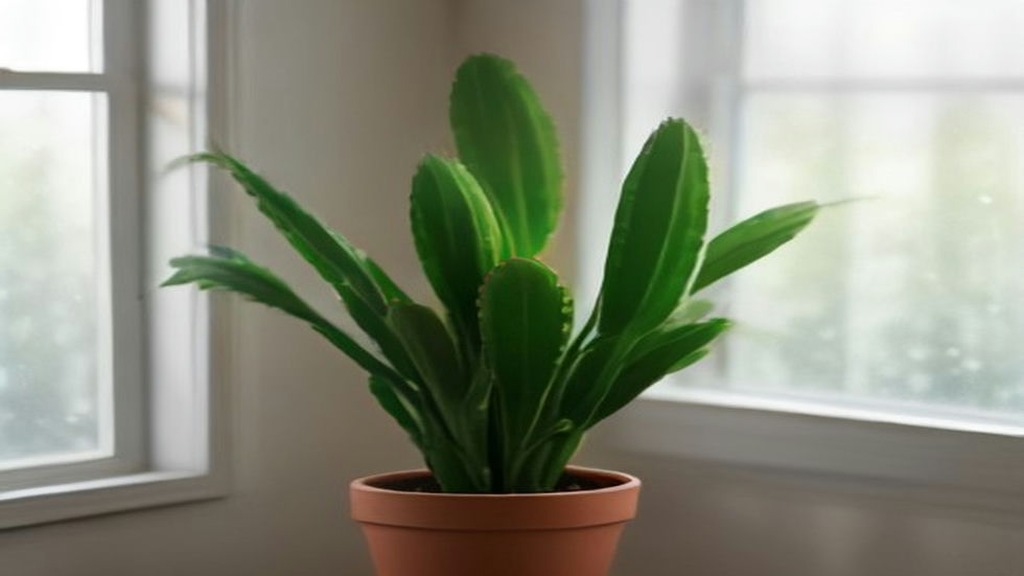
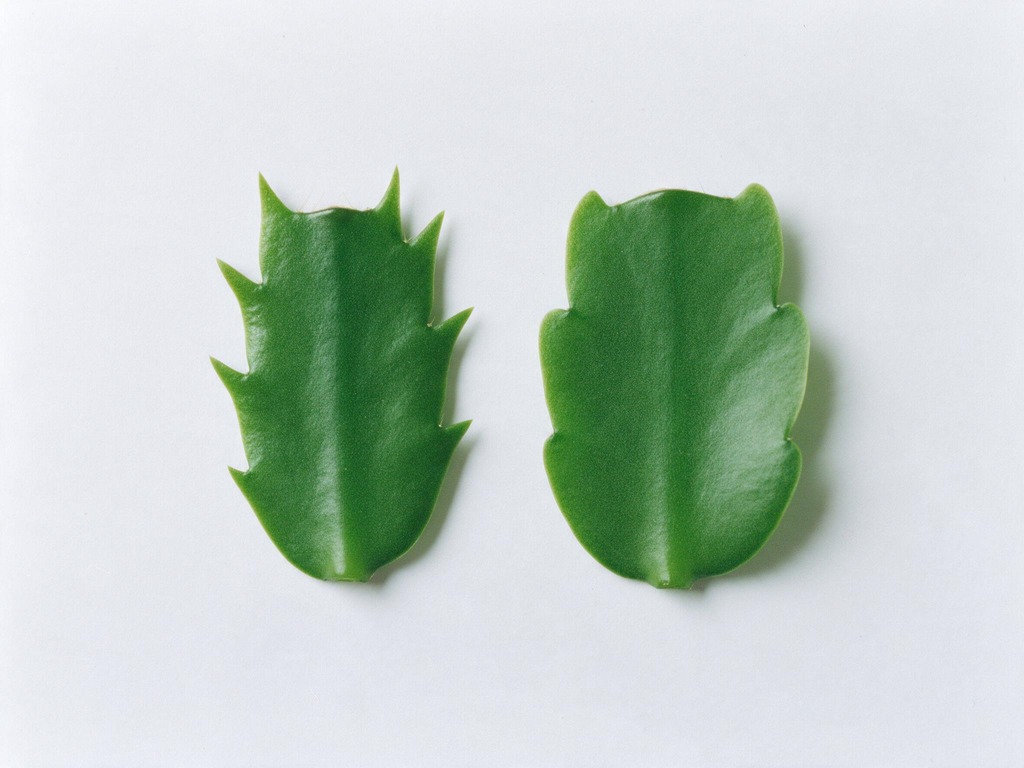
The quick identification trick from Clemson’s factsheet: look at the edge of a segment. A Thanksgiving cactus (Schlumbergera truncata) has two to four sharp, tooth-like serrations. A true Christmas cactus (Schlumbergera x buckleyi) has much softer, rounded edges. Neither plant has real leaves; the green phylloclades are the stems doing the photosynthesis.
Why this matters for bloom timing. Thanksgiving cacti set buds and open earlier in the season, often finishing their show about a month before Christmas. Plenty of people in early December wondering why their plant “will not bloom” are waiting for a Christmas schedule on a Thanksgiving plant that already bloomed weeks earlier.
Easter cacti flower in spring, after a longer cool rest, a different care conversation. If your plant blooms in March or April, this page will not solve that, but it also means you were never waiting for Christmas flowers in the first place.
The rest of this page assumes you have a Thanksgiving or Christmas type and want fall or winter flowers. Soil, pot, and year-round basics are on the parent page: how to grow a cactus at home walks through the jungle-cactus side of that equation.
Do the date math before you change anything
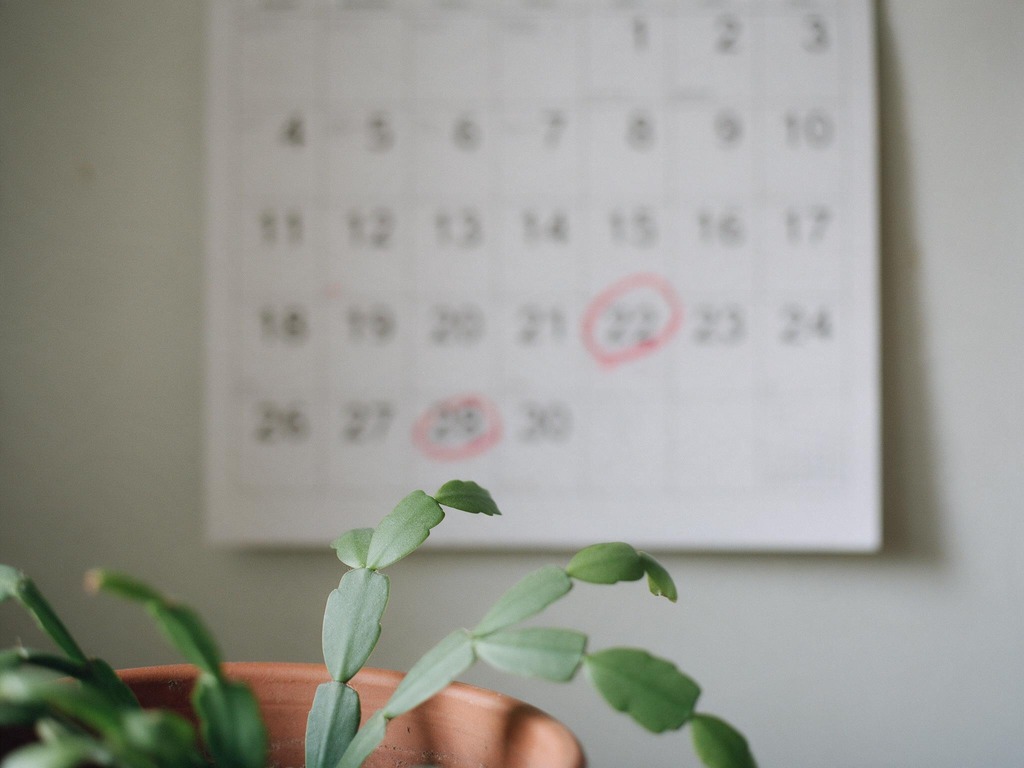
Schlumbergera buds take about six weeks to form once the right signal arrives. Count backward from the holiday you want, and be honest about which weekend you are aiming for. These dates are for 2026; next year, rerun the math.
| Desired peak bloom | Latest start date (6-week path) | Safer start (8-week cushion) |
|---|---|---|
| Thanksgiving (Nov 26, 2026) | Oct 15, 2026 | Oct 1, 2026 |
| Christmas (Dec 25, 2026) | Nov 13, 2026 | Oct 30, 2026 |
Today is October 19. The Thanksgiving column is already four days past its latest start. That is not a total loss: the cool-night route below, running around 55°F at night, can deliver in about five to six weeks, so buds around November 23 are still realistic. If your house cannot do cool nights and you are stuck with pure darkness, aim at Christmas instead.
The point is to stop guessing. “I will do something soon” has killed more holiday cactus displays than cold ever did. Pick the holiday on the right, work backward, and start this week.
Route 1: cool nights, the shortcut most people miss
This is the route most indoor growers can actually stick to. UMN Extension’s guidance: if nights run around 55°F, buds form in roughly five to six weeks, and the daylength requirement sometimes loosens up entirely. A cool room can replace most of the darkness routine.
In practice, that means a guest bedroom you do not heat hard, an enclosed sunporch, a hallway off the garage. It beats the daily ritual of covering a plant with a box because one skipped night is not fatal.
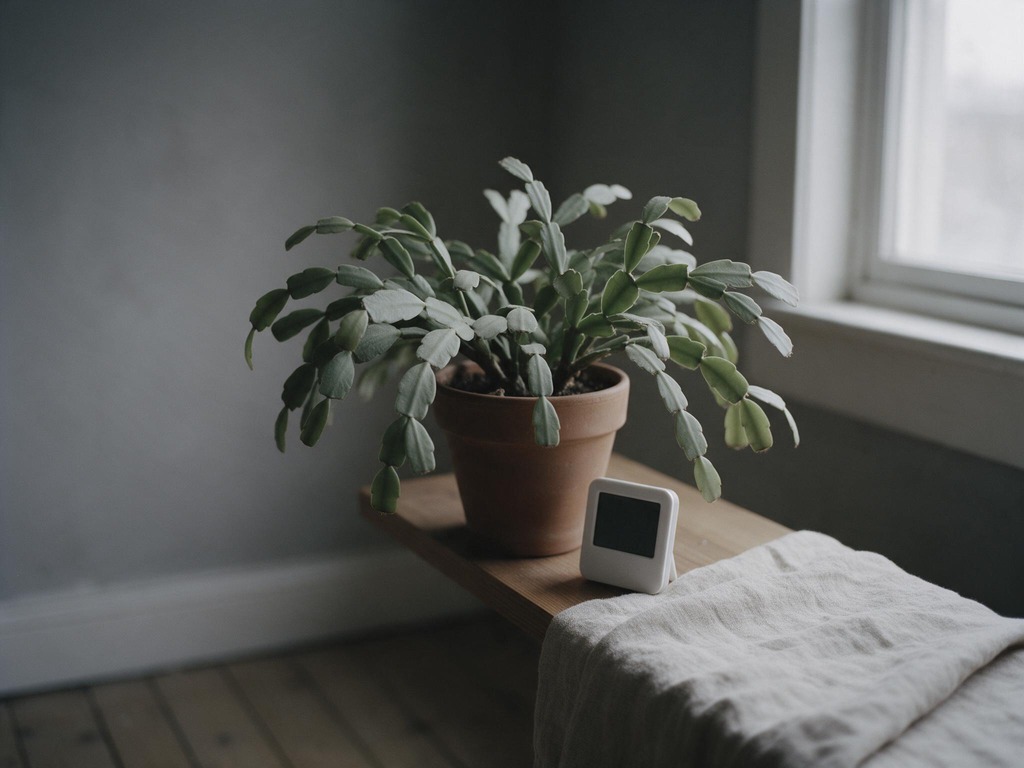
The trap is guessing. People swear their spare bedroom “feels cool,” but room temperature varies more than you think, and you cannot negotiate with a plant about what your ankles felt like. Put a small thermometer-hygrometer at pot level and read the overnight low for three nights. The Indoor Hygrometer Thermometer 2-Pack (H5075) has Bluetooth app logging, so you can see the overnight minimum without opening the door. Two units means one at the pot and one as a room reference.
Who it is not for: if the only cool spot you have drops close to outdoor winter cold, leave the plant inside. Trading a budless plant for a frozen one is not progress. Skip it too if that cool room is pitch black during the day.
Route 2: twelve hours of real darkness
If your nights sit between 60 and 65°F, cool is not doing the job, and darkness becomes non-negotiable. The floor is 12 hours of uninterrupted dark every night; 13 or 14 is more forgiving. Nights warmer than 65°F and the plant is unlikely to set buds at all, no matter how dark it gets.
Uninterrupted is the word everyone misses. One porch light, a streetlamp through a sheer curtain, a TV left on in the corner, or the little indicator LEDs on your own grow-light timer breaks the cycle. Check the obvious stuff: overhead kitchen lights left on by a late reader, hallway nightlights, passing car headlights, the standby glow on the power strip.
Three ways to make it happen, cheapest first:
- Move the pot into a spare bedroom, closet, or unused room from evening to morning.
- Cover the whole pot with a cardboard box or opaque cloth every evening, remove it in the morning. Do not seal it in something airless; heat buildup under plastic rots the segments.
- If neither is possible, go back to Route 1. Forcing darkness in a living room you use every night is a losing battle.
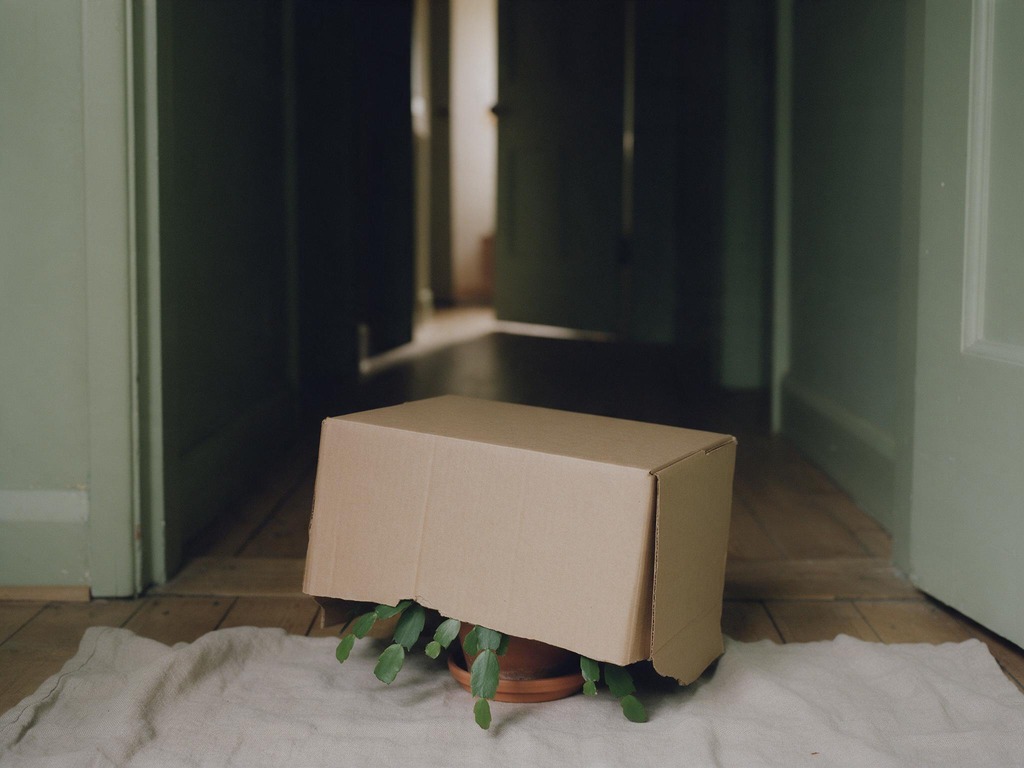
And here is the part that confuses people running grow lights. Shortening the night does not mean shortening the day. Bright indirect light during the day is still required; cutting both ends leaves you with a weak, non-flowering plant. The most common mechanical cause of “why will it not set buds” is a grow-light timer stuck on a 14-hour summer schedule since June. Swap in a programmable unit like the 7-Day Heavy Duty Digital Timer with Dual Outlet, so you can run two schedules at once: 8 hours of grow light on one outlet, something unrelated on the other.
Who it is not for: if you only run a single outlet for one light and never need dual scheduling, a basic mechanical timer is cheaper. This unit earns its place when you have two devices with different schedules.
Who this route is not for: night-shift households, anyone whose living room is the only available plant space, and anyone who already has a reliably cool spare room.
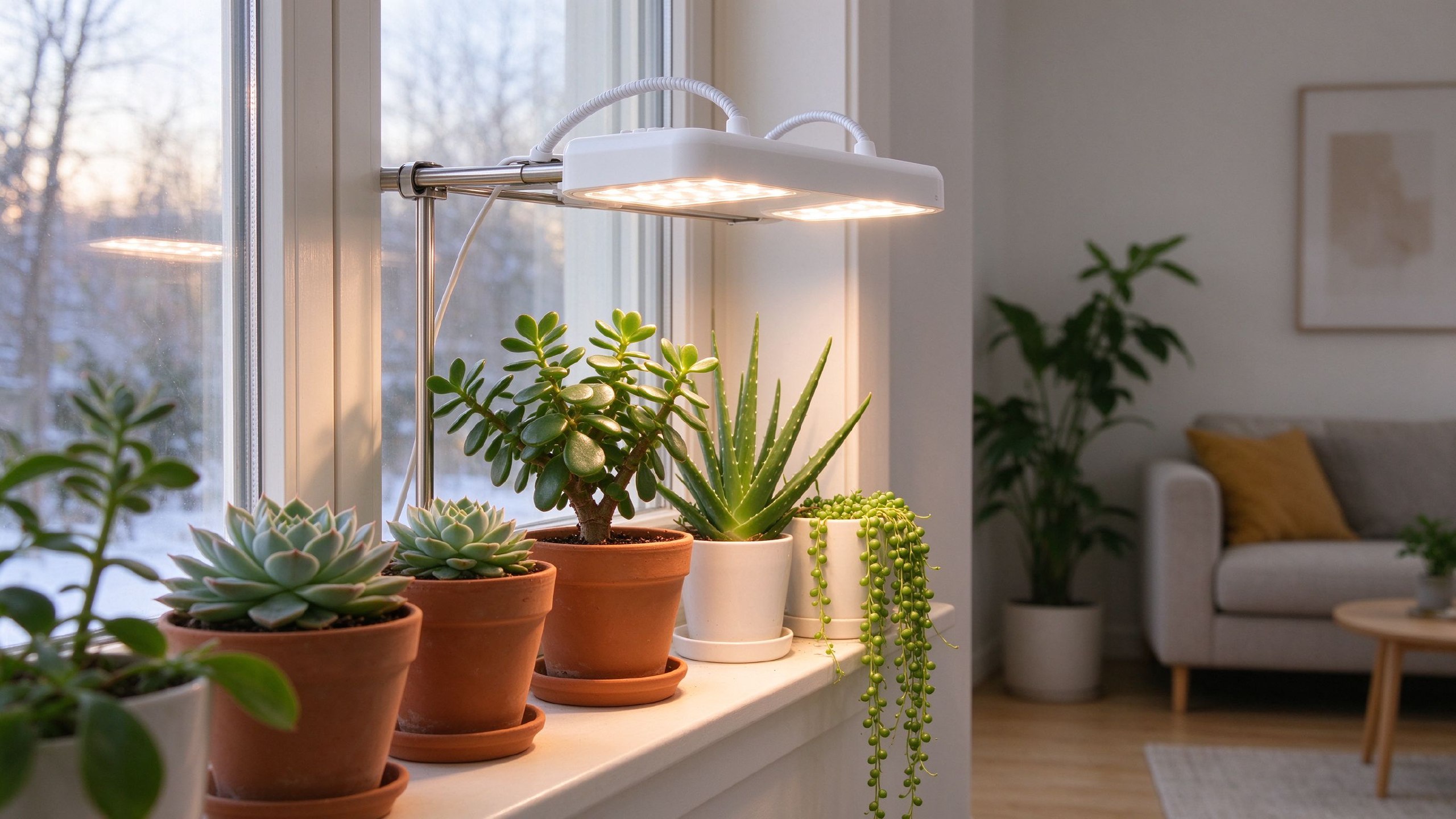
If daytime light is genuinely weak, supplement. A clip-on unit like the clip-on 6000K Full Spectrum Grow Light clips above one pot for a few hours midday and unclips easily. Who it is not for: if your plant sits in a south window all winter, a clip-on lamp is extra gear you do not need. The logic of when to add light at all is covered in our grow light for succulents guide; the rule here is extra daytime brightness, never extra hours at night.
Buds that form and then fall off
Bud drop is not a failure to bloom. It is what happens after buds set and something in the environment shifts. The plant already did the hard part, and then you moved it.
Most causes are a version of the same story. Rotating the pot so the other side faces the window. A cold draft from an open door or window gap. A hot blast from a heating vent when the furnace kicks on. Watering once from bone-dry to soaking, then letting it dry out hard. Repotting the plant, or dumping fertilizer on it, right as buds appear.
The rule the moment you see buds: your job switches from coaxing to leaving it alone. No rotating, no repotting, no heavy trim, no weekend guests moving it for a photo.
What not to do in November
Three habits that feel like help and are the actual cause of missing flowers.
Do not add fertilizer, especially anything high-nitrogen. This plant wants flowers now, not bigger green segments. Nitrogen pushes foliage growth at the exact moment buds need to stay put.
Do not repot or prune. Flower buds form at the tips of mature segments. Cutting back in fall is cutting back this year’s flowers. Repotting stress is the same story as moving it; the roots should be left where they are until after bloom.
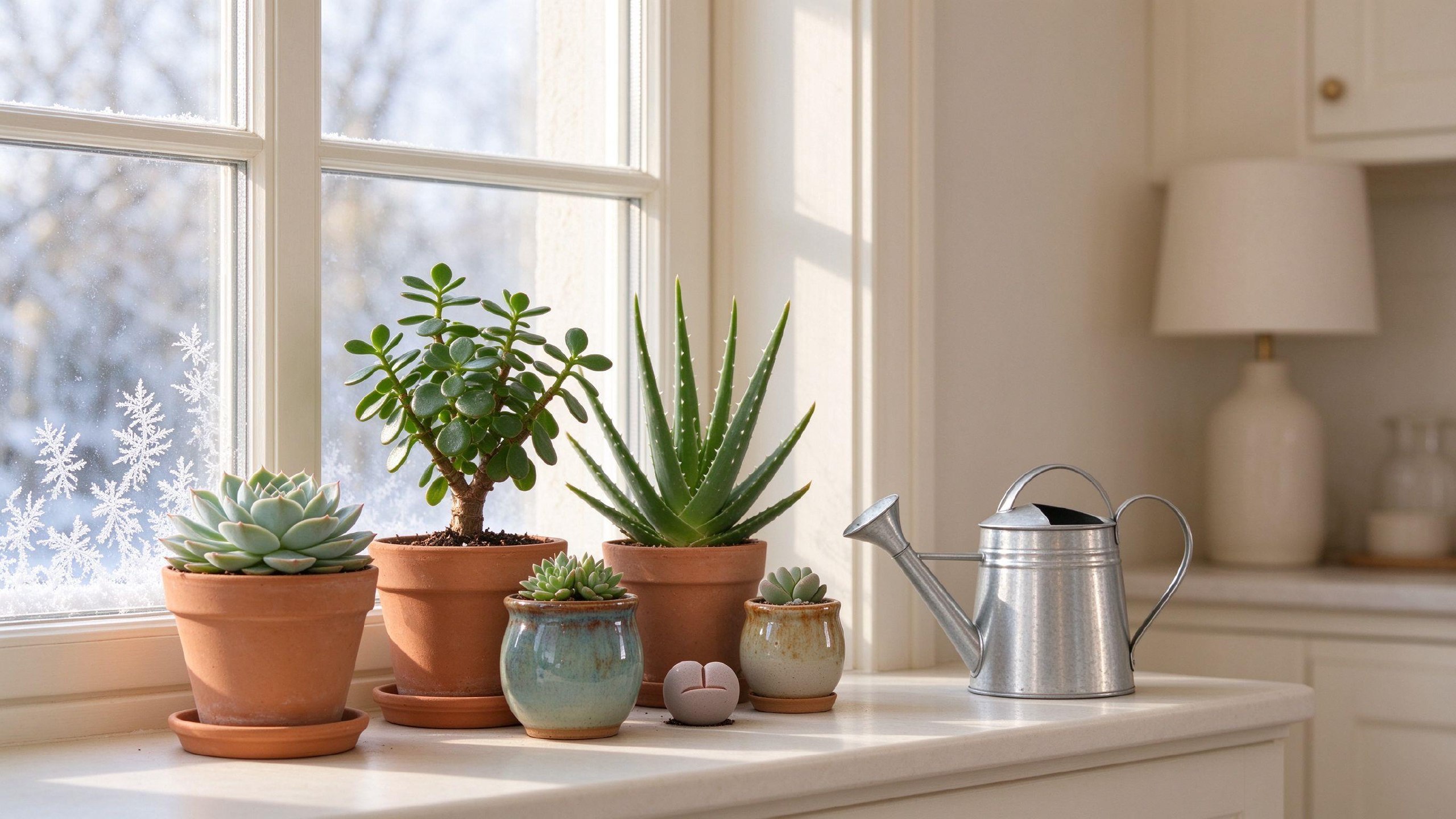
And the one this site has to correct out loud: do not treat it like a desert cactus and withhold water. This is a rainforest epiphyte, native home is a Brazilian tree branch in high humidity, and its soil should stay slightly moist, never bone dry. The common mistake is importing the “winter rest, barely water” logic from summer-growing succulents like Echeveria. That guidance exists for its own plant group: our succulent winter dormancy article is written for summer-growing succulents like Echeveria and most cacti, not for Christmas cactus. Applying it here is how you get a dry, stressed, bud-dropping plant.
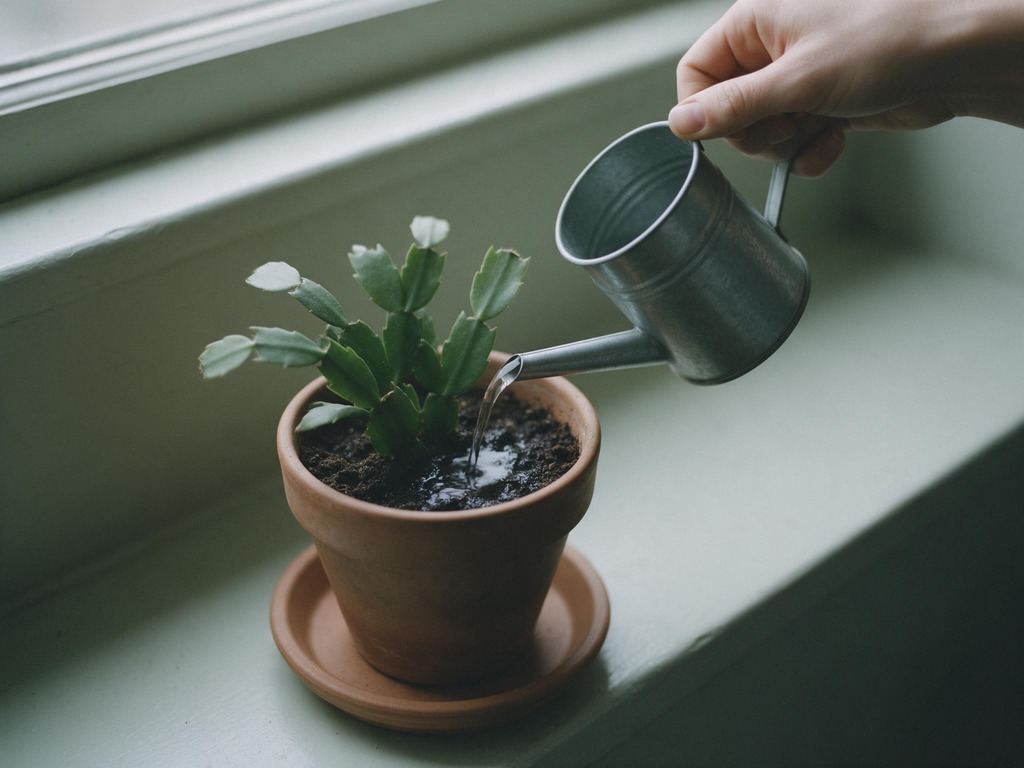
Because indoor heat drops humidity hard in November, a small room humidifier in the same room matters. The 2L Cool Mist Humidifier runs around 24 dB, quiet enough for a bedroom or guest room next to the plant. Who it is not for: if your home already runs humid in winter, this is redundant; this is a problem for dry heated rooms, not damp ones.
The short version
- Identify the plant first. Teeth on the edge mean Thanksgiving; rounded edges mean Christmas.
- Pick your holiday, count back six weeks. If today is past the latest start date for Thanksgiving, aim for Christmas.
- If nights can hold around 55°F, skip the darkness routine and measure the overnight low with a hygrometer for three nights.
- If nights sit 60 to 65°F, give 12 hours of uninterrupted dark minimum. 13 to 14 is safer.
- Hunt for every light leak: hallway lights, TV glow, streetlamp, timer indicator LEDs.
- Keep a grow light on during the day, not the night. Shorten darkness, never shorten daylight.
- The moment buds appear, stop moving, rotating, repotting, and fertilizing.
- Keep soil slightly moist. Do not dry it out like a desert cactus.
If you miss this year entirely, write the process into next September on the calendar. Holiday cacti live for decades, and a plant that knows its schedule will hand you flowers every winter.
FAQ
Can I just put it in a closet at night?
Yes, with a consistent window like 6 pm to 8 am, then move it back into bright indirect light each morning. The cost is daily labor, and one missed night pushes the timeline back a step. If that routine sounds miserable, use the cool-night route instead.
How many hours of darkness does it actually need?
12 hours is the floor. 13 or 14 is more reliable. If nights sit near 55°F, that requirement relaxes, per UMN Extension. “More than 14 hours” is not a rule and is not supported by the guidance we are working from.
It’s already November and there are no buds. Is it too late?
Almost certainly too late for Christmas this year. Two things to do now: keep conditions stable, no fertilizer, no moving, no repotting. Then mark mid-September on next year’s calendar so this plant gets its full six-week window.
Will fertilizer make it bloom?
No. Fertilizer does not replace the light cycle. After buds are clearly formed, a low-dose phosphorus-potassium feeding is reasonable timing, but nitrogen in fall works against flowering.
Disclosure: Some links in this post are affiliate links. If you buy through them, I may earn a small commission at no extra cost to you. See the full affiliate disclosure, and read how we research on our methodology page.