Fall Checklist: Bring Succulents Indoors Before It's Too Late
Fall Checklist: Bring Succulents Indoors Before It’s Too Late
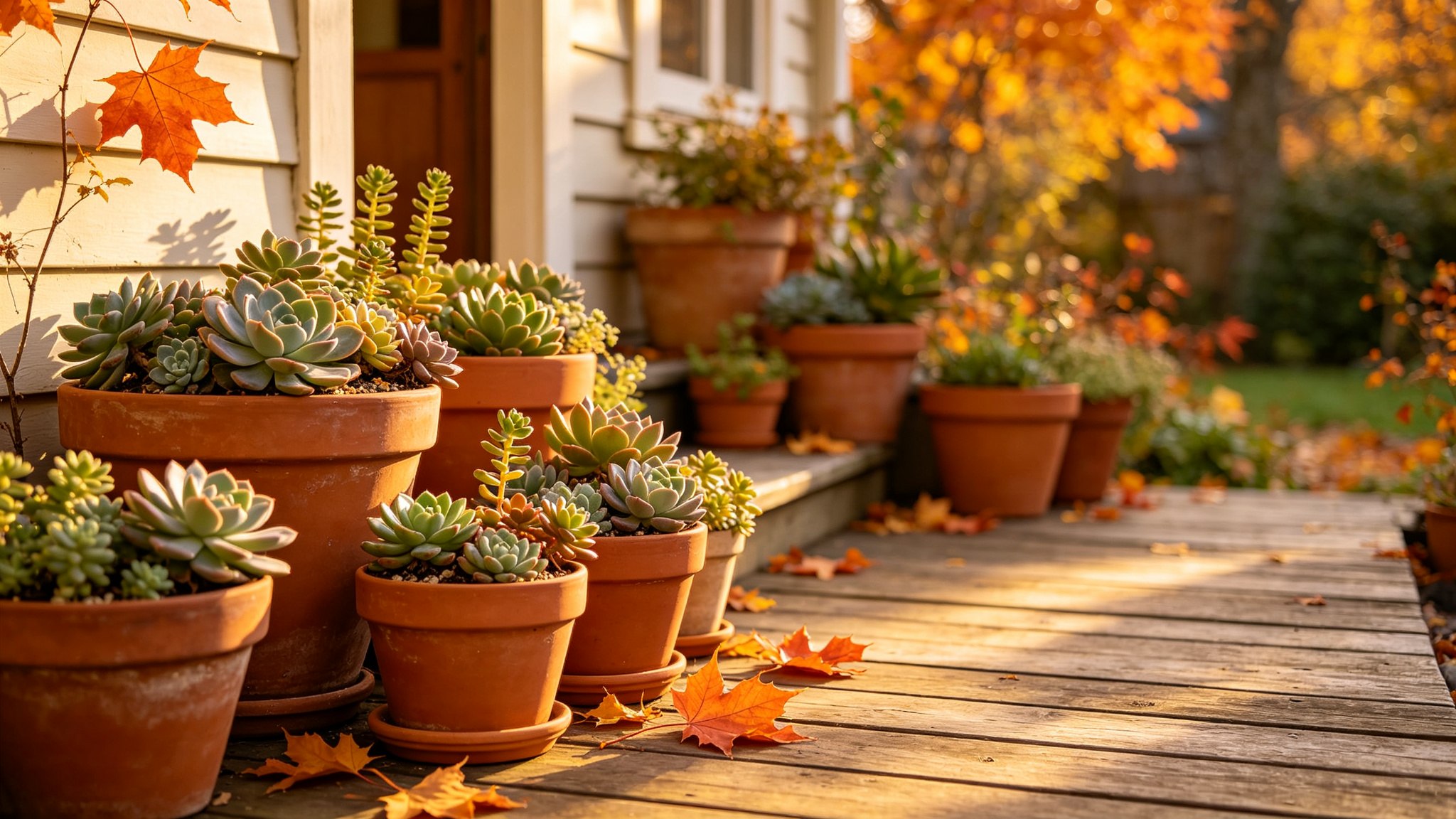
If your succulents spent summer outside, there’s a question you can’t afford to get wrong: when to bring succulents indoors. Get it right and they sail through winter. Get it wrong and you’ll find a bowl of mush on the patio after the first hard frost — because most succulents die from the cold in a single night, not from a slow decline.
The good news is the timing isn’t a guess. It’s a temperature, and it’s the same one across every serious grower I’ve read: start the move when nighttime lows consistently dip below 50°F (10°C), and get the tender types inside before 40°F (4°C). Here’s the full fall checklist, in order, with the exact triggers and the steps people skip.
Why the move inside matters (and when it’s too late)
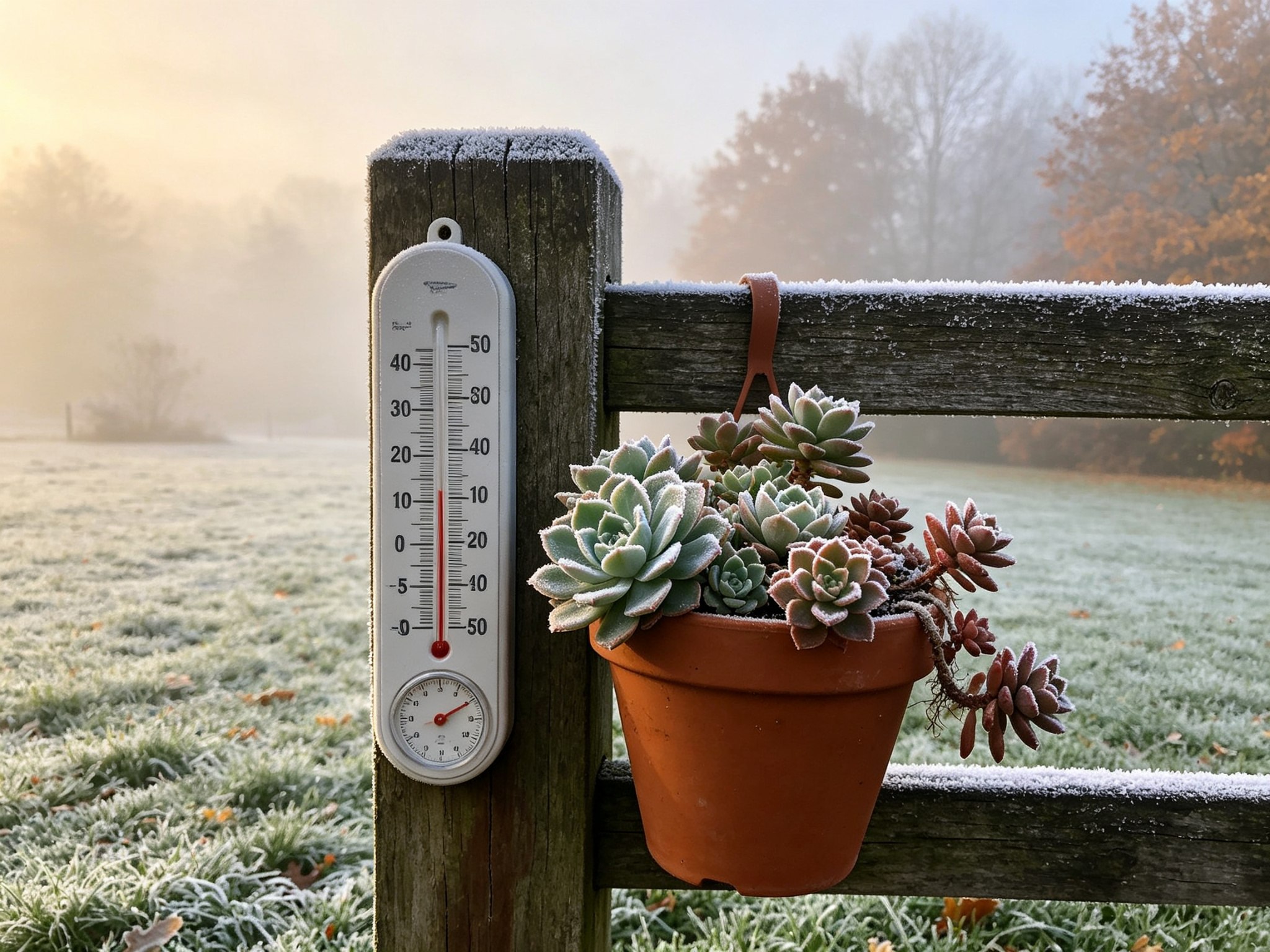
Succulents store water in their leaves, and that’s exactly what makes them cold-vulnerable. When temperatures approach freezing, ice crystals can form inside those water-storing cells and rupture them from within. The damage often doesn’t show for days — the plant looks fine on the porch, then collapses into translucent mush in the kitchen a week later.
Tender succulents — Echeverias, many Sedums, most Crassulas, Kalanchoes — can survive a single brief dip if the soil is dry, but repeated exposure or anything below freezing is a gamble with real stakes. That’s why the rule is to move before the frost, not during it.
The temperature triggers that decide the move
Here’s the decision table to save. It’s the same guidance the big growers publish, tightened into one place:
| Nighttime low | What to do |
|---|---|
| Above 50°F (10°C) | Safe to stay outside. Keep enjoying the sun. |
| Consistently 50–40°F (10–4°C) | Start the transition. Bring tender succulents in overnight, put them back out by day. |
| Below 40°F (4°C) | Bring soft succulents inside for good. Echeveria, most Sedums, Crassulas, Kalanchoes. |
| Below 32°F (0°C) | Emergency zone. Anything not cold-hardy that’s still outside is at serious risk. |
Two practical notes. First, check a sustained seven-day forecast rather than a single night — one cold dip followed by warmth isn’t the same as a steady drop. Second, if your succulents stayed dry, they tolerate cold better than wet ones; a plant sitting in damp soil is the first to freeze.
Which succulents must come inside (and which can tough it out)
Not all succulents are equal in the cold, and this is where most guides lose people.
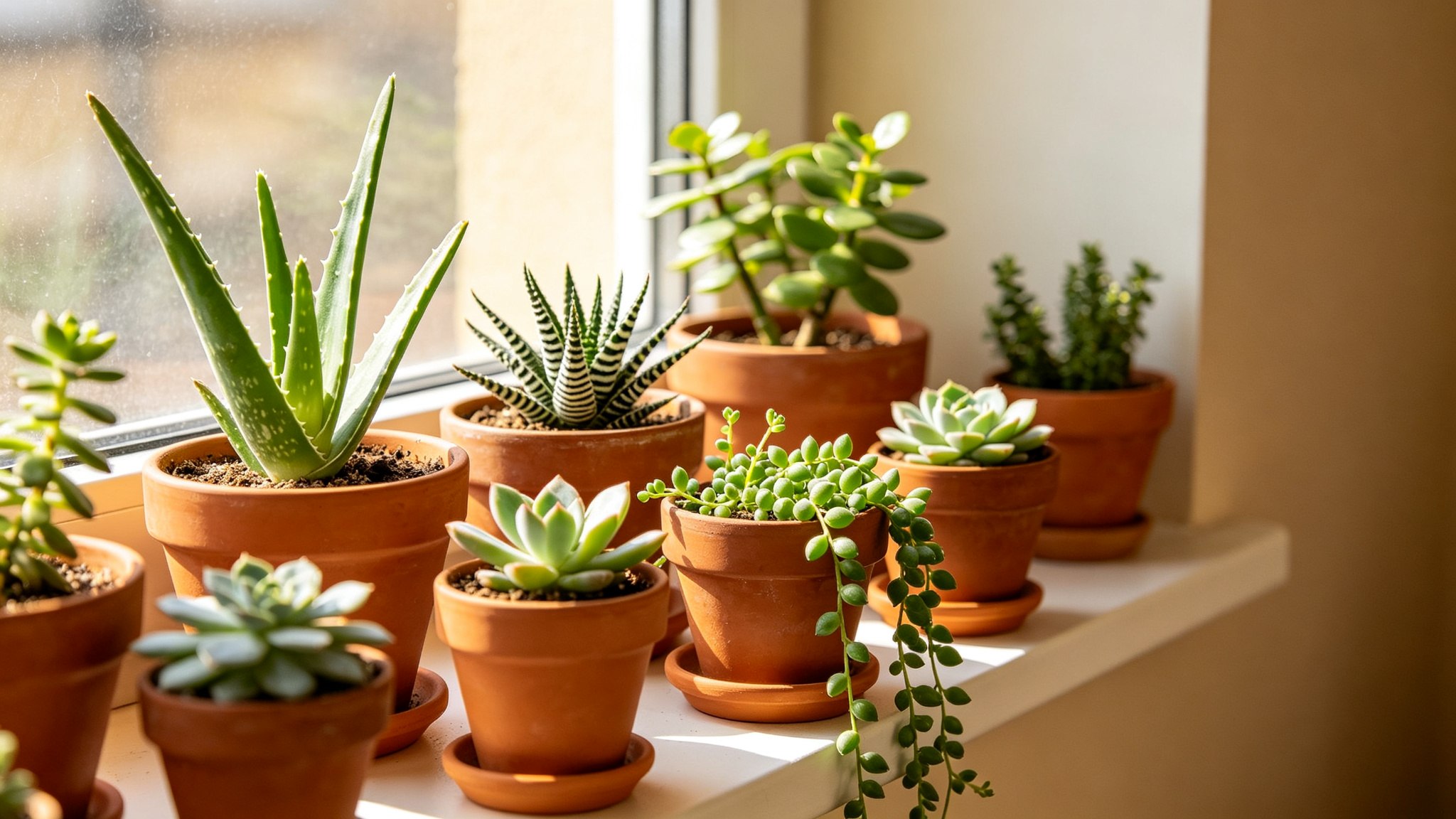
Must come inside (tender): Echeveria, most Sedums, Crassula (jade plants), Kalanchoe, Haworthia, Gasteria, Aloe (especially sensitive to cold), and any tropical succulent. This is the majority of what people keep in pots.
Can often stay out (cold-hardy): Hens and chicks (Sempervivum) and some hardy Sedum species can survive outdoors through winter in many zones, especially in a spot with excellent drainage and some shelter. But “can” isn’t “must” — if they’re in a small pot above ground, roots freeze much faster than they would in the ground. When in doubt, bring them in or move the pot against the house.
When you’re deciding, it’s safer to assume a plant is tender unless you know it’s hardy. A week of indoor time costs you nothing; a night at 28°F costs you the plant.
The 7 to 10 day transition
Moving a succulent straight from full sun into a dim living room is a shock, and shocked succulents drop leaves and stretch. The fix is a slow handoff:
- Check the forecast and pick a window — a stretch of mild nights, ideally before it consistently hits the 50–40°F zone.
- Bring them in overnight, back out by day for 7 to 10 days. This eases them into lower light and higher humidity without a sudden change.
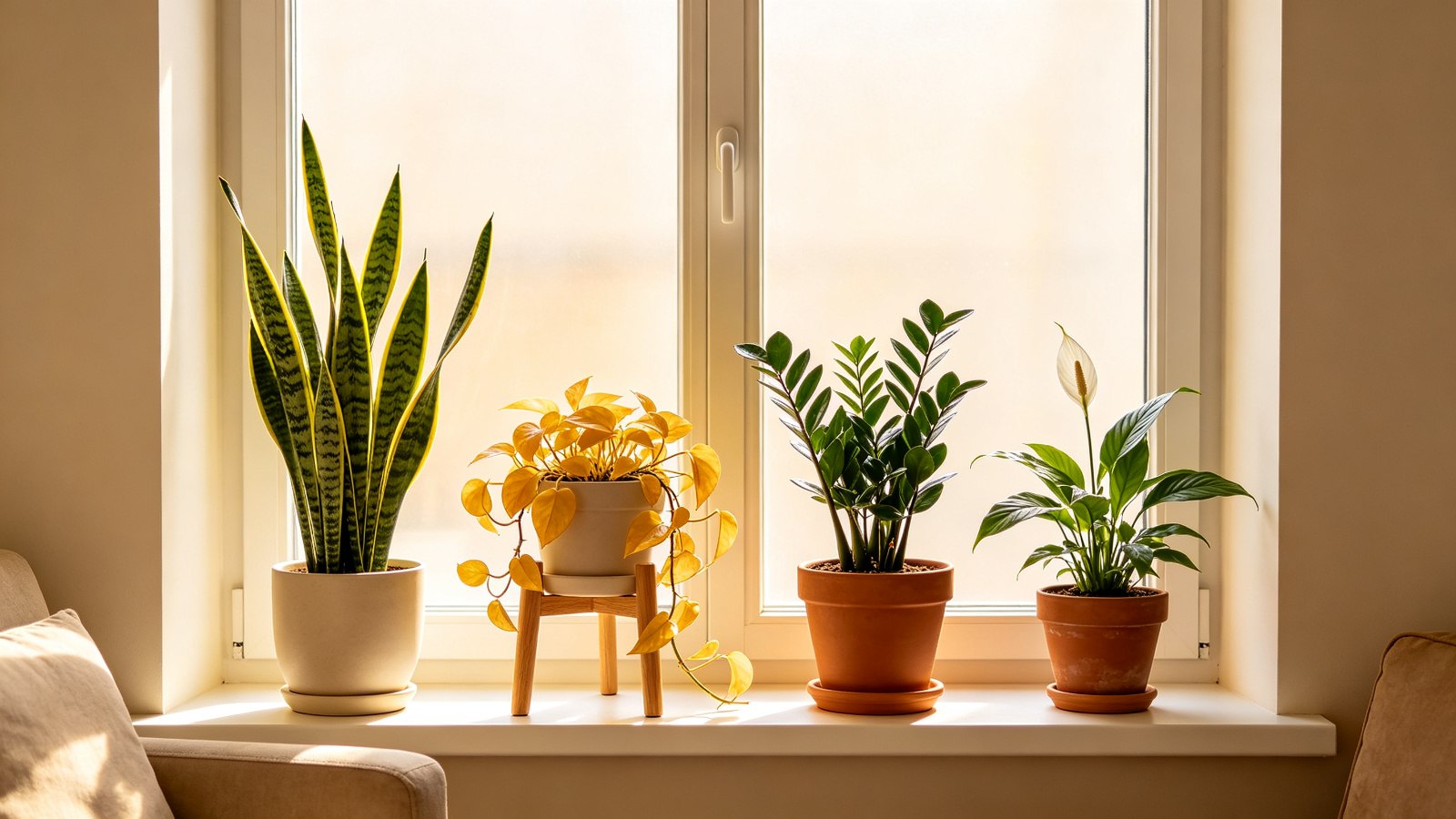
- Pick the permanent spot — your brightest window, south- or west-facing. Most succulents want four to six hours of bright direct light indoors, and they’ll tell you they’re not getting it by stretching.
- Don’t water during the transition. Let the roots dry out; wet roots plus a new environment is a recipe for rot. Resume your normal (reduced) indoor watering rhythm once they’ve settled, usually after a week or two.
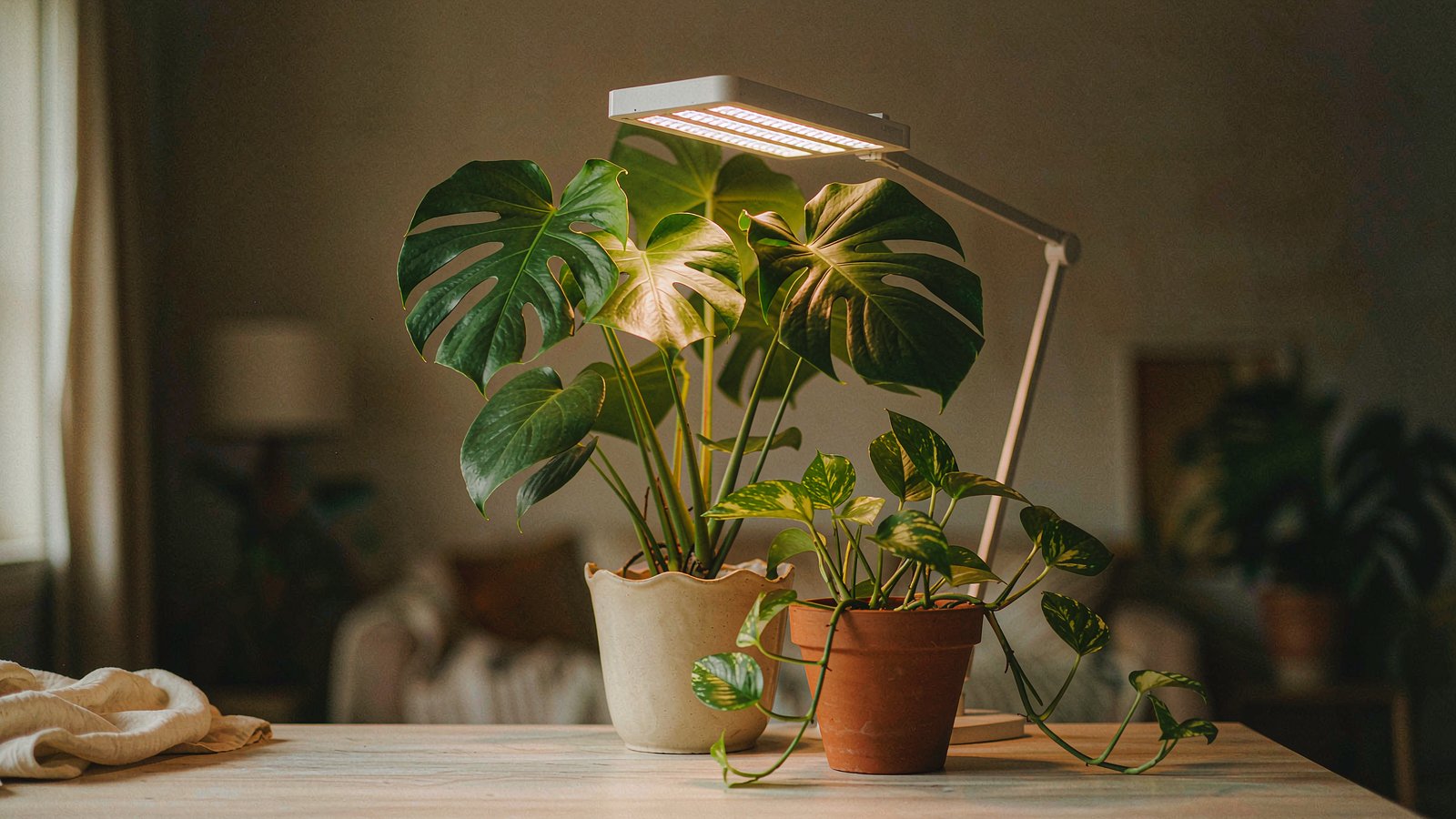
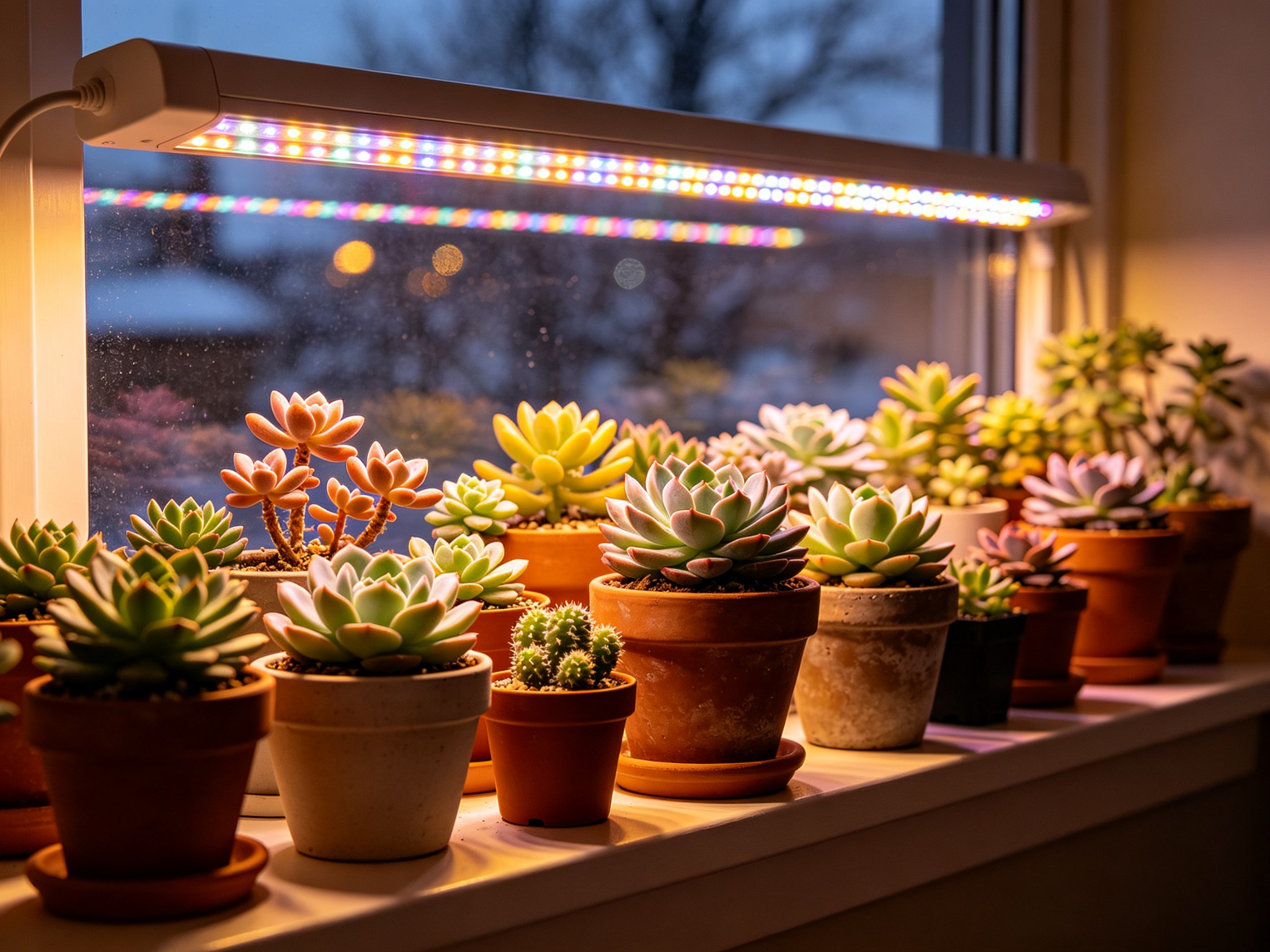
- If winter light is short in your space, set up a grow light before the stretching starts — a full-spectrum LED six to twelve inches above the plants for 12 to 14 hours a day holds them over (see our grow lights for indoor plants guide for the distance and hours math).
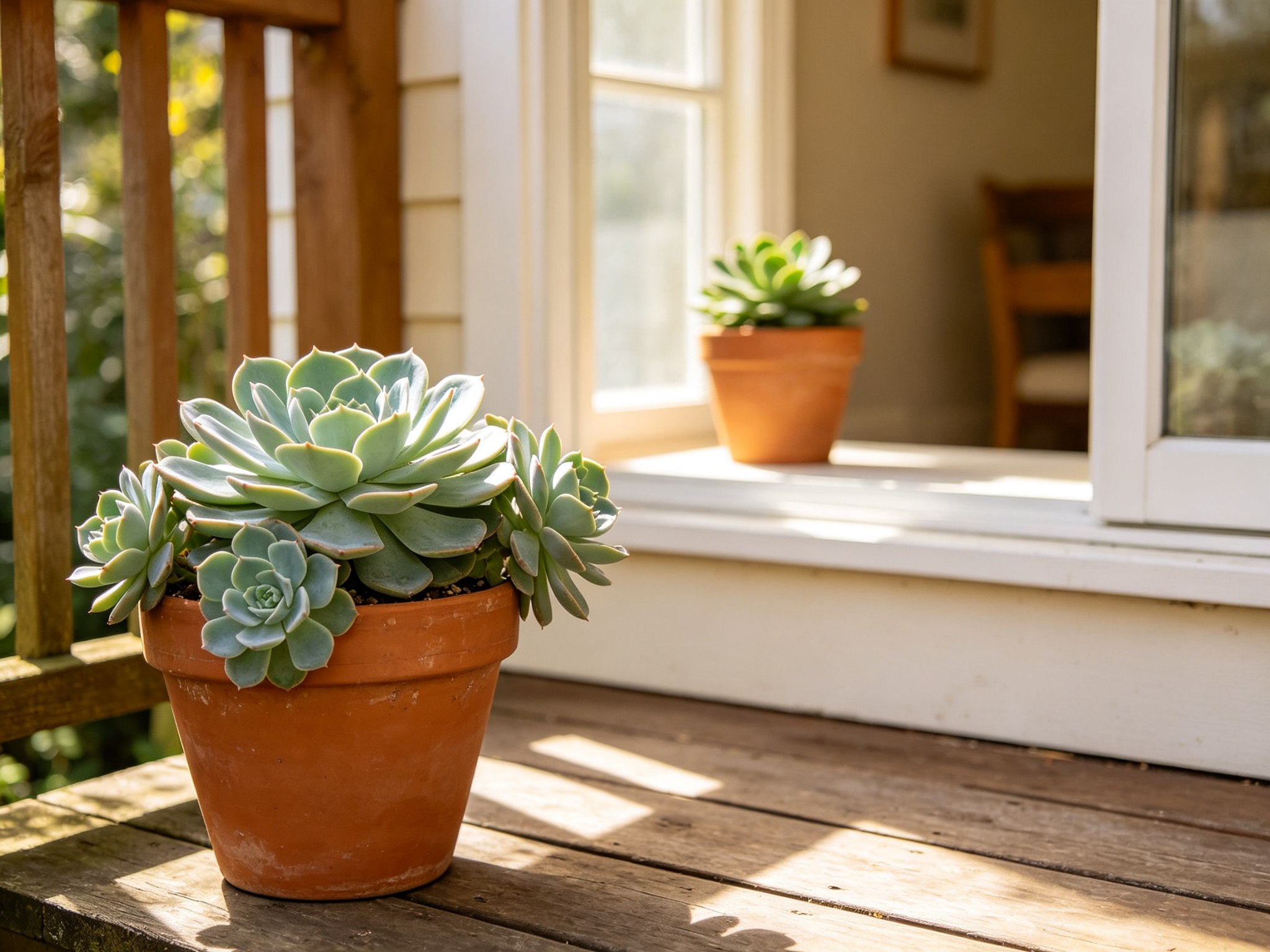
Check for hitchhikers before you bring them in
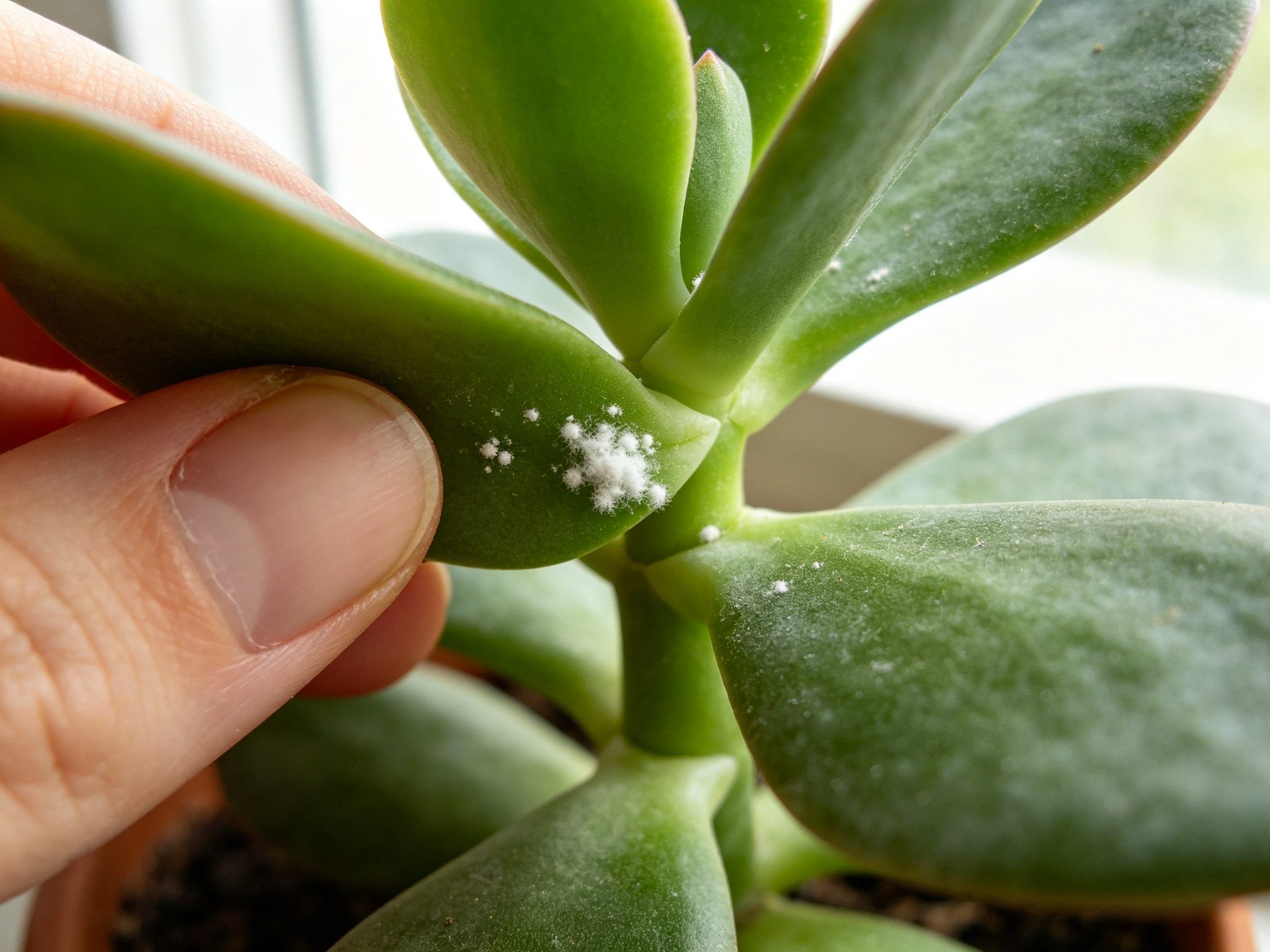
This is the step everyone skips, and it’s how indoor succulent collections get mealybugs. Succulents that spent summer outside pick up passengers: mealybugs hiding in the leaf axils, aphids on new growth, ants, spiders, and the occasional slug.
Before any pot crosses the threshold:
- Look under the leaves and at the soil surface for white cottony tufts, tiny crawlers, or webbing.
- Check the drainage holes and saucer — pests like to ride along in the root zone.
- Quarantine new arrivals for about two weeks away from your other plants, even if they look clean.
- If you find mealybugs, dab them with a cotton swab dipped in 70% isopropyl alcohol, and treat the soil if you suspect root mealybugs. A full rescue routine is worth its own guide, and it works.
Ants aren’t just a nuisance — they farm mealybugs for honeydew, so if you see ants, look harder for the real problem.
Adjust watering and light for indoor winter conditions
Once everything’s inside, the care changes more than people expect:
- Water less. Indoors, soil dries much slower than it did outside in the sun. Most succulents want water only when the soil is bone dry all the way through — often once a month or less in winter. When in doubt, wait. Overwatering in winter is the number-one indoor killer.
- Give them the best window you have. They’ll survive lower light but they’ll stretch for it. Four to six hours of bright direct light is the target.
- Stop fertilizing. Dormant succulents don’t need food until spring.
- Keep them off cold glass. A leaf pressed against a freezing window pane can damage tissue even inside a warm room.
Troubleshooting: what to expect after the move
Dropped leaves. Usually shock from a sudden change. The plant should settle in a couple of weeks; just don’t water it until it does.
Pale, stretched growth. Not enough light indoors. Move it to a brighter window or add a grow light. The stretched section won’t thicken, but new growth will come in normal.
Translucent or mushy leaves. Overwatering or cold damage. If it’s water, let the soil dry out completely and cut way back. If the plant froze, remove the damaged leaves and hope the core survived.
Fine white webs or cottony tufts a few weeks later. Pests you missed at the door. Isolate the plant and treat it now — don’t wait for it to spread.
FAQ
What temperature should I bring succulents inside?
Start the transition when nighttime temperatures consistently dip below 50°F (10°C). Soft succulents like Echeverias should be inside before it hits 40°F (4°C); anything below freezing is a serious risk.
Can succulents stay outside in winter?
Cold-hardy types like hens and chicks (Sempervivum) can survive outdoors in many zones, but tender succulents — Echeveria, most Sedums, Kalanchoe, jade — must come inside before frost.
How do I transition succulents from outside to inside?
Move them in for the night and back out during the day for 7 to 10 days, then bring them in full-time to a bright window. Check for pests first, and hold off watering until they adjust.
Do succulents need grow lights indoors?
Most need four to six hours of bright direct light. If your best window faces north or winter days are short, a full-spectrum LED grow light six to twelve inches above the plants for 12 to 14 hours a day keeps them from stretching.
Why is my succulent mushy after bringing it inside?
Most likely overwatering or cold damage. Let the soil dry out completely, cut watering way back, and remove any translucent leaves.
Your fall checklist (the short version)
- Watch the seven-day forecast; start when nights consistently dip below 50°F
- Bring tender succulents inside for good before 40°F
- Transition over 7–10 days: nights inside, days outside
- Inspect leaves, soil surface, and drainage holes for pests; quarantine new arrivals
- Land them in your brightest window; set up a grow light if light is short
- Don’t water during the transition, then cut to a reduced winter rhythm
- Stop fertilizing until spring
Do it in this order and your succulents will come through winter looking exactly like they did in September. Skip the temperature check and you’re rolling the dice with the frost.
New to succulents entirely? Start with the 11 easiest succulents for beginners, then come back to this checklist when the season turns.