When to Bring Plants Inside: The 50°F Rule Most People Miss
Every fall the same scene plays out on porches and balconies across the country. The nights get cooler, the forecast starts mentioning frost, and suddenly everyone is asking what temperature to bring plants inside. The uncomfortable truth is that most of us have been waiting for the wrong deadline. If you want to know when to bring houseplants indoors, the real answer has nothing to do with the frost date on the calendar. It is the night temperature in the low 50s, weeks before frost ever shows up. This guide gives you the per-plant trigger numbers, shows you how to work back from your local first frost date, and then walks you through the pest protocol to run outside before anything crosses the threshold.
As an Amazon Associate I earn from qualifying purchases. Some links in this post are affiliate links — if you buy through them, I may earn a small commission at no extra cost to you.
Why “before first frost” is the wrong deadline
Frost is 32°F, and by the time the forecast warns you about frost, your plants have already been through weeks of cold stress. That advice is roughly 20 degrees too late.
Tropical houseplants do not wait for freezing temperatures. Chilling injury starts well above 32°F, in a range that runs roughly from 32 to 59°F, and most common indoor plants are already damaged once nights settle into the mid-40s. The damage does not announce itself loudly. A leaf edge curls, a lower leaf yellows, new growth stalls, and the plant simply looks tired. By the time you see the problem, the leaf cells are already hurt, and most of that damage does not reverse.
So when someone says “just bring them in before frost,” what they are really saying is “bring them in after most of the damage is done.” That is why the question of how cold is too cold for houseplants has a much higher answer than people expect. The danger zone starts in the 50s, not at freezing.
The 50°F rule, and the 5 degrees that matter more
Here is the short version. 50°F is the line for your whole collection, and 55°F is the line for the genuinely tender plants. If you only remember two numbers, remember those.
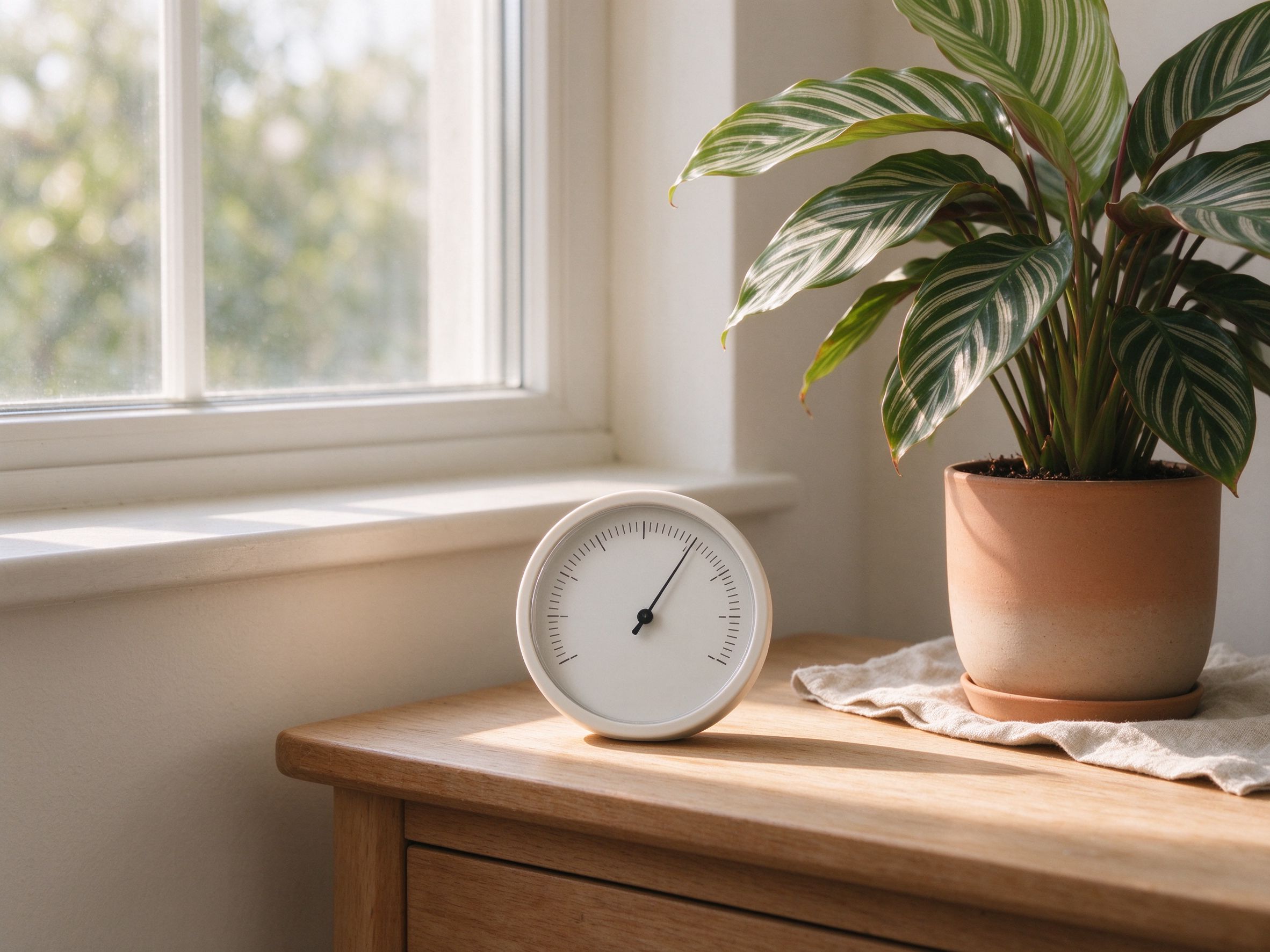
The word that matters more than either number is consistency. One night at 48°F is not a signal to panic. Plants can ride out a single cold dip, and pulling everything indoors on a Tuesday panic is how you end up with a pest problem and a cramped living room. The real trigger is a pattern: four or five nights in ten days below 50°F. Once the lows start stacking up like that, the soil cools, the roots slow down, and chilling injury starts to accumulate even if no single night looks dramatic.
So watch the ten-day forecast, not the overnight one. The moment you see a stretch of nights in the high 40s or low 50s repeated across a week, that is your move-in window. Tender plants like calathea and Phalaenopsis orchids should already be inside by then, because their line sits closer to 55°F.
Houseplant temperature chart: when each plant comes in
Use this chart as your per-plant guide. These are nighttime low temperatures; daytime warmth does not cancel out a cold night. When the forecast low crosses the line for a plant, that plant comes in. You do not need to move everything on the same day, but you should move the tender plants first and work down the list.
| Plant | Nighttime trigger temperature |
|---|---|
| Calathea / Prayer Plant | 55–60°F |
| Phalaenopsis | 55–60°F |
| Tropical Hibiscus | 50–55°F |
| Fiddle-Leaf Fig | 50–55°F |
| Weeping Fig | 50–55°F |
| Pothos | around 50°F |
| Philodendron | around 50°F |
| Boston Fern | around 50°F |
| Spider Plant | around 50°F |
| Snake Plant | around 50°F |
| Jade Plant | 45–50°F |
| Cacti & Succulents | 45–50°F |
| Geranium | 40–45°F |
| Cymbidium Orchid | around 40°F |
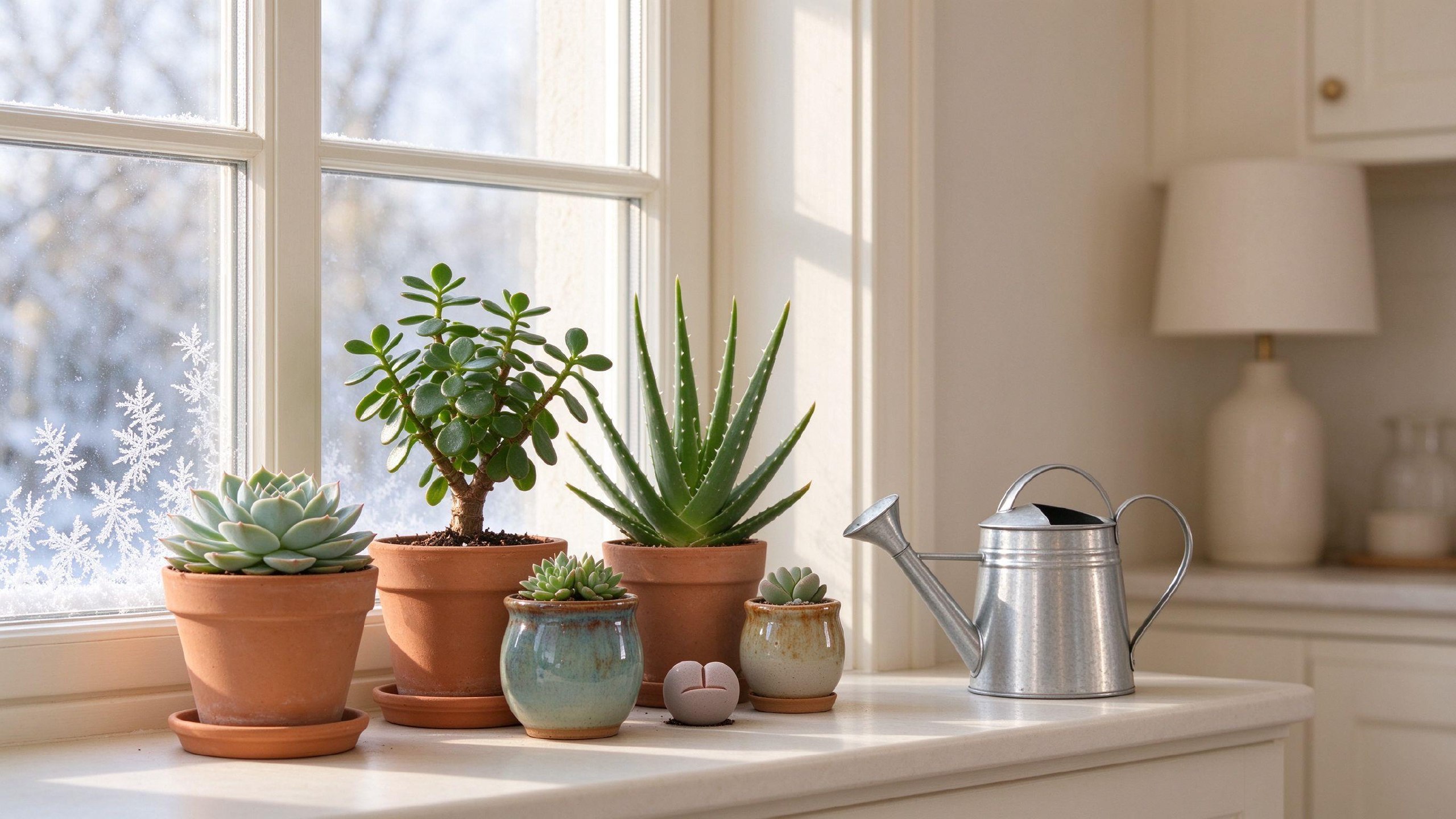
This chart covers the standard houseplant list. If it is a succulent or cactus, the cold tolerance rules are different and worth reading separately. For everyone else on the list, treat the chart as a hard schedule: the plant does not get to vote, and “it looked fine last year” is not data.
Work back from your first frost date
Stop treating the first frost date as a deadline and start treating it as the far edge of your move-in window. Your local frost date is the latest possible date for bringing plants inside, not the right one.
Here is how to set your own schedule. Look up your area’s average first frost date, then count back three to four weeks. That earlier week is your target move-in week. In a typical northern zone, that lands in late September or early October, weeks before frost shows up in the forecast. In milder zones, shift the whole window later, but keep the same gap between the move and the frost date.
Now add the microclimate correction, because this is where most people get caught. The temperature in your weather app is measured at a weather station, not on your balcony. A pot sitting on an open railing, a pot raised high off the ground, or a pot that faces the wind will run several degrees colder than the forecast says. On a night forecast to hit 50°F, an exposed railing pot can easily sit at 45°F. If your plants live in any of those spots, subtract a few degrees from the forecast before you compare it to the chart, and move that plant a day or two earlier than the number suggests.
The pre-move pest protocol (run it outside)
Bringing plants in is how outdoor pests become indoor pests, so the entire treatment happens outside, before the plant crosses the door. Skip this once and you will spend the winter fighting spider mites and mealybugs in your living room.
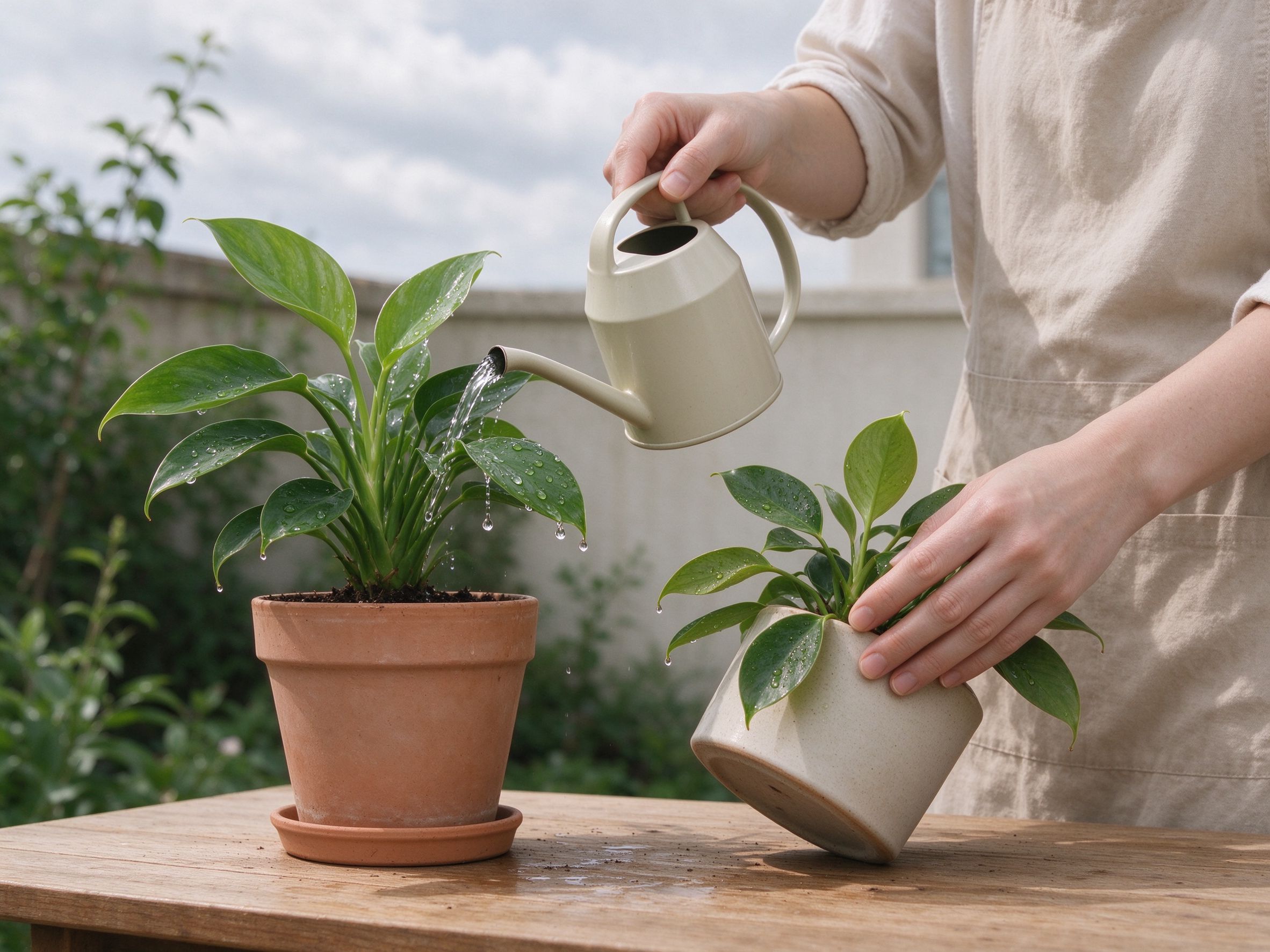
Check the seven hiding spots where pests actually live:
- Undersides of leaves, where mites and aphids cluster
- Leaf axils and nodes, where scale and mealybugs tuck in
- New growth and flower buds, the soft tissue pests prefer
- Stems and petioles, where you may spot sticky honeydew
- Soil surface and drainage holes, home to fungus gnats
- The outside of the pot and the saucer, where pests hitch a ride
- The tap test: tap the pot over a sheet of white paper and see what falls off
Then run the treatment in this order: a strong rinse with water, a full cover with an insecticidal soap or horticultural oil (flip the leaves and get the undersides), a 15-minute soak of the pot itself, and a swap of the top inch of soil. The soak is the step people skip, and it is the one that flushes out anything living in the pot wall or drainage holes.
If a plant is badly infested, do not nurse it. Throw it out. Lose one plant, not the shelf. The rest of the collection will thank you.
Quarantine timeline: day 0, 3, 7, 14
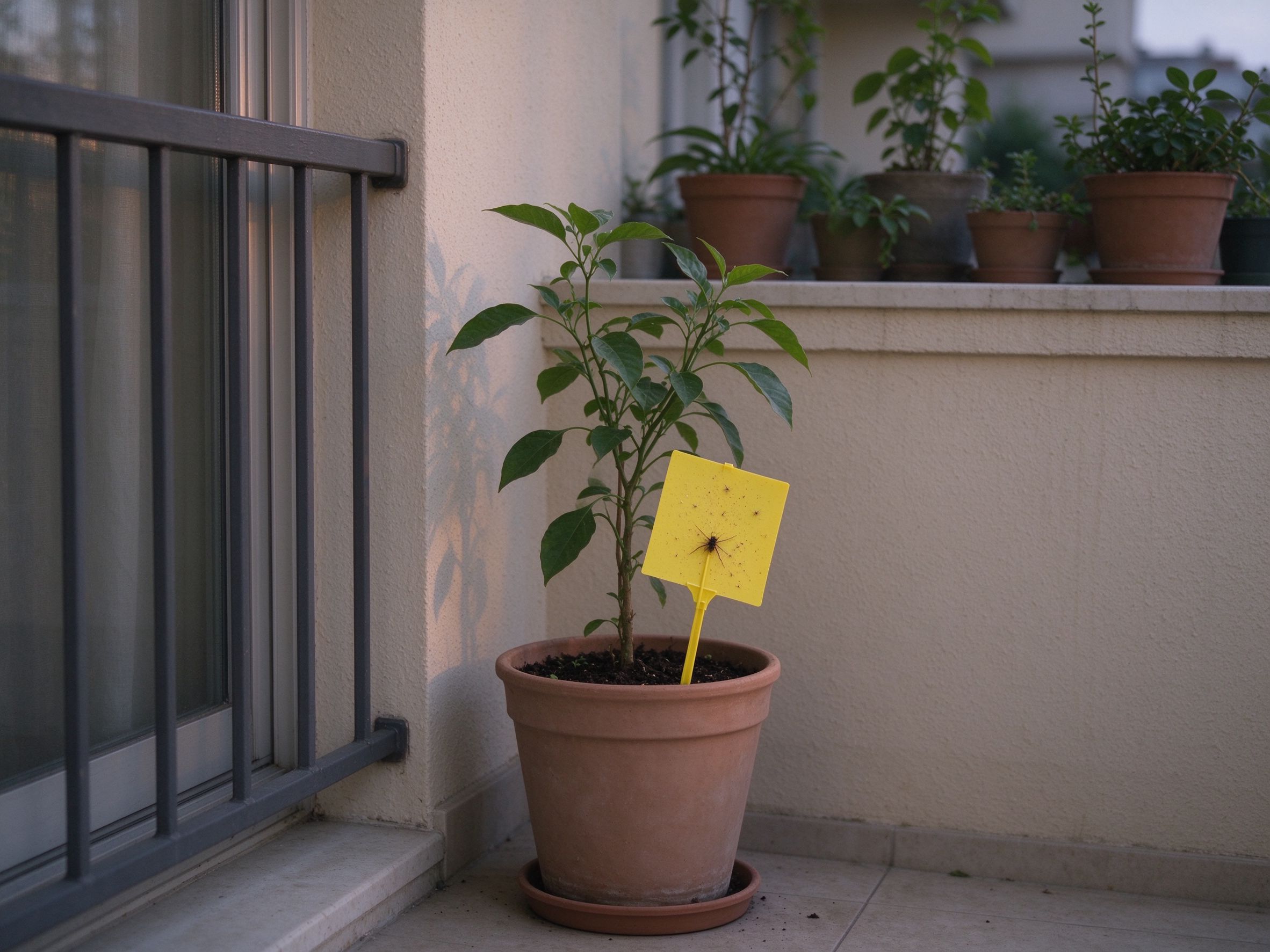
Even a clean-looking plant can hide eggs you did not see. That is why every plant gets a quarantine period after the outdoor treatment, before it joins the collection. This is also the answer to how long to quarantine new houseplants: at least three weeks, on this schedule.
| Day | What you do |
|---|---|
| Day 0 | Move the plant into its quarantine spot and place a yellow sticky card in the pot |
| Day 3 | Check the card and the leaf undersides; spot-treat anything you find |
| Day 7 | Full re-inspection plus a second round of treatment (soap, horticultural oil, or spinosad) |
| Day 14 | If the card is clean and the leaves show no signs, the plant graduates into the collection |
Two rules keep this from being theater. First, if you find any pest at any point, the clock restarts at day 0. A single thrips on day 12 means you start the three weeks over. Second, know when not to graduate. The plant does not graduate if the card caught something in the last few days, if you can see live pests, or if new damage appeared on the leaves. Three clean weeks is the graduation standard; anything less and you are guessing.
Pests to expect, and what treats each one
Different pests need different treatments, so match the pest to the product rather than spraying everything with one thing.
- Spider mites: tiny, webbing on the undersides, worst in dry air. Treat with a soap spray or horticultural oil, and keep up the humidity.
- Mealybugs: white cottony clumps in the leaf axils. Wipe them off, then treat with horticultural oil.
- Scale: brown or tan bumps on stems and petioles. Scrape them off and treat with oil; they resist sprays until you break the shell.
- Thrips: slender, fast, leave silvery streaks on leaves. Treat with spinosad and sticky cards.
- Fungus gnats: small flies around the soil. The yellow card catches adults; BTI mosquito bits handle the larvae in the soil.
- Aphids: clusters on new growth and buds. A strong rinse plus soap spray clears them.
- Whiteflies: small white moths that fly up when you touch the plant. Sticky cards plus repeated soap sprays.
One hard rule here. DIY dish soap is not a substitute for insecticidal soap. Regular dish soap strips the leaf’s natural coating and can burn foliage, and it does not kill pests the way a potassium-salt insecticidal soap does. If the label does not say it is for plants, do not put it on your plants.
And one thing that quietly makes this whole fight easier: indoor air gets dry in winter, and dry air is exactly what spider mites love. Keeping a small room humidifier near your plant corner takes away their favorite conditions before they become a problem.
After the move: where the rest of the routine lives
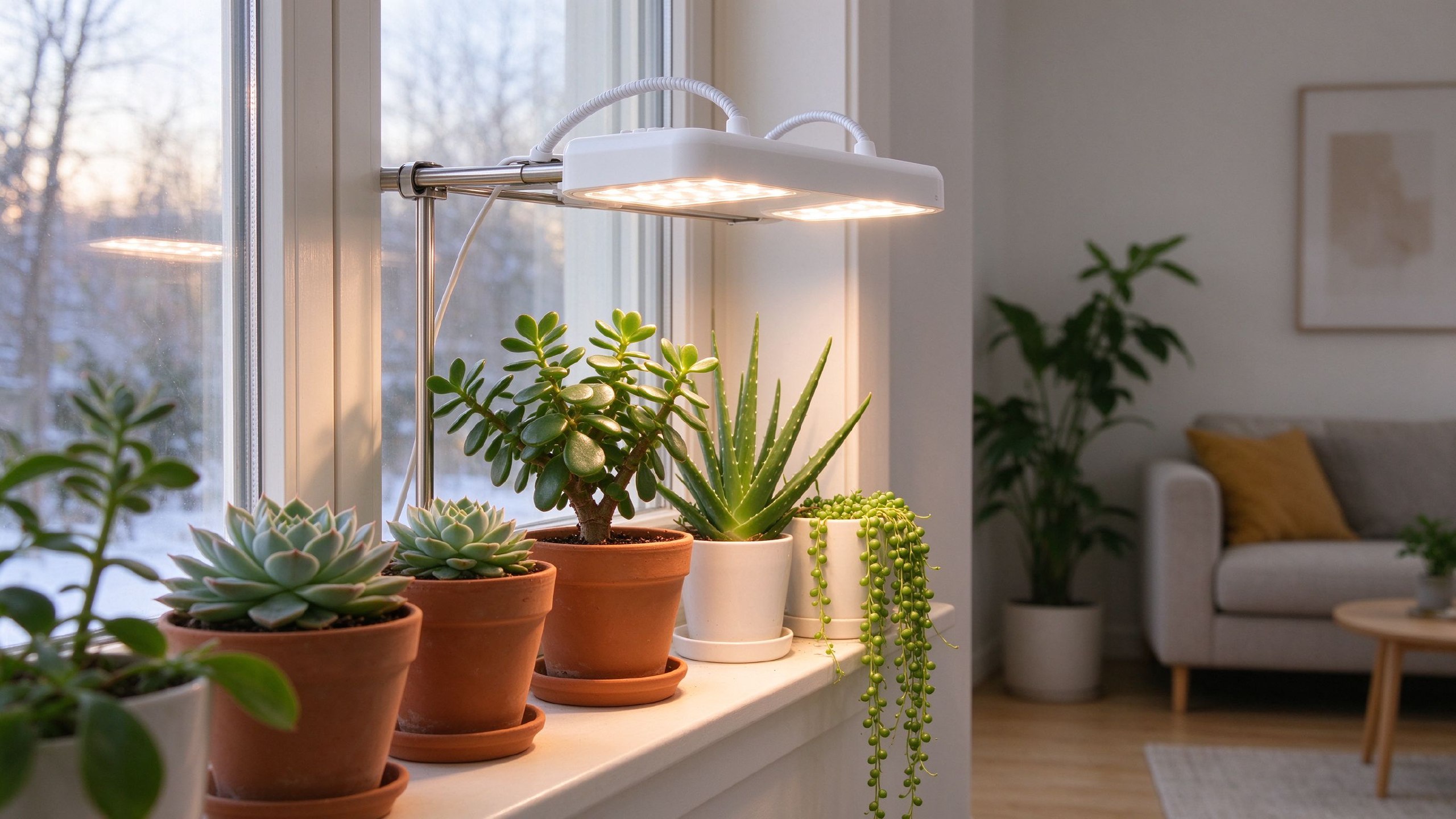
Once the plants are inside and the quarantine clock has run, the watering, feeding, humidity, and window placement changes all live in one place, so this guide stops here. Read the fall care routine after the move for the day-to-day schedule, add grow lights when indoor light drops, and if the collection is too big for your space, this list of which houseplants to save first will help you prioritize.
FAQ
What temperature should I bring plants inside?
Low 50s at night, and it has to be consistent, not one cold night. 50°F is the number for a mixed collection; 55°F for genuinely tender plants like calathea and Phalaenopsis orchids. Many tropicals are already damaged in the mid-40s, and nearly all die below freezing.
How long should I quarantine houseplants before bringing them in?
At least three weeks. Check on day 0, 3, 7, and 14 with a yellow sticky card, and restart the clock if you find anything.
Do I need to bring plants in before the first frost?
No. That advice is roughly 20 degrees too late. Chilling injury starts well above freezing, so your real deadline is a nighttime low in the low 50s, not the frost date on the calendar.
Which houseplants can stay outside the longest?
Geraniums (40 to 45°F), cymbidium orchids (around 40°F), and jade plants plus most cacti and succulents (45 to 50°F). Move the tender tropicals first and leave these for last.
The move-in checklist (the short version)
Print this, stick it to the fridge, and work through it in order:
- Watch the ten-day forecast for a stretch of nights in the low 50s, not a single cold night.
- Know your plant lines. Tender plants at 55°F, the mixed collection at 50°F, the cold-tolerant group at 45 to 40°F per the chart.
- Count back from your first frost date by three to four weeks, and subtract a few degrees for exposed railing pots.
- Run the pest protocol outside: check the seven hiding spots, rinse, treat with soap or oil including the undersides, soak the pot for 15 minutes, and swap the top inch of soil.
- Quarantine for three clean weeks with a yellow sticky card, restarting the clock at any sign of pests.
- Move tender plants first, cold-tolerant plants last, and never let the frost date be the thing that decides for you.
Disclosure: Some links in this post are affiliate links. If you buy through them, I may earn a small commission at no extra cost to you. See the full affiliate disclosure, and read how we research on our methodology page.